Summer Intensive
with Judith Hanson Lasater!
Last Day to Save up to 70%!
This Offer Is Now Closed - Sorry You Missed Us!
For questions, send a note to Support@YogaUOnline.com
Save Up to 70% with Our Summer Special with Judith Hanson Lasater! PLUS, Join Judith Live Online!

Course Package #1:
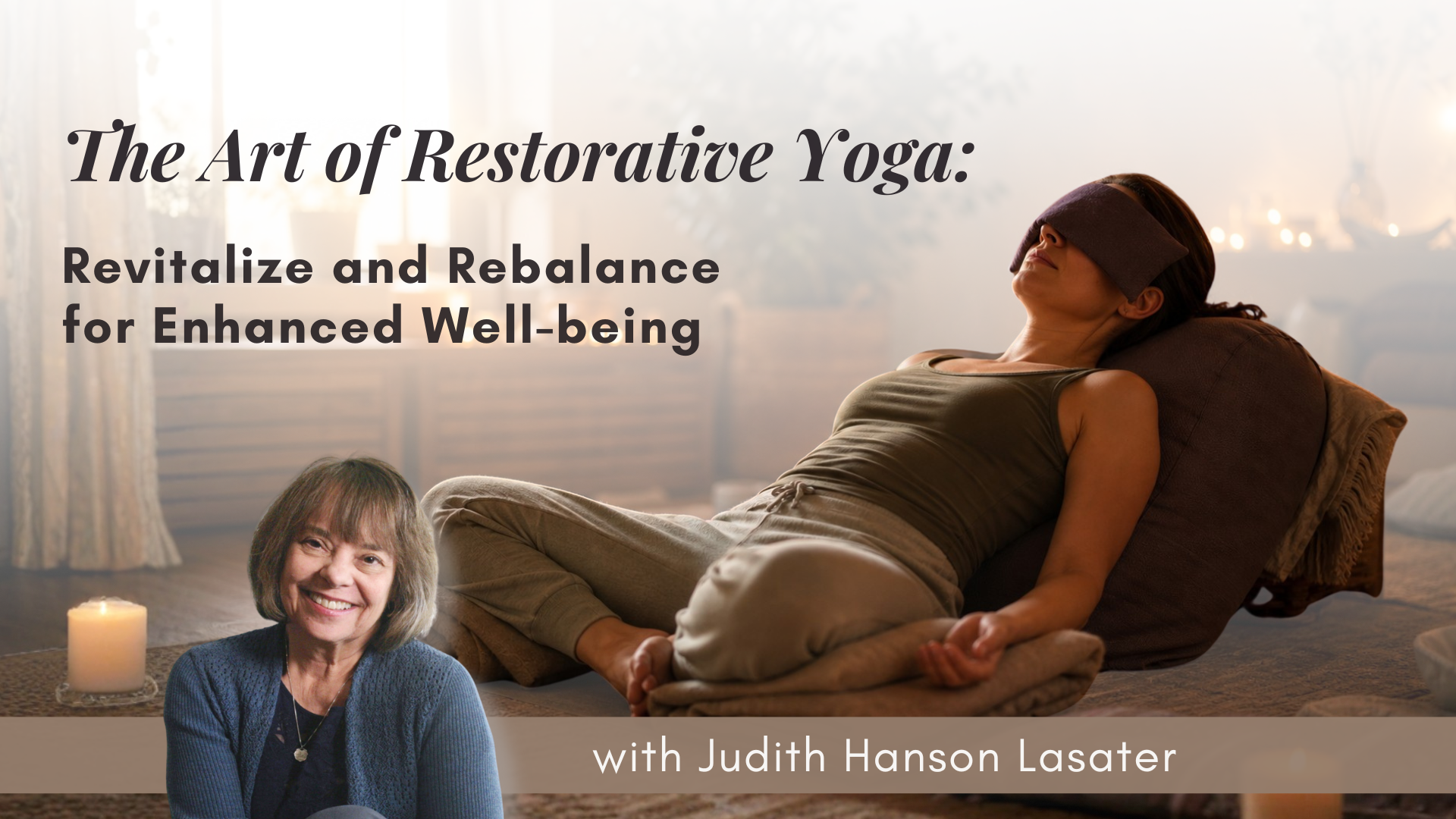
Practicing Restorative Yoga - Revitalize and Rebalance
This package consists of 10 hours of coursework on the practice of Restorative Yoga. It is a rare opportunity to learn how to practice and teach Restorative Yoga directly from one of the leading authorities on Restorative Yoga.
Course Package #2:
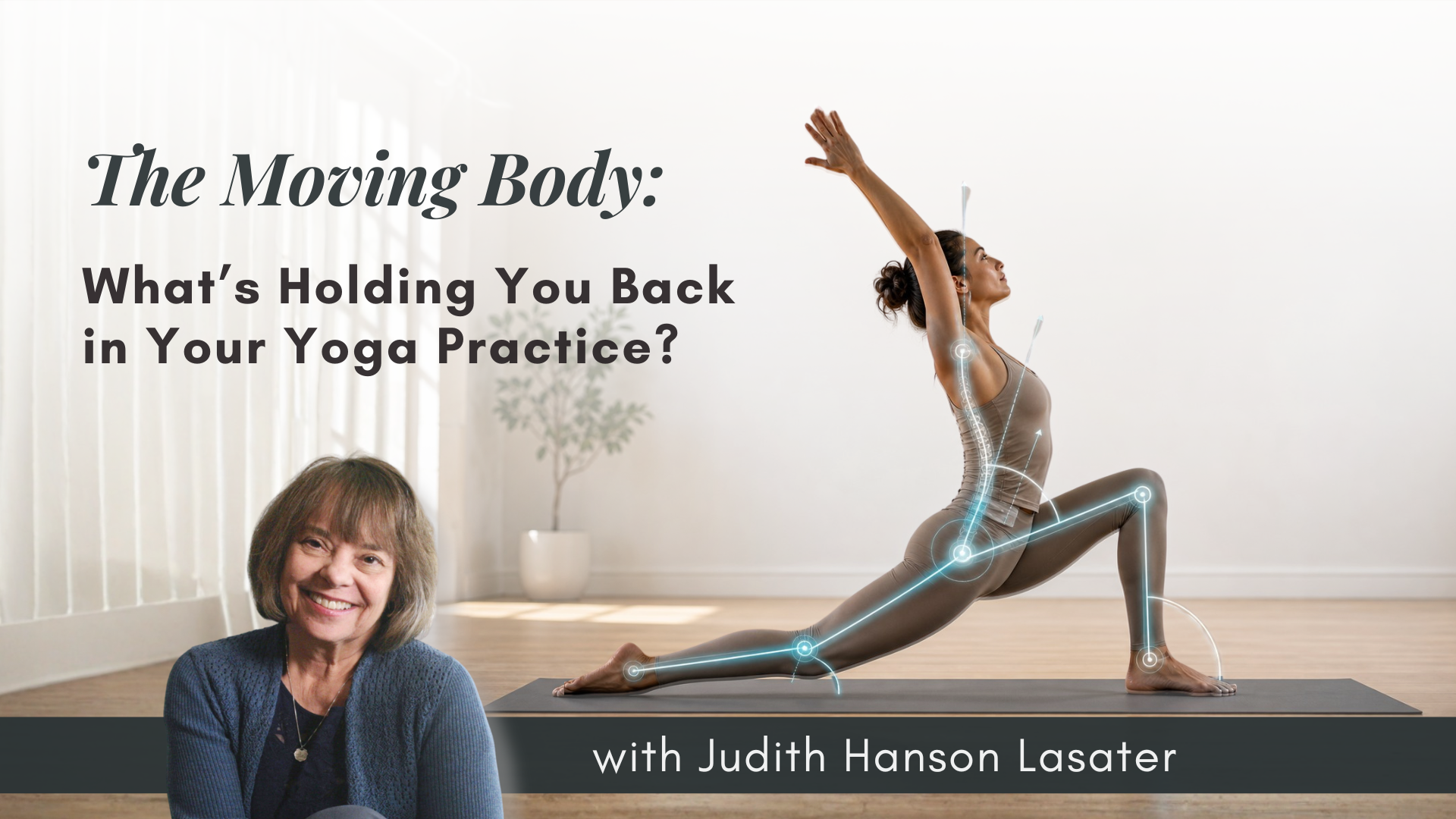
The Yoga of Movement: Kinesiology in Practice
Ever wondered why you see the same misalignment patterns across your students and why they are so hard to address? In this in-depth, 10-hour course package, Judith goes deeply into the key biomechanical principles that underlie the practice of yoga to transform your practice and teaching.
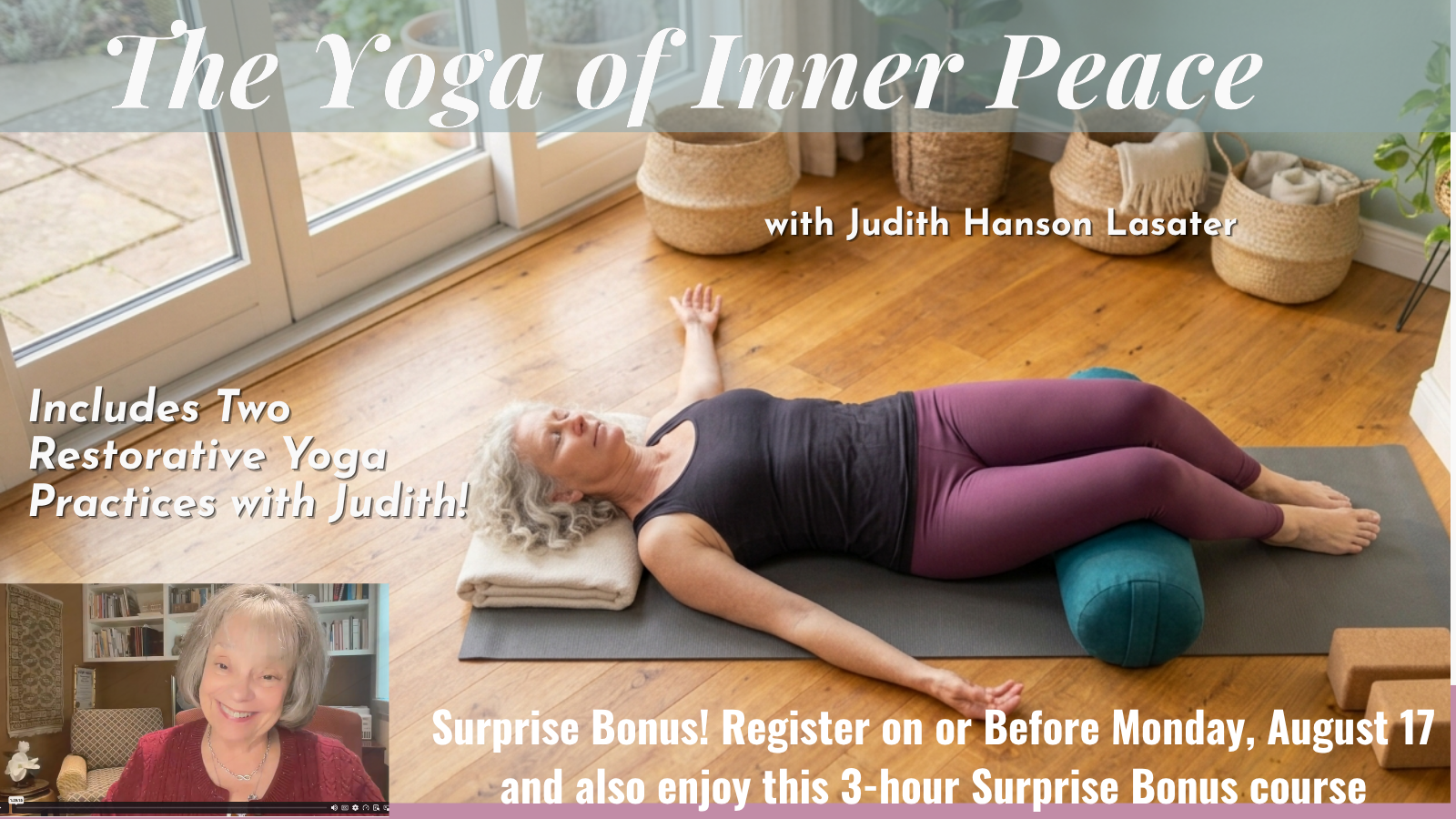
Surprise Bonus Course with Judith: The Yoga of Inner Peace: Exploring the Stages of Being
Register on or before Monday, August 17 and also get this 3-hour Course with Judith - Includes Two Guided Restorative Practices with Judith!
Sometimes wish that you could stop the merry-go-round of our frenzied lifestyle and just take some time out to chill out?
In this day and age, learning how to take a “time out” to soothe and relax body and mind is not just a luxury, says Judith. It’s a necessity.
As the pace of life in the digital era continues to accelerate, our senses are constantly on overload, and our mind spins faster and faster.
But once the pace of our life gets out of control, everything is affected. Our digestion suffers, sleep becomes disrupted, and we become increasingly exhausted and lose our ability to cope with even minor challenges.
Yoga is an essential antidote to avoid getting trapped in this vicious cycle, notes Judith. But not just any kind of yoga.
In this course, learn Judith’s signature approach to using yoga to snap out of our frantic go-go pace of life and restore greater inner peace and calm.
Gather your props because we will practice Restorative yoga during each session to be able to more deeply embody a new way of being. Judith will also share simple, practical practices we can immediately apply to our daily life to help us stay in touch with our new-found ease.
Learn More About the Summer Special Below!
Course Special #1: The Art of Restorative Yoga -
Revitalize and Rebalance
“Restorative yoga has been helpful for my patients with diverse conditions, such as back pain, neck pain, high blood pressure, asthma, migraine and tension headaches, stress-related diseases, chronic fatigue, chronic obstructive pulmonary disease, and cancer."
- Mary Pullig Schatz, MD
The Art of Practicing & Teaching Restorative Yoga
We work very hard in our lives, and while we may sleep, we rarely take time to rest. Restorative Yoga poses help us learn to relax and rest deeply and completely.
During deep relaxation, all the organ systems of the body benefit. The measurable results of deep relaxation include more balanced blood pressure, blood sugar and cholesterol levels, as well as improved digestion and elimination, reduced muscle tension, insomnia and generalized fatigue.
In this online course, Judith Hanson Lasater will introduce you to the experience of Restorative Yoga and some of the basic teaching principles for this important practice. The key to the healing benefits of a restorative practice are the supported poses and breathing practices, which help reset body and mind and heal the effects of chronic stress.
Take a Sneak Peek at What's in this Course!

Restorative Yoga: Understanding the Difference Between Stretching and Opening
Here's What's Included:
Module 1: Nourish & Rejuvenate - The Art of Restorative Yoga
Two Lectures on Practicing and Teaching Restorative Yoga, PLUS 60-minute Restorative Yoga Practice with Judith and Lizzie Lasater
Module 2: Savasana: The Art of Doing Nothing
Lecture, Plus Restorative Yoga Practice with Judith and Lizzie.
Learn the setup for a Restorative Savasana Practice.
Learn why Savasana is the most important, yet most overlooked pose in yoga, and a wealth of tips to incorporate a restorative version of this important pose into your practice and teaching.
Module 3: Deepen Into Peace: Finding Time for Silence in Your Life
Lecture Plus Restorative Yoga Practice with Judith and Lizzie Lasater
Module 4: Nourish, Revitalize and Rebalance Your Spirit
Two lectures Plus Restorative Yoga Practice with Judith and Lizzie Lasater
Module 5: Asana, Body Awareness and Meditation: Practicing for the Whole Self
Two lectures Plus Restorative Yoga Practice with Judith and Lizzie Lasater
What You Will Learn
- Why Restorative Yoga is an important adjunct to a regular yoga practice, and when and how to integrate it.
- How a restorative practice can create the foundation of mental, emotional and physical relaxation to provide greater integration in your life.
- Key elements of a restorative practice, including poses, breath awareness and simple meditation techniques.
- A basic restorative sequence to use for yourself or your students to nurture, restore, and heal.
- Why Savasana is one of the most underused poses in yoga and how to make it work for you and your students.
Course Special #2: The Moving Body
What's Holding You Back in Your Yoga Practice?
Wonder what's holding you (or your yoga students) back in their yoga practice?
If you're feeling stuck in your practice and frustrated that you just can't seem to get comfortable in some yoga poses, take heart. You are not alone!
- Did you know that there are certain common underlying dynamics that are holding most students back in their yoga practice?
- And, did you know that most of these can be addressed, as long as you understand the basic principles that are driving the issues?
Learn what's holding you back in your yoga practice and how to address common issues in this course bundle with Judith on The Moving Body: Tracking the Origin of Misalignment in Yoga.
Kinesiology is the study of the biomechanical principles that underlie human movement. In this 10-hour course bundle, yoga teacher and physical therapist Judith Hanson Lasater offers an introduction to this important topic as it applies to the practice and teaching of yoga asana.
Understanding kinesiology is the portal through which we can understand how and why to apply therapeutic suggestions to students who are struggling to do yoga poses because of various muscle imbalances.
Here's What's Included:
Module 1: Kinesiology and Its Therapeutic Applications
Tracing the Origin of Common Misalignment Patterns in Yoga Asanas
As yoga teachers, it's important to know the names and functions of key muscles.
But kinesiology moves way beyond this. It enables us to see the body as a functional whole and gives us insights into the biomechanical foundation for common misalignment patterns in yoga postures.
In this module, Judith will show how kinesiology can help us understand the biomechanical forces working around each joint.
Experience how shifting the focus to the forces occurring around each specific joint, rather than just individual muscles, can give us deeper insight into the factors that affect our ability to perform yoga postures safely and with correct alignment.
Module 2: Kinesiology of the Shoulder Joint
Functional Anatomy, Asana and Therapeutics
The shoulder is an important joint in the body as well as an important symbol of our strength and ability to succeed in the world. The position of our shoulders instantly telegraphs our mood to the world.
Yoga teachers are increasingly called upon to work with students who have limited range of motion of the shoulder joint or even rotator cuff issues.
For these reasons, it’s imperative for yoga teachers and students to understand the biomechanics and kinesiology of the shoulder joint and the surrounding joints that move in conjunction with it.
In this online yoga course, Judith Hanson Lasater continues her series on the kinesiology of yoga, and reviews the functional anatomy of the extended shoulder joint as it applies to yoga practice.
Module 3: Freedom of the Hip Joint
Asanas, Anatomy and Kinesiology or Safe Movement
Wonder how to deal with tightness in the hips that hold you or your students back in their yoga practice? Yoga poses that create greater balance in the hip joint are some of the most rewarding yoga poses, but they are often challenging, particularly for beginning yoga students.
In this module on the kinesiology and therapeutics of the hip joint, Judith Hanson Lasater shares some of the key principles for creating greater freedom in the hip joint.
Hip-balancing poses are known as one of the most powerful groups of poses for releasing deep-seated stress, tension and negative emotions, which many of us tend to store in the pelvic area.
But because the soft tissues surrounding the hip are some of the strongest in the body, hip-balancing poses must be done with careful awareness and attentiveness.
Judith addresses some of the key individual differences in the anatomy of the hip joint, which shape our yoga practice and shows how to adjust poses accordingly.
What You Will Learn
- The single most important movement principle to understand when you are analyzing why a student can or cannot perform an action.
- How shifting the focus to the forces occurring around each specific joint, rather than just individual muscles, bones or joints, can give deeper insight into the forces that affect alignment in yoga postures.
- The biomechanical foundations for common patterns of misalignment in yoga postures.
- Crucial individual differences in the anatomy of the hip joint and how they can affect practice.
- Keys to keeping the hip supple can help you ease back pain or avoid it altogether and will help ensure mobility and agility as you get older.
- Principles of safe practice for shoulder opening and strengthening yoga postures.
- Do’s and don’ts for students with preexisting shoulder injuries or rotator cuff issues.
Take a Sneak Peek at What's in this Course!
Both courses together qualify for a total of 20 CEs with Yoga Alliance.