Age Strong for Life:
What If the Real Aging Divide in Aging
Isn't Genetics or Luck, But Something You
Can Actually Build?
Take the example of Alzheimer's. One in two people over 85 will be diagnosed with either Alzheimer's or dementia.
But did you know that the changes leading to memory loss are decades in the making?
And, more importantly, that many of the risk factors are modifiable?
Catch Our Early Bird Bonus with Leslie Howard!
Yoga for Pelvic Floor Health: Research-Based Practices for Incontinence and Pelvic Pain.
Once you cross into your sixties and seventies, you start noticing something most people never talked about before: two people, same age, same neighborhood, sometimes the same family, and yet one is gardening, traveling, and playing pickleball on Saturday mornings, while the other has become weak, housebound, and increasingly unable to manage simple daily tasks.
It's rarely the crisis itself that explains the difference. A hip fracture, a bad flu, a hard fall, these land on both of them. What separates the two outcomes is something almost no one is taught to think about: how much reserve capacity each body had built up beforehand.
TAKE A SNEAK PEEK AT LESLIE'S EARLY BIRD BONUS!

Why Breath Awareness Matters for Pelvic Floor Health
Aligning the Diaphragm and Pelvic Floor in Chair Pose
Pelvic Positioning for Safer Forward Bends
What Counts as Incontinence?
It’s Not Just the Pose—It’s How You Practice
Pelvic Floor Anatomy: Understanding Its Three Layers
THE HIDDEN FACTOR
Introducing Reserve Capacity: The One Thing That Decides How Hard Aging Hits
Every organ and system in your body, your heart, your lungs, your muscles, your immune system, doesn't run at full power on a normal day. It runs at a fraction of what it's actually capable of, keeping the rest tucked away in reserve for the day you really need it.
Think of it as a savings account. Young bodies hold an enormous, mostly unnoticed surplus in that account. But the account naturally shrinks with age, a process doctors call homeostenosis, unless you actively keep making deposits.
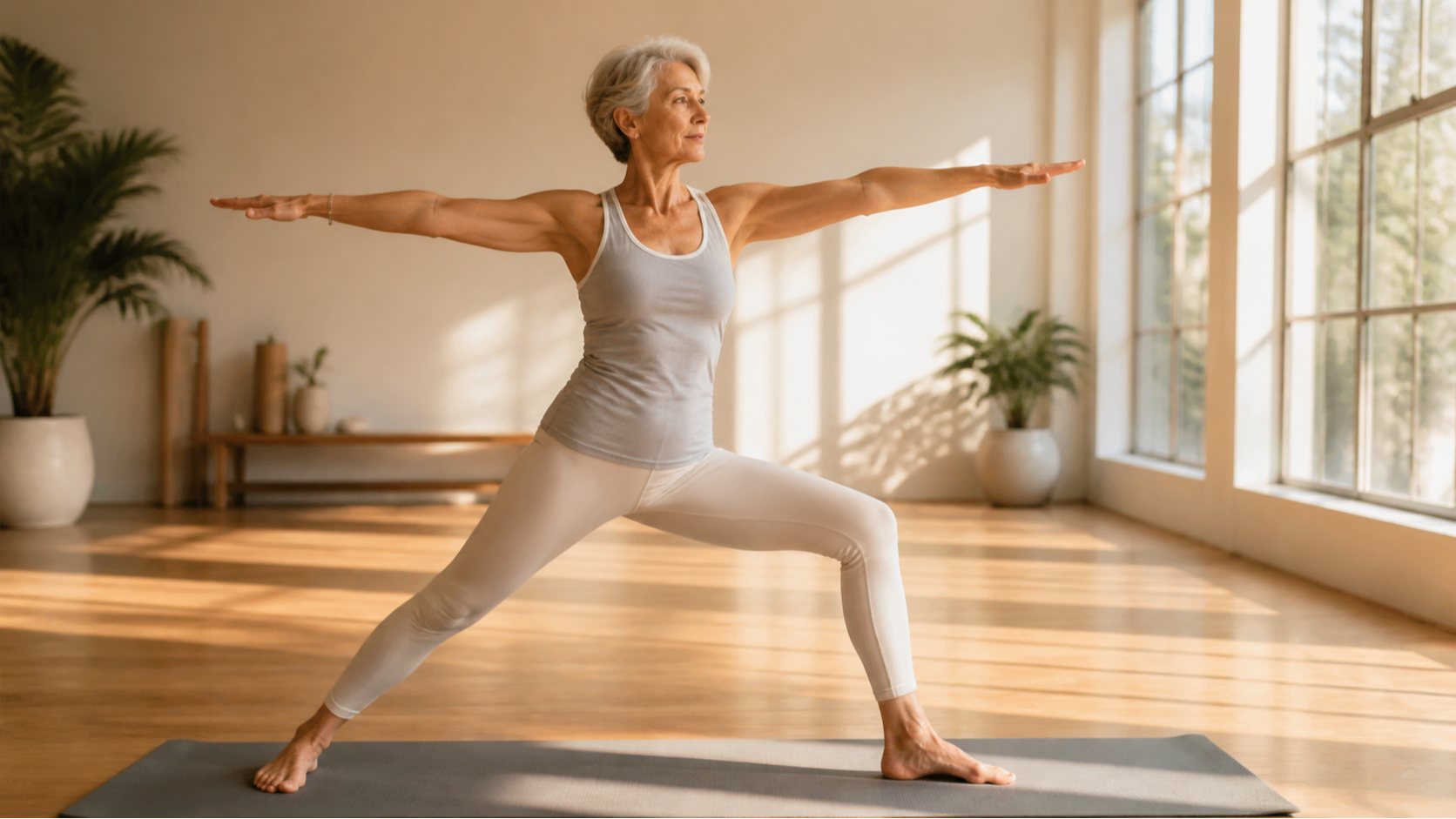
This is exactly why a healthy-looking older adult can seem perfectly fine one day, and then a small cold or a minor fall suddenly turns into a real crisis. It's not that the illness was so much worse. It's that there was less left in the account to draw from.
Reserve capacity doesn't compete with your muscles, bones, and joints for attention. It's the factor that determines whether the work you put into all three actually holds up when life tests you.
CURBING THE FRAILTY SYNDROME:
TWO PEOPLE, SAME FRACTURE, TWO COMPLETELY DIFFERENT OUTCOMES
Two people can suffer the exact same hip fracture, with the exact same bone scan results, and end up in entirely different places six months later. One is walking again. The other never fully recovers.
The difference usually isn't the fracture. It's how much reserve each person had left in the tank before it happened, and how much quiet wear and tear had already built up in their tissues over the years.
Researchers call the depleted end of this spectrum frailty, a syndrome that results from declining reserve across multiple body systems at once, leaving little to draw on when something goes wrong. It's one of the strongest known predictors not just of whether someone breaks a bone, but of how well they heal afterward.
WHY THIS IS THE FACTOR MOST
PEOPLE MISS
Most wellness advice focuses on treating problems after they show up: a diagnosis, a fall, a fracture. That's necessary, but it's reactive. It can bring you back to baseline, but it was never designed to build the reserve that determines what happens the next time life tests you.
Reserve capacity is different because it isn't something you notice building. There's no dramatic symptom, no single test result. It shows up only in the moment you need it, and by then, it's too late to start building it from scratch. That's exactly why it's the factor almost nobody pays attention to, until they're the person who didn't bounce back.
THE SOLUTION — AGE STRONG FOR LIFE
Building the Reserve That Determines How You Age
Age Strong for Life was designed around this single insight: your muscles, bones, and joints are what let you move, but your reserve capacity is what determines whether that strength holds up when illness, injury, or the ordinary wear of aging hits.
Introducing Age Strong for Life - Building Your Health Span: The Resilience Code
That's exactly what Age Strong for Life
was designed to change
Age Strong for Life is an online membership program for people who want to learn how ancient yoga-based techniques can help change how well they age.
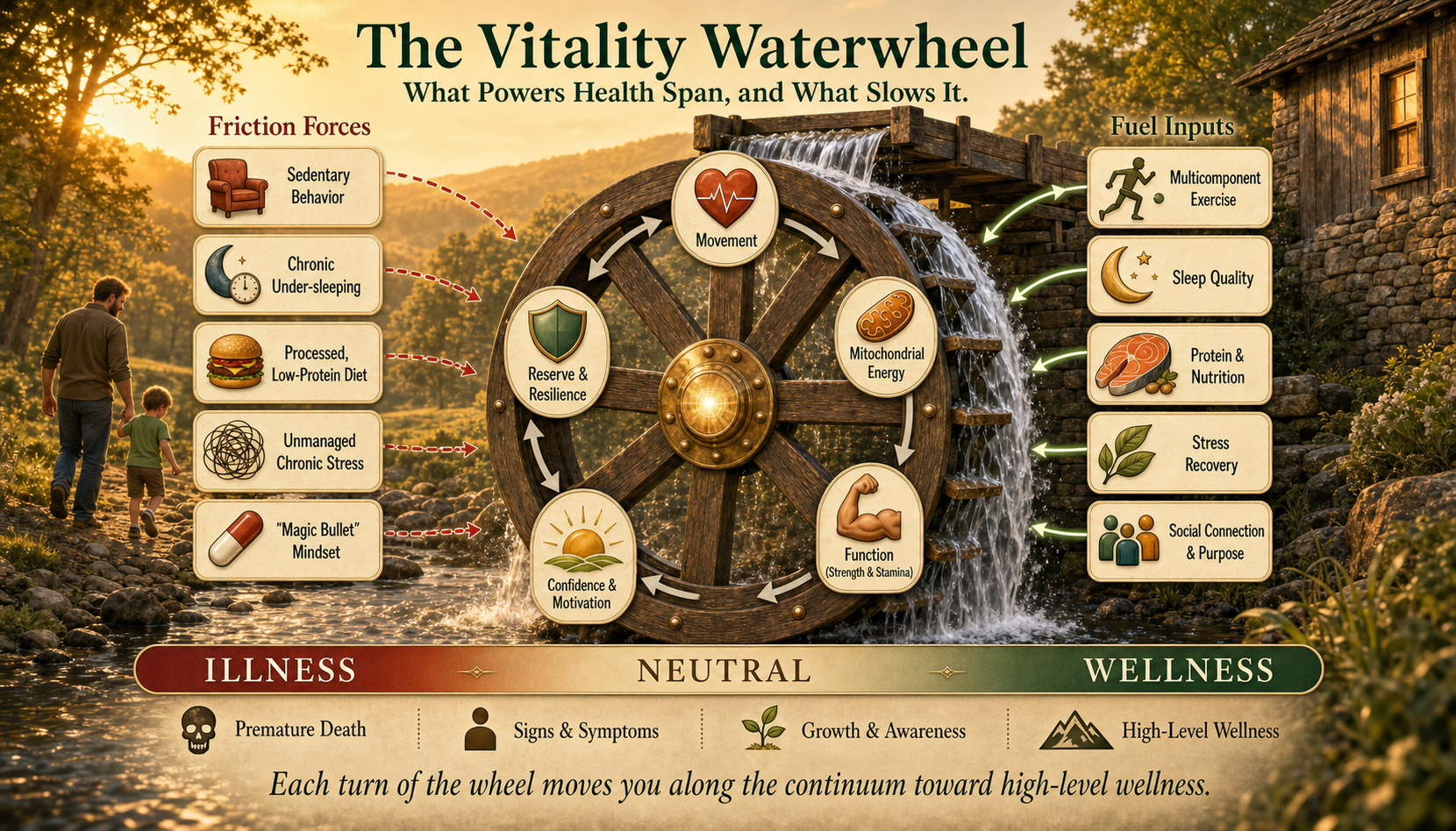
It is built around Vitality Waterwheel formula, which helps create a powerful positive feedback loop that gradually builds your strength, your reserves and your ability to withstand the kind of challenges that usully come with aging.
Each month you get in-depth workshops and practices specifically designed to help you build the key elements that enable you to build your reserves rather than struggling with the typical age-related decline in reserves.
WHY GENERIC APPROACHES FALL SHORT
Why Your Regular Yoga Class Isn't Enough
You might already be doing yoga. Maybe you walk every day. That's a great foundation, but here's the hard truth: most generic yoga classes were never designed to build reserve capacity specifically. The sequencing, intensity, and recovery strategies that actually expand your buffer against age-related decline require specialized knowledge most instructors simply don't have.
Age Strong for Life is different because:
- Our teachers are nationally recognized experts who specialize in healthy aging, not general fitness instructors.
- Every class is designed with your body in mind, with modifications and progressions built in as the foundation, not an afterthought.
- Every practice is chosen to build reserve capacity specifically, not just movement for its own sake.
Weekly Resilience Practice Series
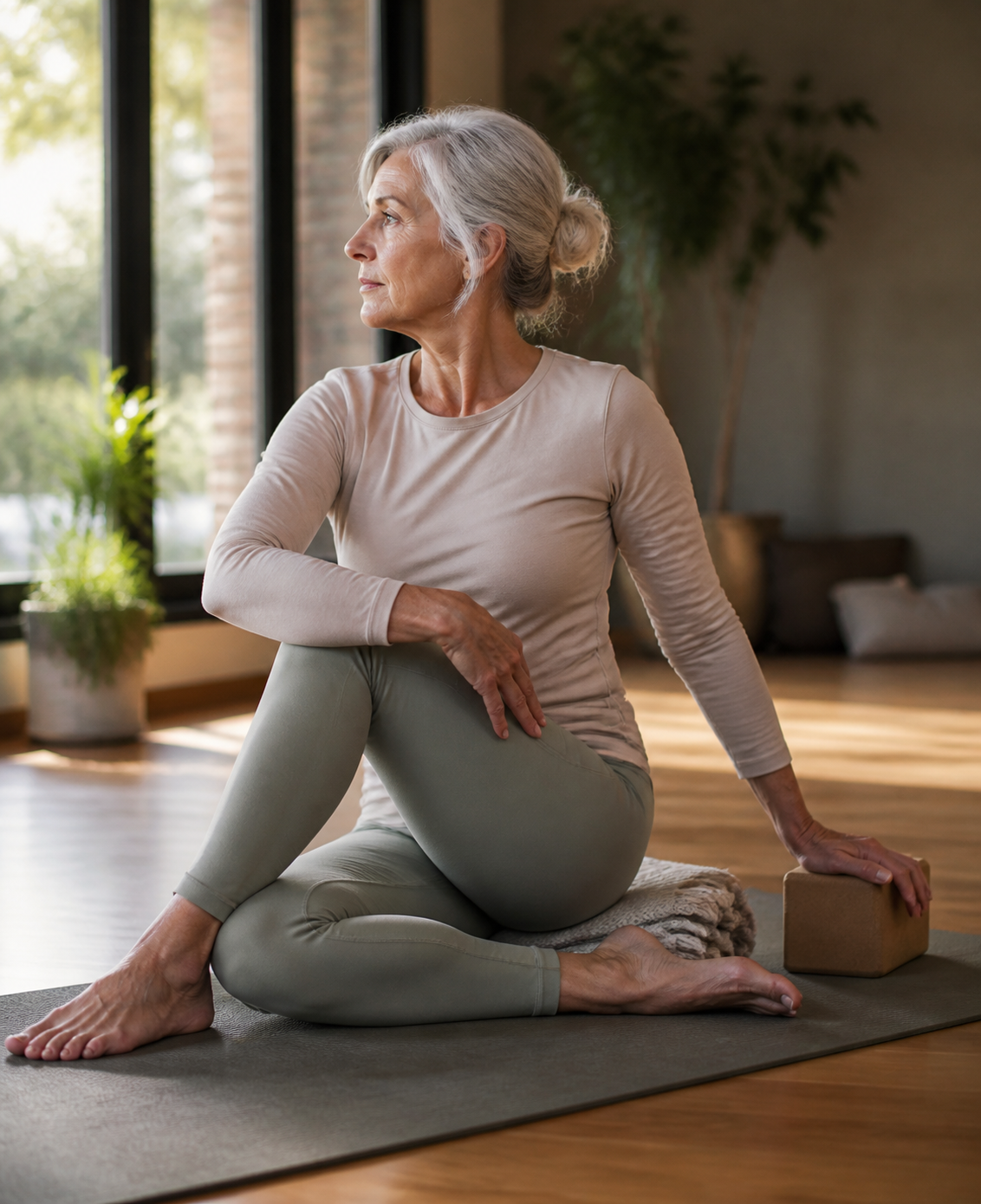
Each week, you join a focused practice series with an experienced yoga teacher or yoga therapist, each one designed to build a specific dimension of your reserve, so the strength you build elsewhere actually holds up under pressure.
Muscle is metabolically active tissue and a key driver of overall resilience, but reserve capacity isn't built through strength training alone.
It also depends on your core and pelvic floor, your walking mechanics, your nervous system's ability to communicate with your muscles, your cognitive buffer against decline, your capacity to recover from stress, your joint health, and your postural alignment. Each monthly series targets one of these dimensions directly:
- September: The Core and Pelvic Floor - Secrets of the Core Canister, with Leslie Howard, builds the pelvic floor and core strength that anchors your balance and integrates intelligent resistance work into yoga's movement framework, protecting aging joints while supporting bone density and the hormonal environment your metabolism depends on.
- October: Building Movement Resilience, with Lynn Crimando, rebuilds the foundation for strong, confident walking, targeting the feet, ankles, and legs to restore strength and mobility that decline with age, so you can walk faster, longer, and with less effort.
- November: Discovering Your Intelligent Body, with James Knight, uses Somatic Wisdom™ to retrain the connection between your brain and your muscles, teaching you to listen to your body rather than simply follow movement instructions, building resilient strength and ease from the inside out.
- December: Building Cognitive Resilience, with Melina Meza, builds the brain's protective buffer against dementia and decline through balance, coordination, and mindful movement, the modifiable lifestyle factors research shows can measurably improve memory and reduce fall risk.
- January: Fostering Nervous System Resilience, with Dr. Arielle Schwartz, trains your vagus nerve and stress-recovery capacity through breathwork and gentle self-applied touch, building your body's ability to recover from daily stress rather than just manage it.
- February: Building Joint Resilience, with Lynn Crimando restores the biology of healthy joints, teaching you that movement itself, not stillness, is what nourishes cartilage, while releasing the protective guarding patterns your nervous system can lock in long after an old injury has healed.
- Building Postural Resilience, with Dr. Baxter Bell, strengthens the back muscles and spinal alignment that prevent the forward curve, hyperkyphosis, that affects roughly 40 percent of older adults and independently raises fracture risk.
Each series stands on its own, but together they cover the full range of what your reserve capacity actually depends on, so no single weak link undermines the strength you're building everywhere else.
Monthly Strength-Building Mentoring Sessions
Here's the truth almost nobody tells you: after 50, muscle isn't optional, it's survival equipment.
It's the reserve tank your body draws on the moment life throws something at you, a bad flu, a hard fall, a surgery, and whether you bounce back in weeks or get knocked down for months depends largely on how much you've got in that tank.
And here's the part that catches most people off guard: the workouts that used to keep you strong stop working around age 50. It's not that you're slacking. It's anabolic resistance, a real, measurable biological shift that means your muscles simply stop listening to the same old stimulus. Most people never learn this, so they either push harder at something that's no longer working, or worse, quietly give up.
This is exactly where Lynn Crimando and guest teachers come in, with in-depth monthly workshops on Building Strong Muscles, Strong Bones, and Healthy Joints, the physical foundation everything else in this program is built on.
These are not gentle stretch-and-relax sessions. Each one pairs the real physiology, why muscle stops responding, what your bones actually need to stay dense, with practices intense enough to put that science to work immediately. You'll leave every session with a sustainable, progressively challenging practice built to keep compounding strength, bone density, and balance for decades, not just for the length of the workshop.
Your muscles are still capable of responding. They're just waiting for the right kind of push. These mentoring sessions will help you learn just how to do that.
Together, the weekly resilience series and the monthly strength mentoring sessions give you both the practices and the deeper understanding you need to build a body that doesn't just move well today, but bounces back reliably from whatever the years ahead bring.
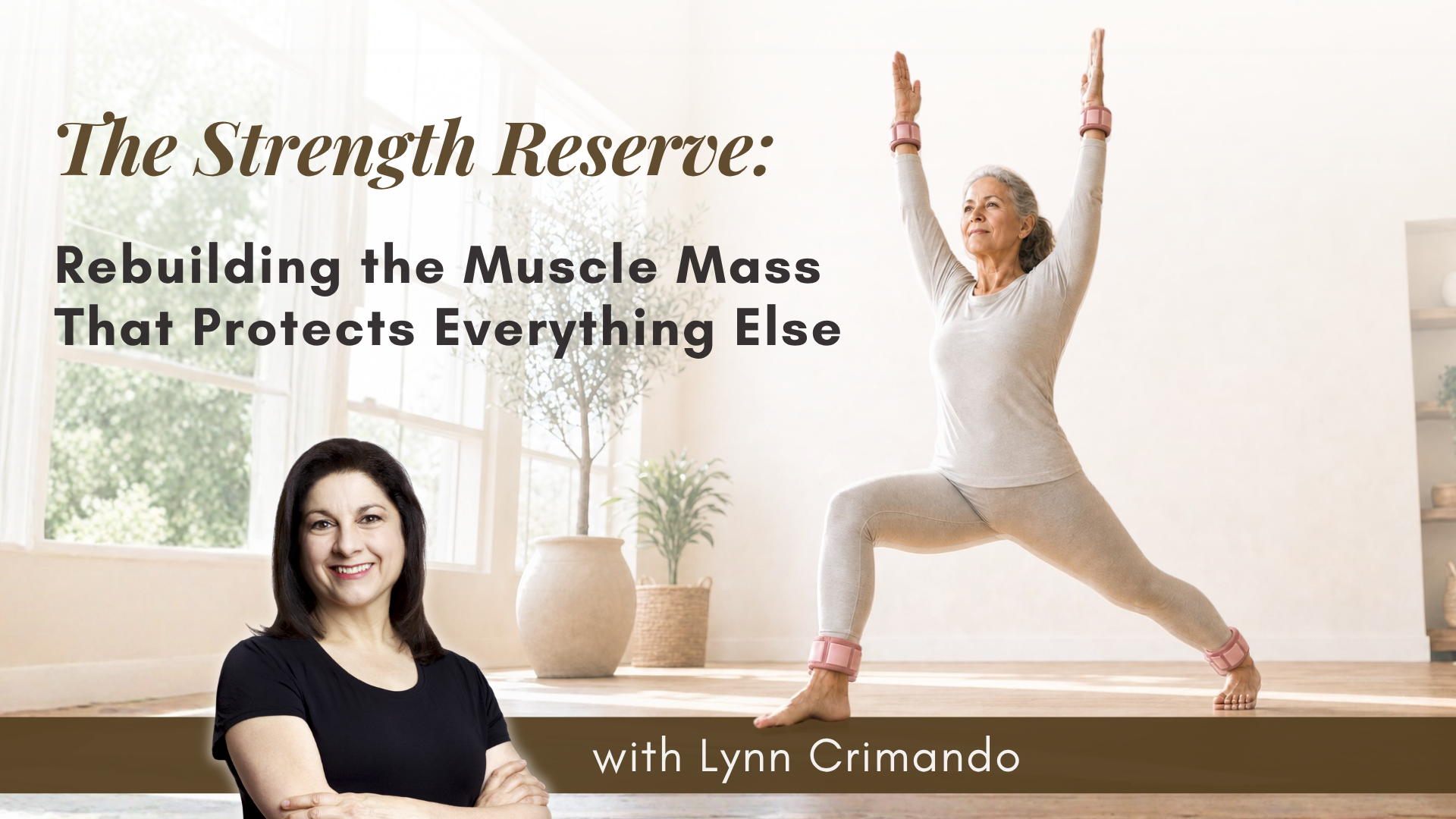
Discover why yoga and strength training is a marriage made in heaven!
Around age 50, the same workouts stop building strength the way they used to — this is a biological shift, not a discipline failure.
Muscle functions as one of the key buffers determining whether you bounce back quickly from illness, falls, or surgery, or get knocked down for months. In this 5-part series, you will learn how to use an integration of strength training and yoga to retain and rebuild muscle mass and power.
Workshop 1: The Reserve Tank - Why Two People the Same Age, Age So Differently
Some 70-year-olds bounce back from a bad flu or a hard fall in weeks. Others never fully recover. The difference isn't luck, it's reserve capacity, the buffer of strength and function your body keeps in the tank for exactly these moments. This session introduces the concept and shows you where your own reserve may already be running low, and why muscle is the fastest lever for rebuilding it.
Saturday, October 3 at 11 am ET/8 am PT
Workshop 2: The Resistance Problem - Why Your Muscles Stopped Listening to the Same Workout
After 50, muscle tissue becomes measurably less responsive to the stimuli that once maintained it, a shift researchers call anabolic resistance. This session unpacks what's actually happening inside the muscle cell and introduces the specific type of stimulus needed to break through resistance and get your body responding again.
Saturday, October 17 at 11 am ET/8 am PT
Workshop 3: The Weight of Doing Less - How Slowing Down Recruits More Muscle, Not Less
Intuition says more speed and more reps build more strength. The physiology says otherwise. This session explores tempo as a training variable, why extending the time a muscle spends under tension changes the recruitment pattern entirely, and gives you a practice that proves it within the first few minutes.
Saturday, November 7 at 11 am ET/8 am PT
Workshop 4: Load-Bearing for Healthy Bones - What Your Skeleton Actually Needs to Stay Dense
Bone doesn't respond to movement for its own sake. It responds to mechanical strain, meaning a bone-building stimulus requires real load, not just motion. This session distinguishes between a gentle held pose and the higher-force, near-maximal contraction your bones need to trigger remodeling, and shows you how to safely introduce that intensity into a yoga practice.
Saturday, December 12 at 11 am ET/8 am PT
Workshop 5: The Compound Interest Practice - One Sequence, Five Systems, Decades of Payoff
Strength, metabolism, stress regulation, balance, and everyday function rarely get trained together, but they don't operate separately in your body either. This closing session integrates everything from the series into a single sustainable sequence designed to keep compounding benefits for years, not just through the next workshop cycle.
Saturday, January 23 at 11 am ET / 8 am PT
Here's a Preview of this Semester's Upcoming Courses
Join Us Live or View the Recordings!
Happening in September
Happening in October
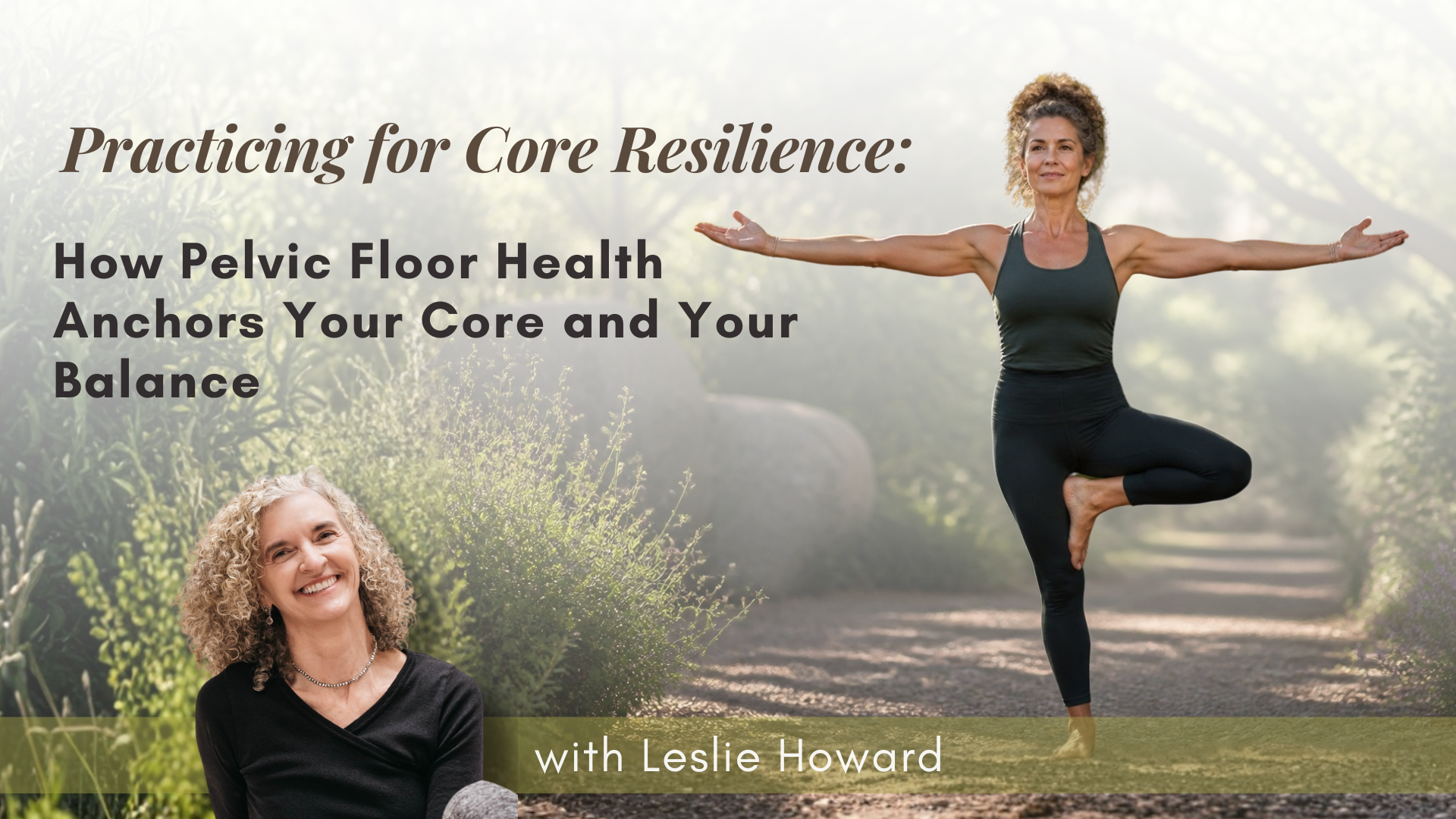
Practicing for Core Resilience:
How Pelvic Floor Health Anchors Your Core and Your Balance
In this 4-part practice series, pelvic floor expert Leslie will teach you yoga practices that effortlessly and holistically engage and tone the pelvic floor muscles, the vital base of the pressure system that stabilizes your spine with every step you take.
Most core training focuses on the muscles you can see, the abdominals, the back. But your pelvic floor is one of four walls of what researchers call the "core canister," working together with your diaphragm, deep abdominals, and multifidus to regulate the internal pressure that stabilizes your spine with every step you take.
When that system falls out of coordination, the effects ripple outward, forcing your lower back to overcompensate, undermining balance, and quietly increasing your risk of injury.
Learn how targeted yoga practices for pelvic floor balance can help you build an integrated core system for real-world stability — the same mechanism that lets you catch yourself on a stumble, lift something without strain, or maintain posture through a long day.
Join Leslie Howard Live Online for a one-hour practice followed by a Q&A!
Thursdays at 4:00 pm ET / 1:00 pm PT
September 17, 24, 29 & October 1
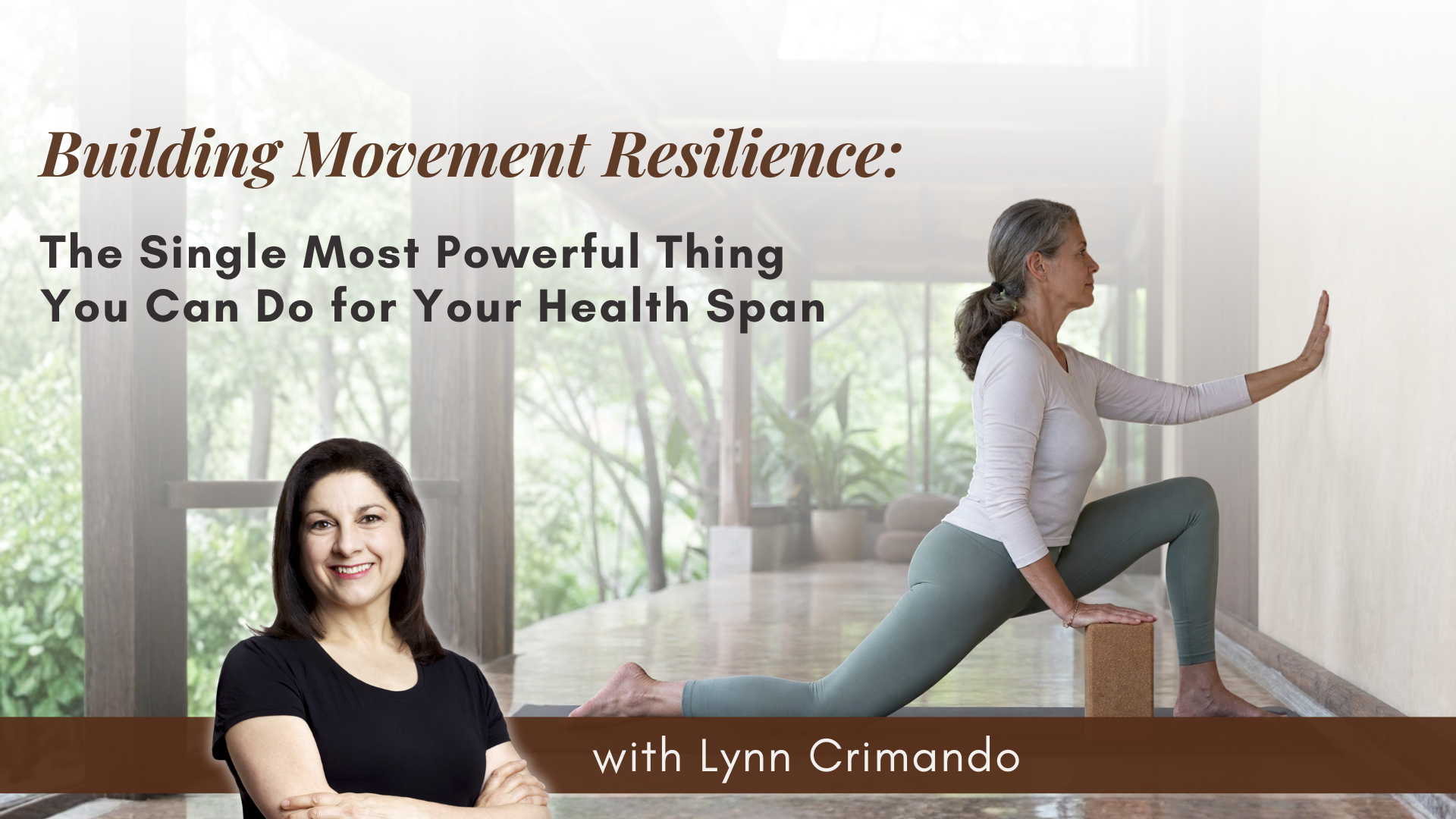
Building Movement Resilience:
The Single Most Powerful Thing You Can Do for Your Health Span
Retaining movement longevity is one of the most important overlooked tools for extending health span.
But age-related muscle loss and problems in feet, ankles and knees often undermine our ability to move and walk freely.
This series with yoga therapist Lynn Crimando rebuilds the foundation for a strong lower chain targeting feet, ankles, and legs to restore strength, mobility, and balance that naturally decline with age.
Learn to build a new foundation for moving with greater ease, preventing common limitations that trip up our freedom of movement over time.
Join Lynn Crimando Live Online for a one-hour practice followed by a Q&A!
Tuesdays at 1:00 pm ET / 10:00 am PT
October 6, 13, 20, & 27
Happening in November
Happening in December
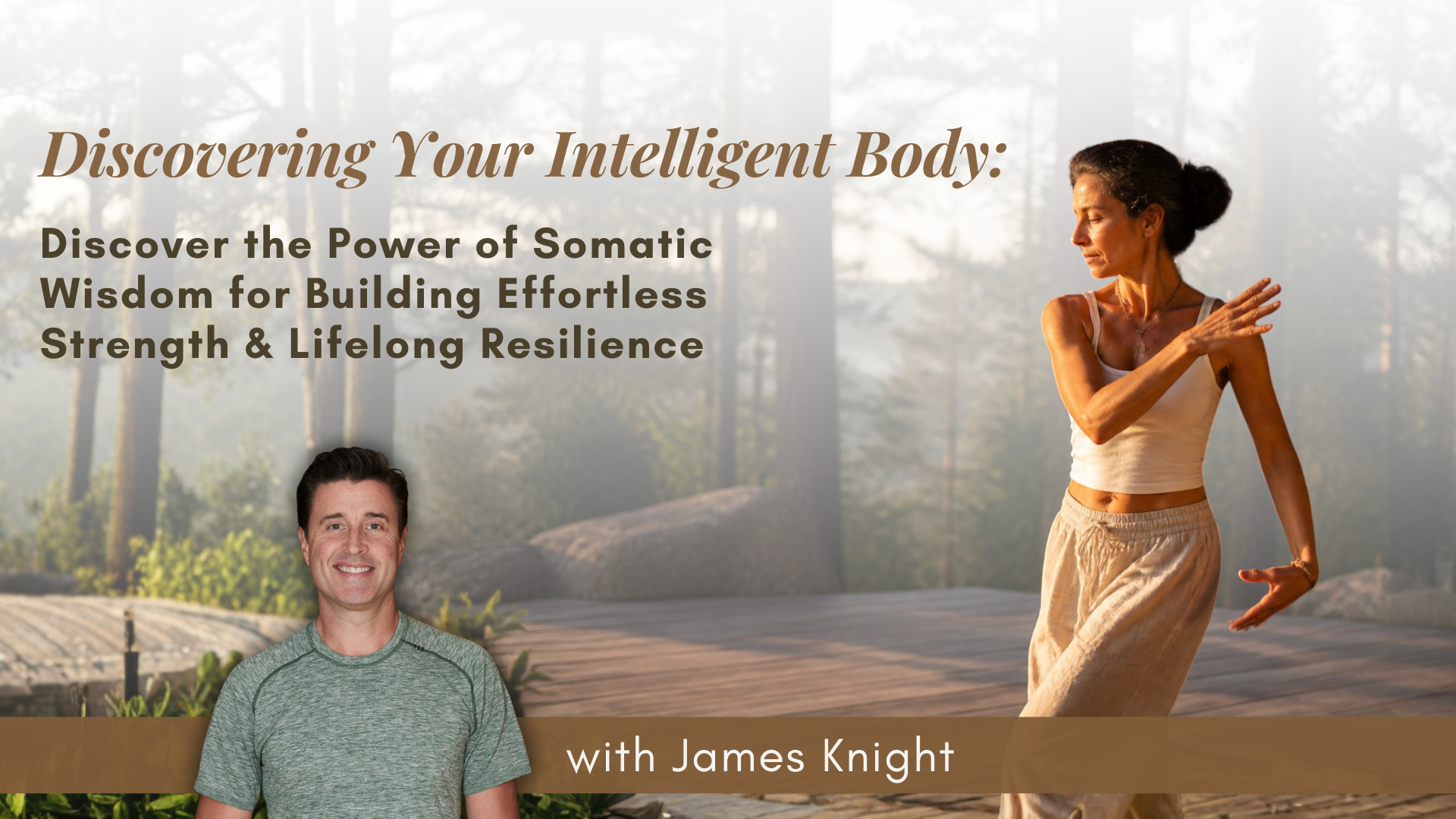
Discovering Your Intelligent Body:
Reconnecting with Somatic Wisdom™ for Building Effortless Strength & Lifelong Resilience
This four-part series with James Knight, founder of Gentle Somatic Yoga®, reframes healthy aging through Somatic Wisdom™ — teaching participants to listen to the body rather than just follow movement instructions.
Combining Gentle Somatic Yoga®, Somatic Movement Flows®, and practical daily strategies, it focuses on nervous system retraining and brain-to-muscle communication to build resilient strength, ease, and confidence in movement. Rather than treating aging as decline, the series cultivates curiosity, adaptability, and lifelong embodied growth.
Join James Knight Live Online for a one-hour practice followed by a Q&A!
Mondays at 4:00 pm ET / 1:00 pm PT
November 9,16,23 & 30
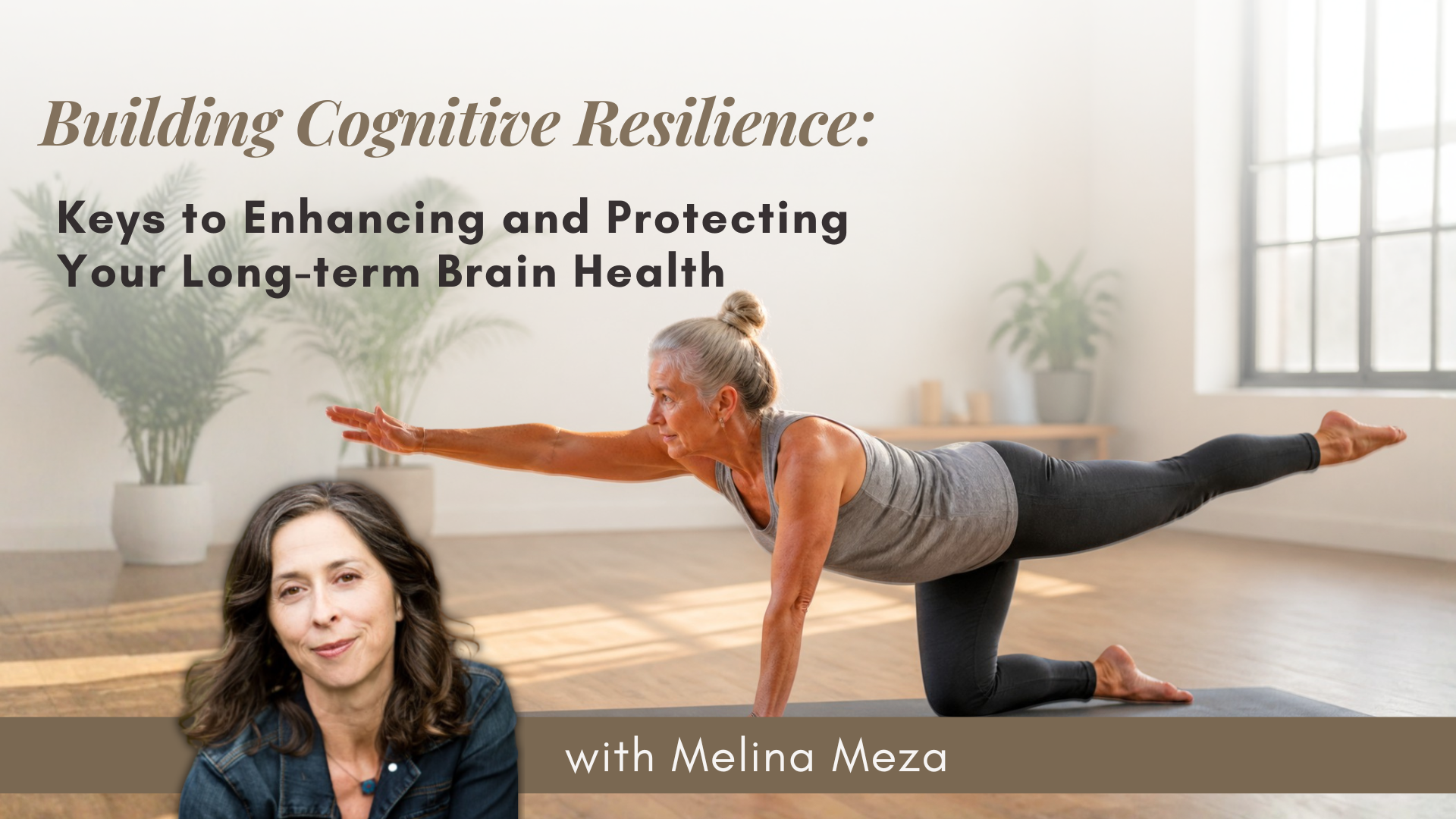
Building Cognitive Resilience:
Keys to Enhancing and Protecting Your Long-term Brain Health
Cognitive reserve — the brain's protective buffer against dementia and Alzheimer's — isn't inherited but built through modifiable lifestyle factors, with movement and yoga showing some of the strongest evidence.
Research links yoga's balance and coordination training to measurable memory improvements within 12 weeks, a larger hippocampus with sustained practice, and reduced fall risk, while breath-based attention training keeps neural networks active.
This series builds cognitive resilience through balance, coordination, and mindful movement practices designed to protect memory, independence, and quality of life long-term.
Join Melina Meza Live Online for a one-hour practice followed by a Q&A!
Tuesdays at 4:00 pm ET / 1:00 pm PT
December 1,8,15 & 22
Happening in January
Happening in February
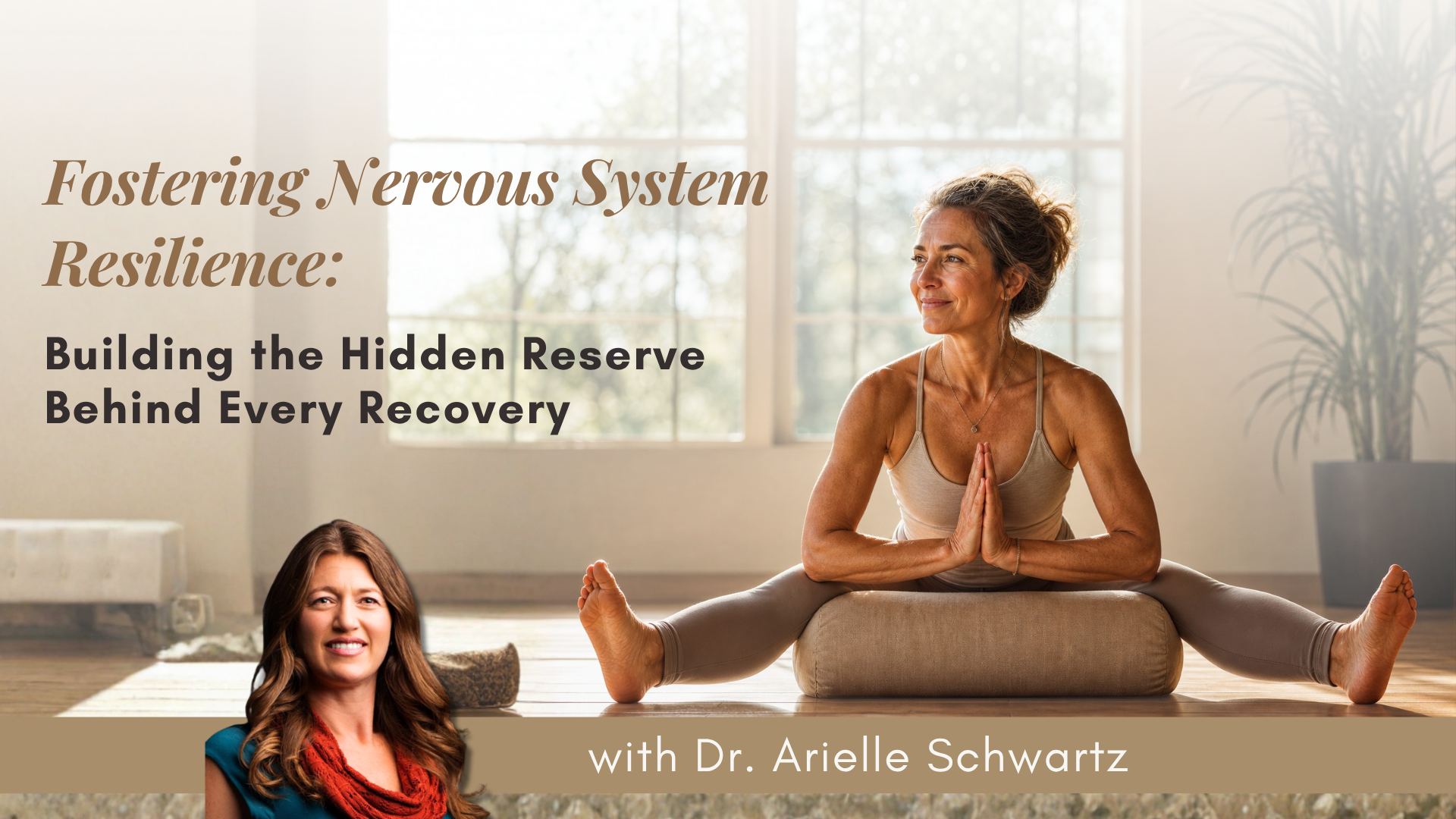
Fostering Nervous System Resilience: Building the Hidden Reserve Behind Every Recovery
Nervous system resilience — your body's capacity to recover from stress — is a trainable reserve centered on the vagus nerve, with vagal tone (measured via heart rate variability) linked to faster stress recovery, better emotional regulation, and stronger heart and cognitive function. Led by psychologist Dr. Arielle Schwartz, this series uses breathwork, gentle self-applied touch, and yoga postures to build the nervous system's capacity to recover from daily stress rather than just manage it. This work complements the physical reserve built elsewhere in the Age Strong program, strengthening the foundation for a longer, more resilient health span.
Join Dr. Arielle Schwartz Live Online for a one-hour practice followed by a Q&A!
Friday at 4:00 pm ET / 1:00 pm PT
January 15 & 29 and Tuesday, February 9
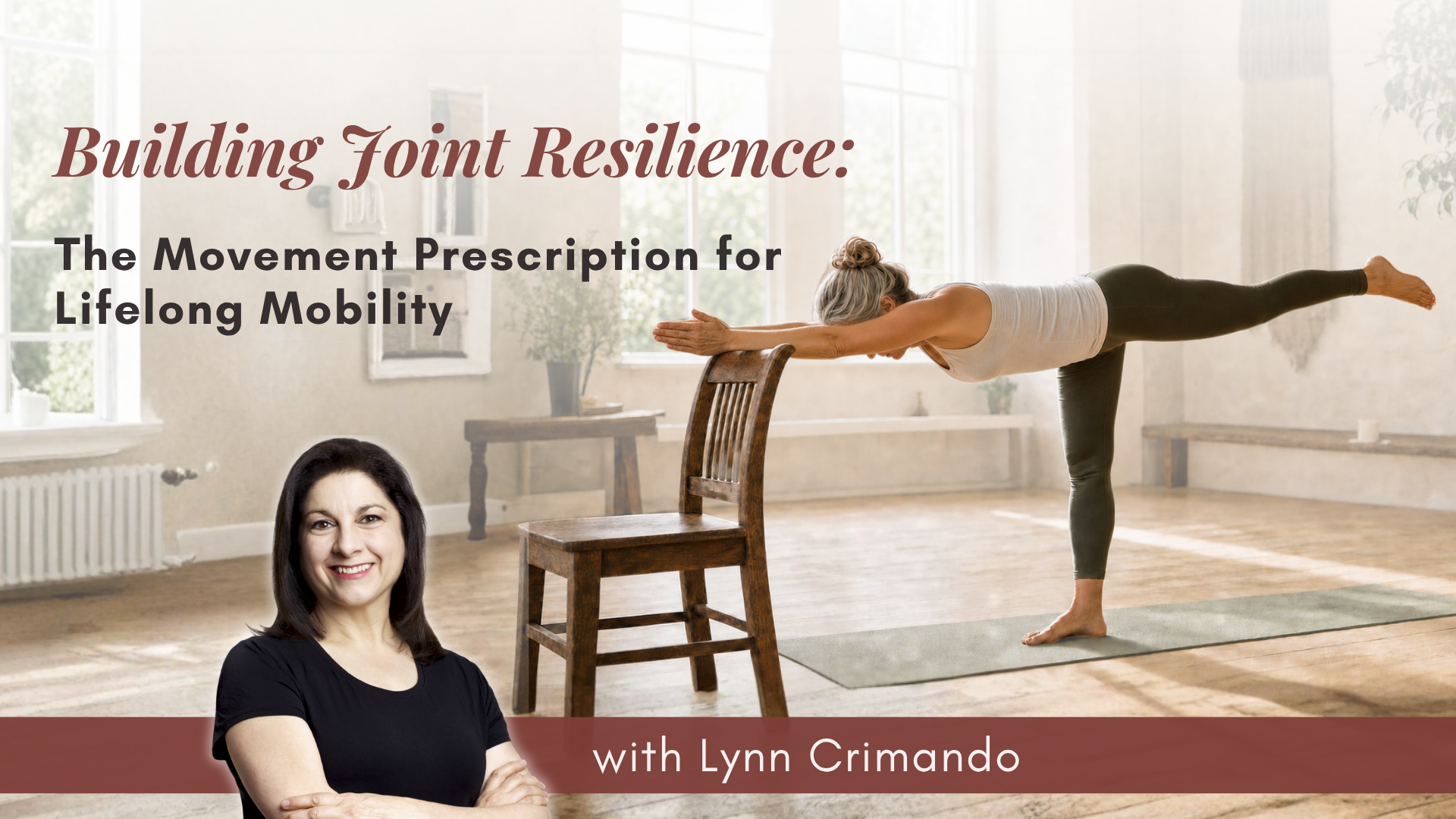
Building Joint Resilience:
The Movement Prescription for Lifelong Mobility
Joints aren't wearing out — they're adaptive structures that depend on movement itself to nourish cartilage and stay resilient, while prolonged stillness (not motion) is often what causes damage. Stiffness develops when supporting muscles, fascia, and ligaments weaken and compensate for each other, and the nervous system can lock in protective guarding patterns long after an injury heals. Building Joint Resilience combines joint biology education, targeted strengthening for hips, knees, and shoulders, and nervous system retraining to release guarding patterns, leaving you with a sustainable practice for lasting joint freedom.
Join Live Online for a one-hour practice followed by a Q&A!
Wednesdays at 1:00 pm ET / 10:00 am PT
February 3,10,17 & 24
Also Featured! Dr. Baxter Bell!
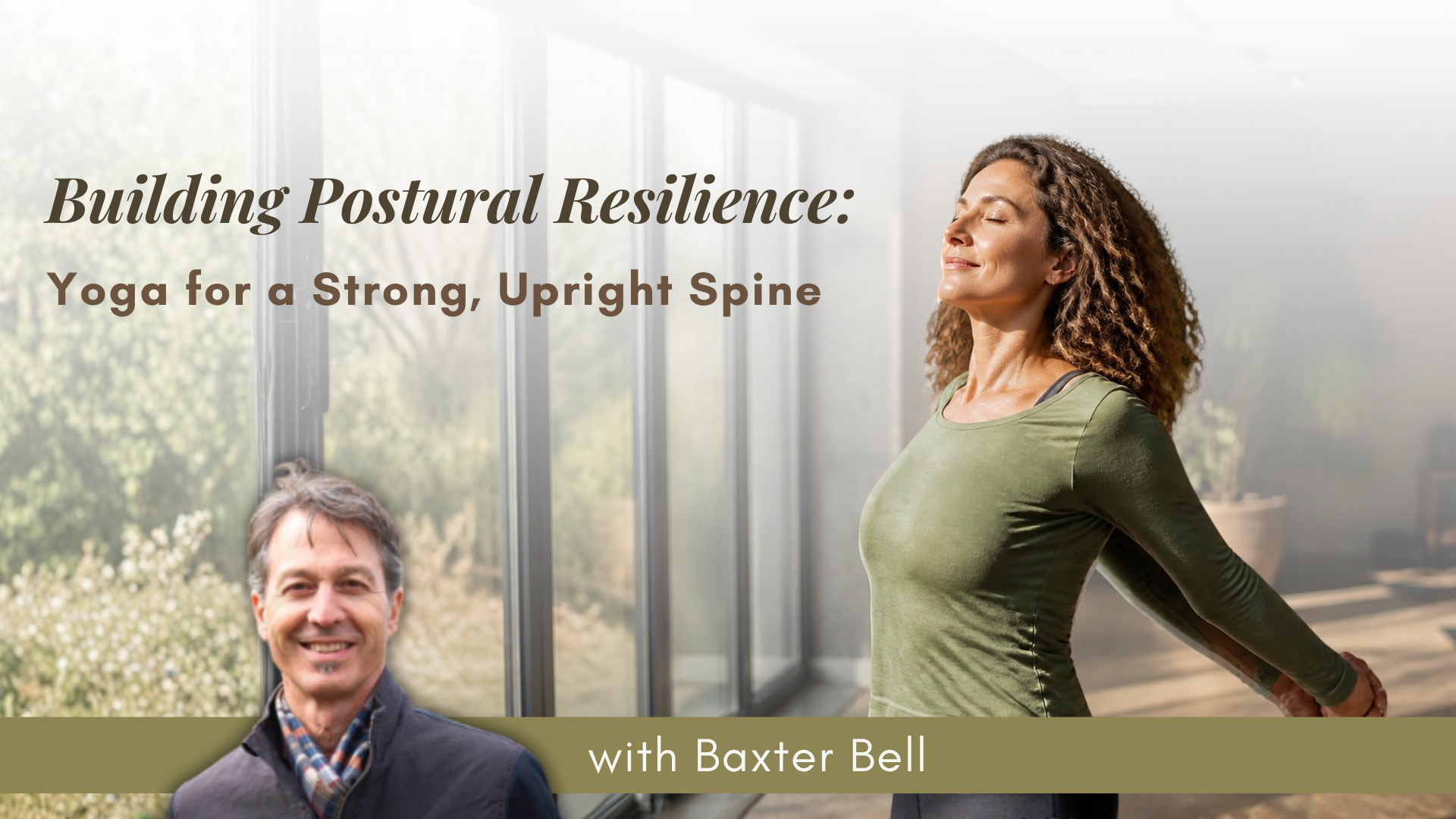
Building Postural Resilience:
Yoga for a Strong, Upright Spine
Hyperkyphosis — the forward spinal curve affecting roughly 40 percent of older adults — isn't just cosmetic; it worsens balance, slows walking, reduces lung capacity, and nearly doubles fall risk while independently raising fracture risk through mechanical loading on the spine. A UCLA randomized controlled trial found that six months of targeted yoga measurably improved spinal curvature in participants averaging 75 years old, proving the condition is remediable rather than inevitable. Building Postural Resilience strengthens back muscles, releases tight chest and hip muscles, and builds spinal alignment awareness to interrupt the cycle linking poor posture and fracture risk.
Join Live Online for a one-hour practice followed by a Q&A!
AGE STRONG FOR LIFE:
Your Complete Roadmap
This isn't one of those membership programs where you're left wondering what to do next.
Age Strong for Life follows a step-by-step roadmap that gives you the knowledge, practices, and confidence to take meaningful action on your muscles, bones, joints, to help you gradually build or retain a high level of reserve capacity. You'll be guided in live sessions every single week, and we'll be right there supporting you.
* ALSO CATCH OUR EARLY BIRD BONUSES *
Register Before the Early Bird Deadline and Also Get This Amazing Bonus Course with Dr. Ginger Garner!
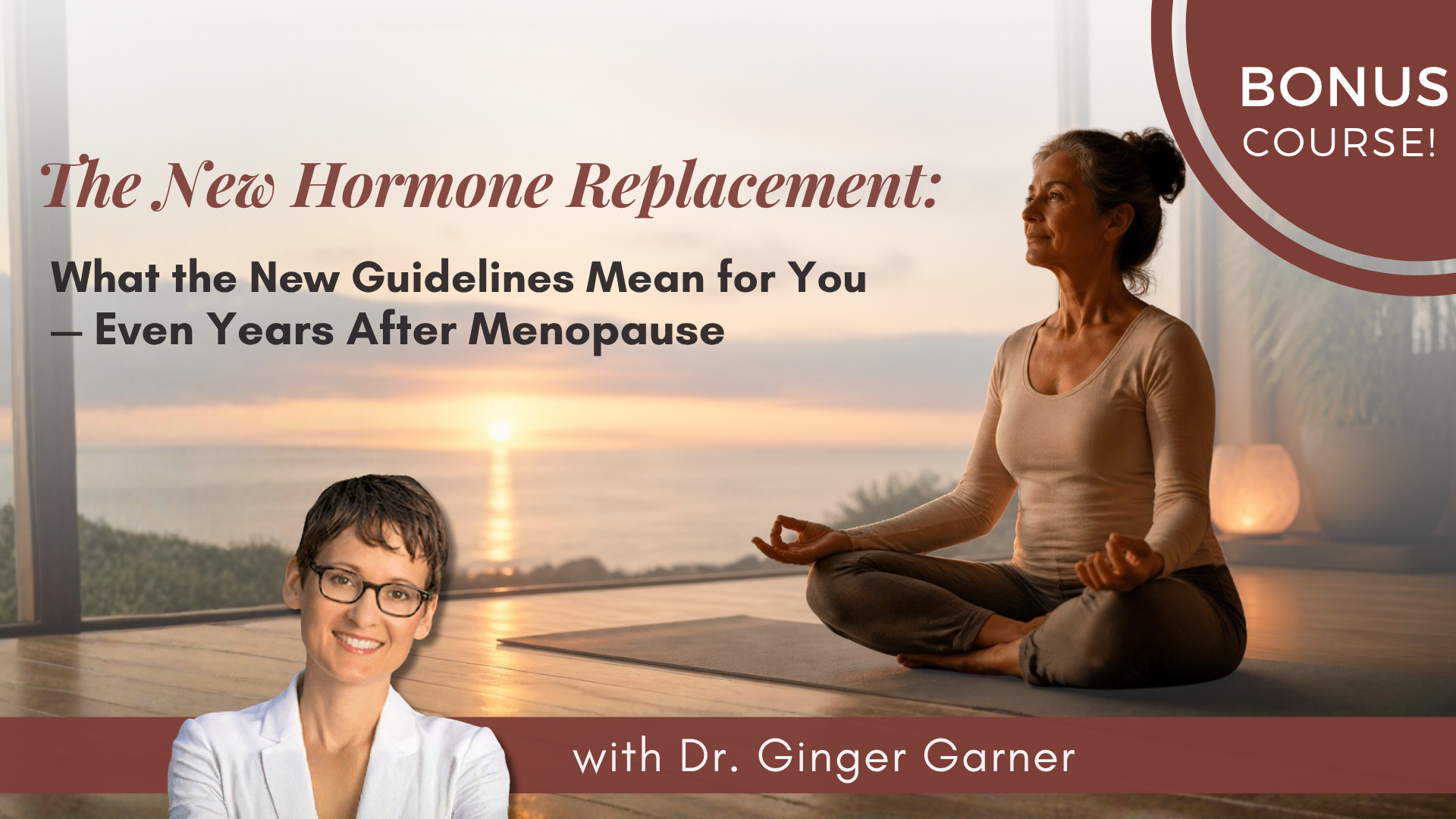
The New Hormone Replacement: What the New Guidelines Mean for You — Even Years After Menopause
For decades, women were told there was a narrow "window" for starting hormone replacement therapy — and if you missed it, the door was closed for good. That guidance is now being revisited.
Join Dr. Ginger Garner for this bonus workshop as she breaks down the evolving research and updated clinical guidelines on hormone replacement therapy (HRT) — and what they actually mean if you're 10, 15, or even 20 years past menopause.
You'll learn:
- Why the medical guidance around HRT has shifted, and what prompted the reassessment
- What the "timing hypothesis" really says — and doesn't say — about starting HRT later in life
- The risks and benefits worth understanding at each stage: 10 years out, 15 years out, and 20+ years out from menopause
- Questions to bring to your own doctor to advocate for an informed, personalized conversation
- How hormone health connects to the broader picture of building reserve capacity and long-term vitality
Whether you're currently on HRT, stopped years ago, or never started, this session will help you understand where the science stands today — and what options may still be worth exploring for your own health and longevity.
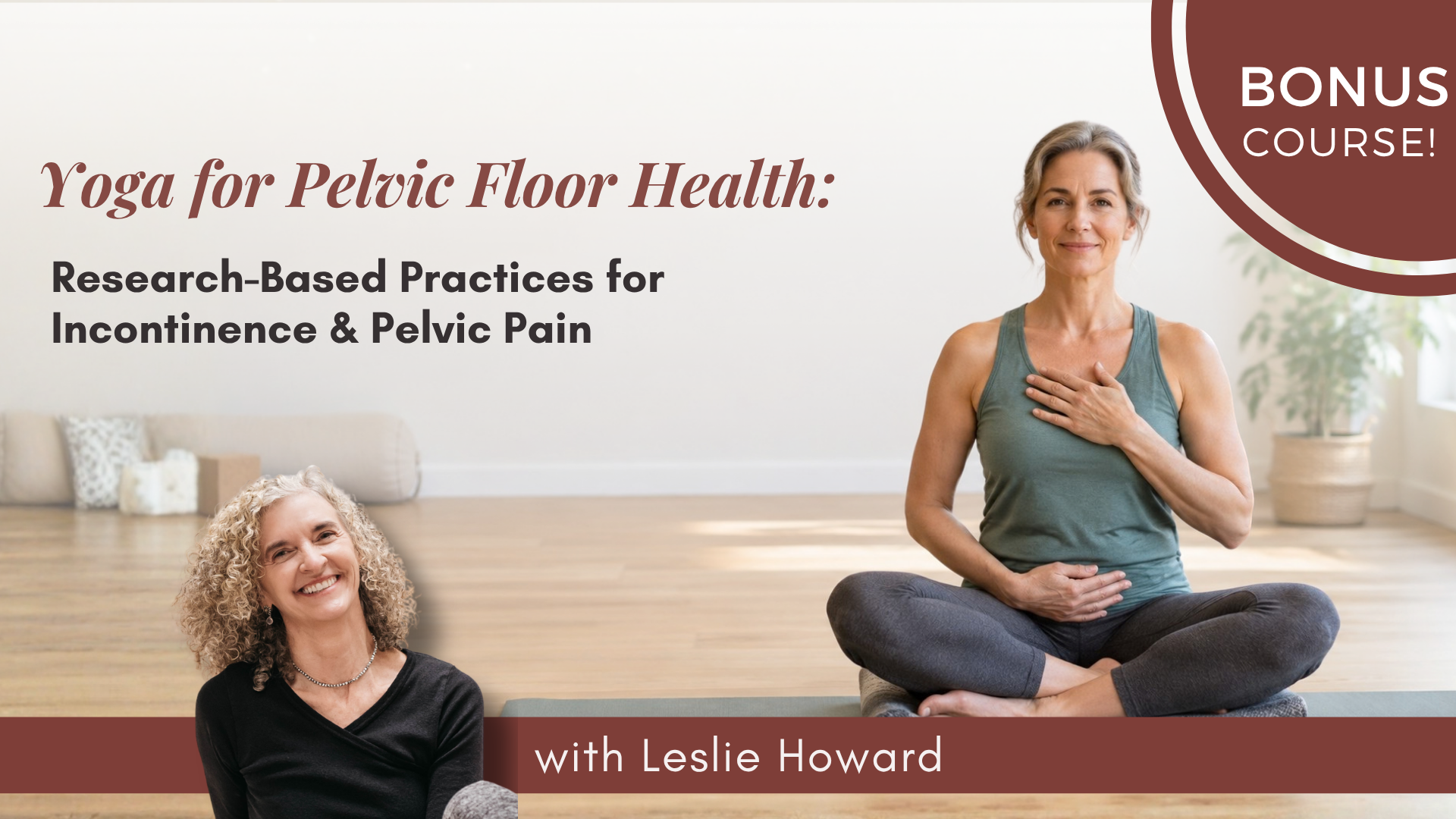
Yoga for Pelvic Floor Health: Research-Based Practices for Incontinence & Pelvic Pain
What You Will Learn:
- The anatomy and physiology of the pelvic floor and factors that may contribute to incontinence following pregnancy or menopause
- Practices that help develop pelvic floor awareness and teach you how to engage the pelvic floor in yoga poses
- How to recognize whether your symptoms may be associated with an overly weak or overly tight pelvic floor
- The keys to balanced pelvic floor engagement and how to use yoga postures and breathing practices to address different patterns of imbalance
- How to release and stretch overactive muscles that may contribute to pelvic pain.
Recordings Available
This Program Is for You If…
-
You're over 45 and want to build the reserve that determines how well you recover from whatever the next decade brings, not just react after the fact.
-
You've watched someone your age bounce back from a health crisis while another never fully recovered, and you want to know why, and what you can do about it.
-
You want expert guidance from nationally recognized specialists, not generic fitness content.
- You've noticed you're losing strength, and everyday tasks, getting out of a chair, carrying groceries, climbing stairs, are getting harder.
-
You're concerned about fracture risk or bouncing back from a fall, surgery, or illness.
-
Early joint pain or stiffness has started limiting your movement, and you know that when movement stops, everything else gets worse.
-
You want to do yoga but you're worried about injury in classes not designed for your body.
Your Next Step

Chronic disease doesn't happen overnight. It's built — silently — over decades. But so is vibrant health.
Every expert-led yoga class you take, every workshop that strengthens your understanding of your muscles, bones, and joints, every strategy you add to your Health Span is another layer of protection against the decline that so many people accept as inevitable.
It doesn't have to be inevitable. And now you have the program to prove it.
Join Age Strong for Life today and start building health span across all 3+1 Pillars of Healthy Aging!
SAVE 75%!
Membership registration is available for a limited time only! Everything you need to build your reserve capacity and movement longevity across all the dimensions.
If you were to join each program individually, the cost would be $197 a month.
You pay only $47 - a 75% savings!

I've Still Got Questions
No problem - check out the most frequently asked ones below...