Building Cognitive Resilience
Keys to Enhancing and Protecting Your Long-term Brain Health
Your brain is adaptable. Your movement can help keep it that way.
Research into cognitive aging has revealed an important concept called cognitive reserve: the brain's ability to continue functioning well despite age-related changes. Over four live sessions, Melina Meza explores how movement, balance, breath, and attention can support it.
Four live sessions, Tuesdays at 4:00 pm ET / 1:00 pm PT
December 1,8,15 & 22
Your core is more than your abs
Most core training focuses on the muscles you can see. The abdominals in front, the back behind, and whatever a mirror rewards.
True core resilience starts deeper, in a system that works quietly and constantly whether or not you are thinking about it.
Think of your torso as a canister with four walls. Those walls manage the pressure inside your abdomen, and that pressure is part of how your spine stays steady while you move.
When the walls coordinate well, movement feels supported. When they do not, other structures tend to pick up the slack.
The Core Canister
Four walls, one system
These structures are usually trained separately. They work together, regulating pressure and reducing shear and bending stress on the lumbar spine as you move.
Above
Diaphragm
The breathing muscle that forms the roof and sets the rhythm the rest of the system follows.
In front
Deep abdominals
The front wall, wrapping the waist and responding to changes in pressure.
Behind
Multifidus
Small deep muscles along the spine that support it segment by segment.
Below
Pelvic floor
The base of the canister, and the wall most often left out of core work.
What you'll discover
Four ideas carry the series, each one paired with practice.
Understanding the core canister
Meet the diaphragm, deep abdominals, multifidus, and the floor of the pelvis as one coordinated, pressurized system rather than four isolated muscles.
Why core coordination matters
Poor coordination, not weakness alone, can leave the lower back compensating and may add strain during ordinary movement.
Connecting the core to everyday balance
Catching yourself during a stumble, lifting something without unnecessary strain, holding good posture through a long day. This is where an integrated core shows up.
Why isolated exercises aren't the whole answer
Training the base of the pelvis works better when it is approached as part of a system that includes breath and the rest of the core.
From isolated strength to integrated resilience
Kegels have their place, but research suggests that isolated training on its own is not necessarily enough to change functional outcomes such as mobility, gait speed, or standing balance.
What seems to matter more is timing. When the diaphragm, the abdominal wall, and the floor of the pelvis respond together, pressure inside the abdomen is managed well and the spine has a steady base to work from.
Yoga is well suited to this kind of learning, because breath and movement are already trained in the same practice.
The goal is not to strengthen one muscle group. It is to help the whole system work as one.
Your Teacher
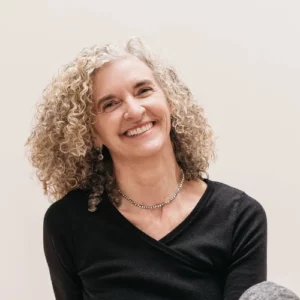
Meet Leslie Howard
C-IAYT, E-RYT500, LMT
Oakland-based yoga teacher, specializing in all things pelvic. She leads workshops and trainings worldwide and has written a book about caring for the female pelvis, Pelvic Liberation. She has designed two very successful studies for UCSF on how to use yoga to alleviate incontinence and pelvic pain.
In 2022, after losing a long-time student, she took a deep dive into the subject of yoga and death. She has 60 hours of Death Doula training, runs a regular Death Café (a place to come and talk about death) and is volunteering in hospice care for Kaiser Oakland. She is currently writing a book about Savasana and accepting death. Her teaching is informed by over 3500 hours of yoga study with senior Iyengar yoga teachers. She considers Ramanand Patel her most important influence and mentor.
Who this series is for:
-
People who want to build core awareness beyond surface strength
-
Practitioners interested in supporting balance and steadiness on their feet
-
Anyone curious about pelvic health and how it relates to the rest of the body
-
Movers who want more coordinated, efficient movement
-
Adults focused on mobility and healthy aging over the long term
-
Yoga students exploring practices for whole-body resilience
This series is educational. It is not a treatment program and does not diagnose or address medical conditions. If you have specific health concerns, please speak with your healthcare provider.
Live Series Schedule
Four sessions at 4:00 pm ET / 1:00pm PT
Session 1
September 17
4:00 pm ET / 1:00 pm PT
Session 2
September 24
4:00 pm ET / 1:00 pm PT
Session 3
September 29
4:00 pm ET / 1:00 pm PT
Session 4
October 1
4:00 pm ET / 1:00 pm PT
Build a stronger foundation for movement
Join Leslie Howard for a practice series on the deep coordination that supports your core, your breath, and your balance.