Live Sessions
MONTHLY OVERVIEW
Access Full Calendar Below
CALENDAR OVERVIEWNOVEMBER
James Knight
Discovering Your Intelligent Body:
Reconnecting with Somatic Wisdom™
Mondays at 4:00 pm ET / 1:00 pm PT
November 9,16,23 & 30
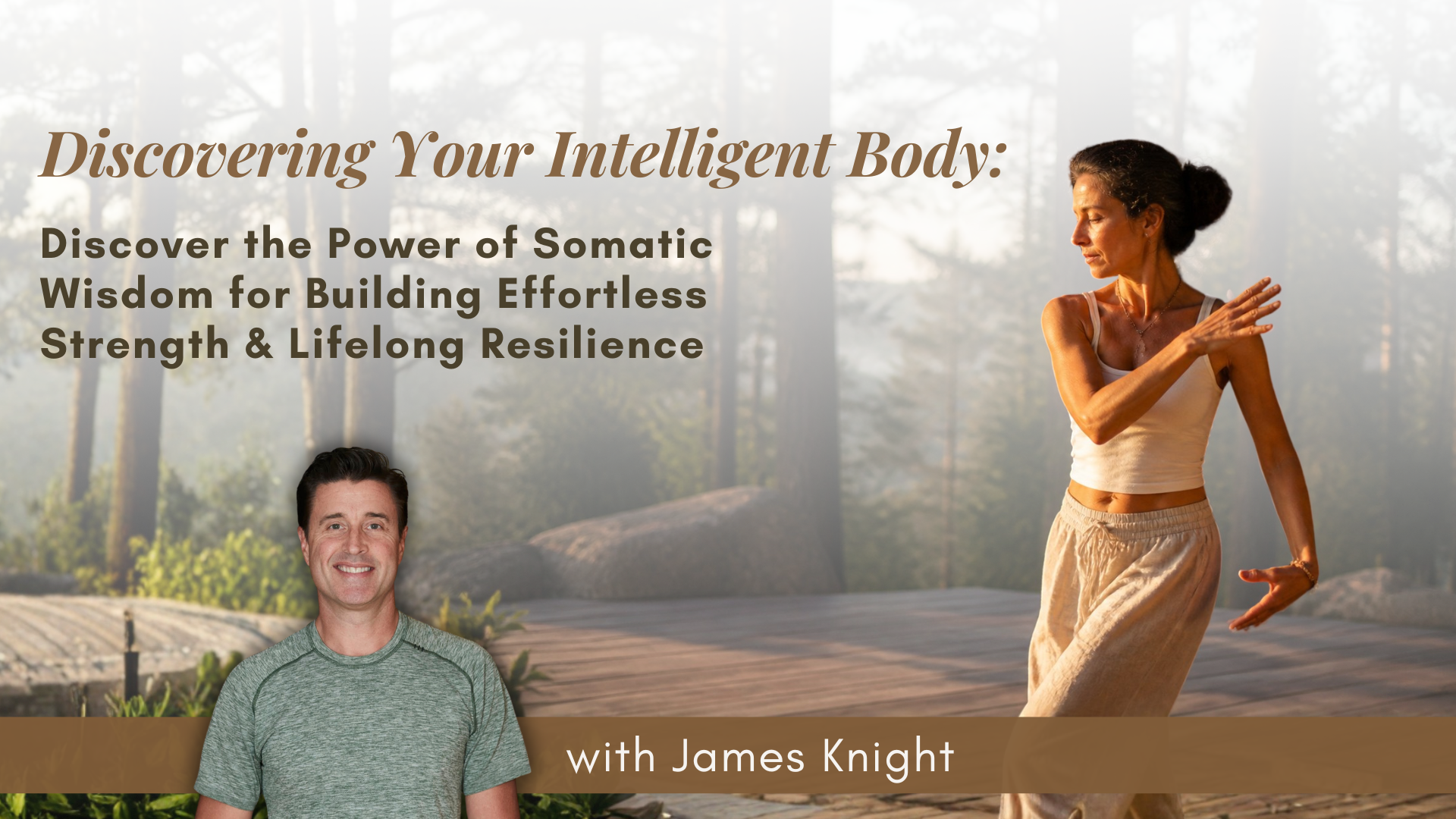
Aging is not the ending of your story—it is an invitation to keep writing it.
Join yoga teacher James Knight, founder of Gentle Somatic Yoga®, for a transformational four-part journey that will redefine your relationship with your body and your understanding of what movement and exercise can be.
This is not another program to help you hold on to what you have. It's an invitation to remember, repattern, strengthen, and embody a version of yourself with more freedom, resilience, and joy than you may have thought possible.
In this four-part series, James Knight introduces a fresh perspective on healthy aging through the lens of Somatic Wisdom™. Rather than focusing solely on muscles, flexibility, or exercise, participants will learn how the nervous system, brain-to-muscle communication, and mindful movement work together to create resilient strength, greater ease, and more pleasure in everyday movement.
Each session in this series combines Gentle Somatic Yoga®, Somatic Movement Flows®, and practical strategies that can immediately be integrated into daily life. While every practice in the series stands on its own, together they offer a progressive journey from increasing awareness to creating sustainable movement patterns that support resilience, independence, and vitality for years to come.
DECEMBER
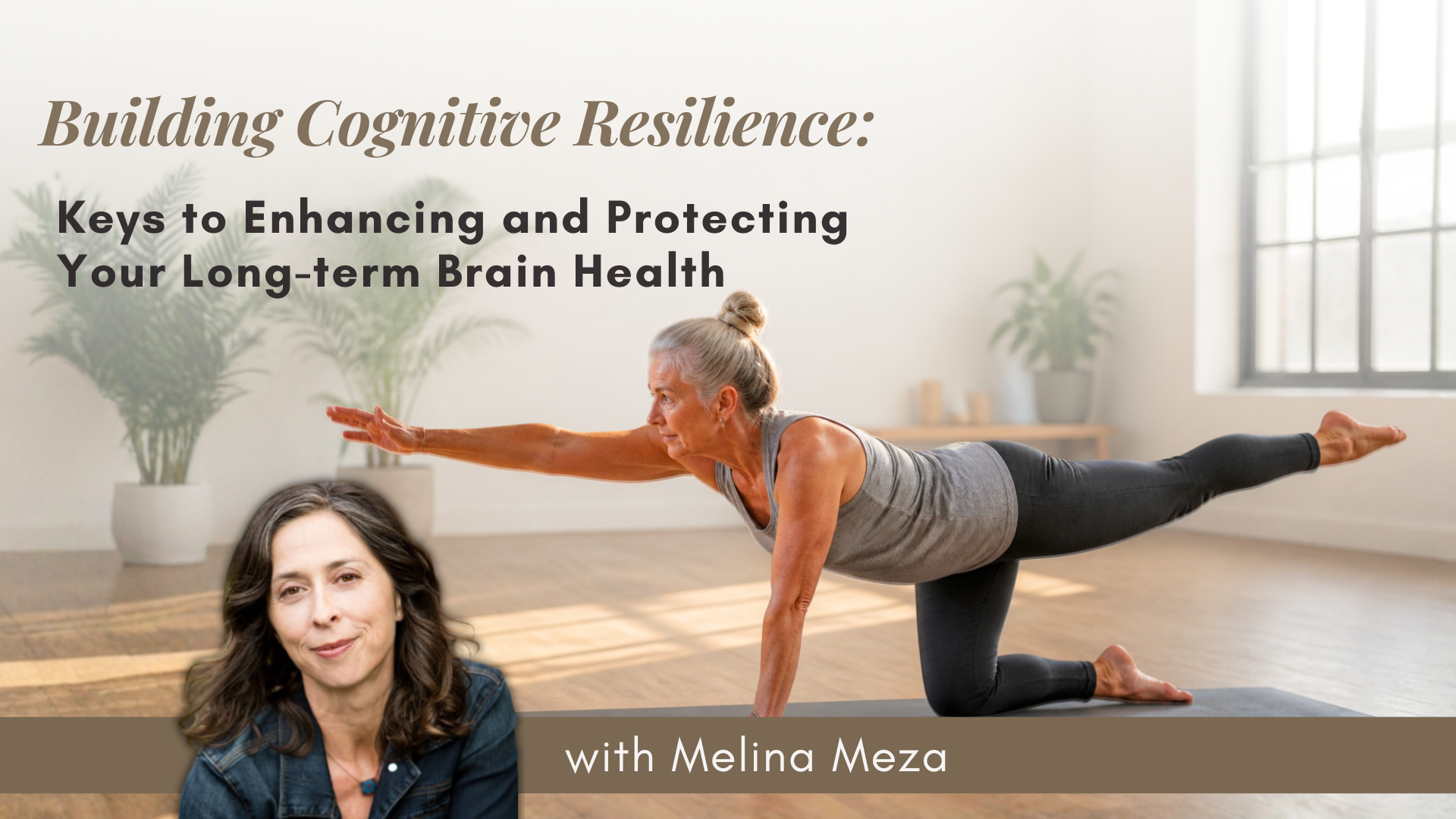
Melina Meza
Building Cognitive Resilience:
Keys to Enhancing and Protecting Your Long-term Brain Health
Tuesdays at 4:00 pm ET / 1:00 pm PT
December 1,8,15 & 22
For decades, one of neuroscience's greatest mysteries was this: why do some people's brains show the physical changes linked to dementia and Alzheimer's, while their minds and memory stay perfectly sharp?
A long-term study on Catholic nuns helped resolve this puzzle. When researchers examined their brains after death, some showed the full physical hallmarks of Alzheimer's disease — plaques, tangles, all the classic markers. Yet these women had shown no signs of memory loss while alive.
Something protected them from ever experiencing the effects of that disease. Researchers call it cognitive reserve — a mental buffer, built over a lifetime, that lets some brains keep functioning well despite age-related wear and tear.
Here's the hopeful part: cognitive reserve isn't something you're born with. It's something you build. Researchers estimate that up to 45 percent of dementia cases worldwide may be preventable or delayable through modifiable lifestyle factors.
So what builds it? Not crossword puzzles or brain-training apps, despite popular claims. The stronger research evidence points to something simpler: movement, and yoga in particular.
JANUARY
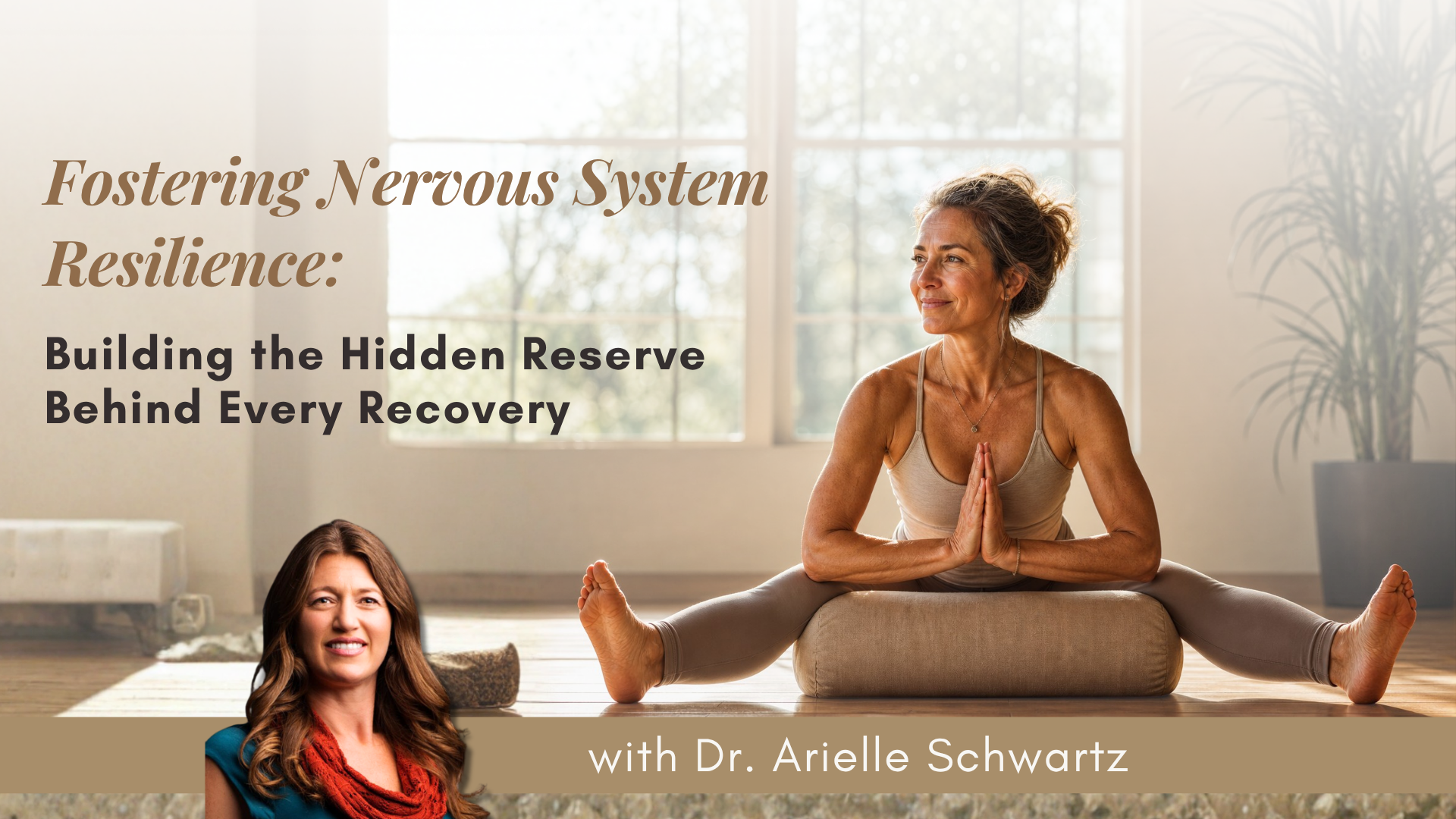
Dr. Arielle Schwartz
Fostering Nervous System Resilience:
Building the Hidden Reserve Behind Every Recovery
Friday at 4:00 pm ET / 1:00 pm PT
January 15 & 29 and Tuesday, February 9
Two people face the same stressor — an illness, a stumble, a stressful week — and one bounces back quickly while the other struggles for weeks. What explains the difference?
Researchers refer to this capacity as nervous system resilience, and building it may be one of the most powerful, overlooked things we can do for our long-term health. Nervous system resilience isn't a fixed feature — it can be cultivated at any age.
Much of the conversation around building reserve focuses on muscles and joints. But your nervous system has its own reserve capacity, centered on the vagus nerve, the primary regulator of your body's "rest and recover" response. Researchers track this through vagal tone, often measured via heart rate variability, or HRV — a marker increasingly used to gauge physiological resilience more broadly. Higher vagal tone is linked to faster stress recovery, better emotional regulation, and stronger cardiovascular and cognitive function.
In other words, your nervous system's reserve capacity shapes how well every other system in your body — heart, muscles, immune function, mind — can absorb stress and bounce back.
The good news? This capacity can be enhanced, and yoga is one of the best ways to help reshape the nervous system's ability to respond effectively to challenges.
FEBRUARY
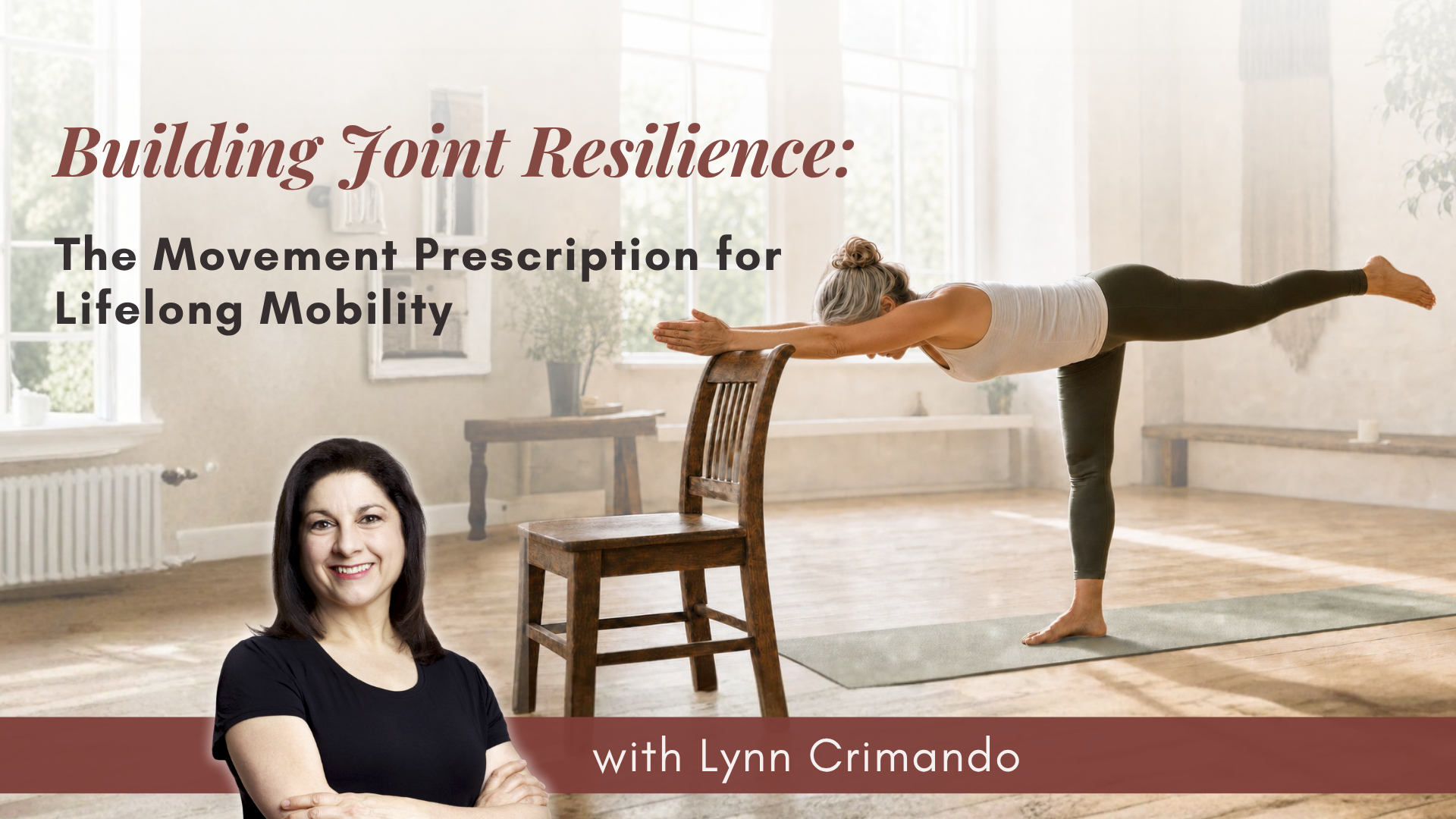
Lynn Crimando
Building Joint Resilience:
The Movement Prescription for Lifelong Mobility
Wednesdays at 1:00 pm ET / 10:00 am PT
February 3,10,17 & 24
Want to move through life without your knees, hips, or shoulders holding you back? Here's a shift in thinking most people never learn: your joints aren't wearing out. They're waiting to be trained.
Joints are living, adaptive structures that respond to how you use them. Cartilage has no direct blood supply and depends almost entirely on movement to receive nutrients and clear waste. Movement isn't just safe for your joints. It's what keeps them alive, and prolonged stillness is often more damaging than motion itself.
Unfortunately, joints quietly stiffen over the years. A joint is never protected by one structure alone; it's supported by a web of muscles, fascia, and ligaments, and when one part weakens, the others compensate, creating wear and instability. After an injury or flare-up, the nervous system often develops a protective guarding pattern, restricting movement long after healing has occurred.
The good news is that this can be reversed. Joints that stiffen with disuse can regain fluidity, strength, and confidence, not through more effort, but through smarter, more intelligent movement.
Across four sessions, Building Joint Resilience guides you through the biology of joint health, targeted strengthening for vulnerable joints like hips, knees, and shoulders, and gentle nervous system retraining to release guarding patterns that may be limiting your range. You'll leave with a simple, sustainable daily practice and real confidence in your body's ability to keep moving freely for years to come.
MARCH
Mia Perry
Release & Restore:
Yoga for Myofascial Mobility and Ease
Coming Soon!
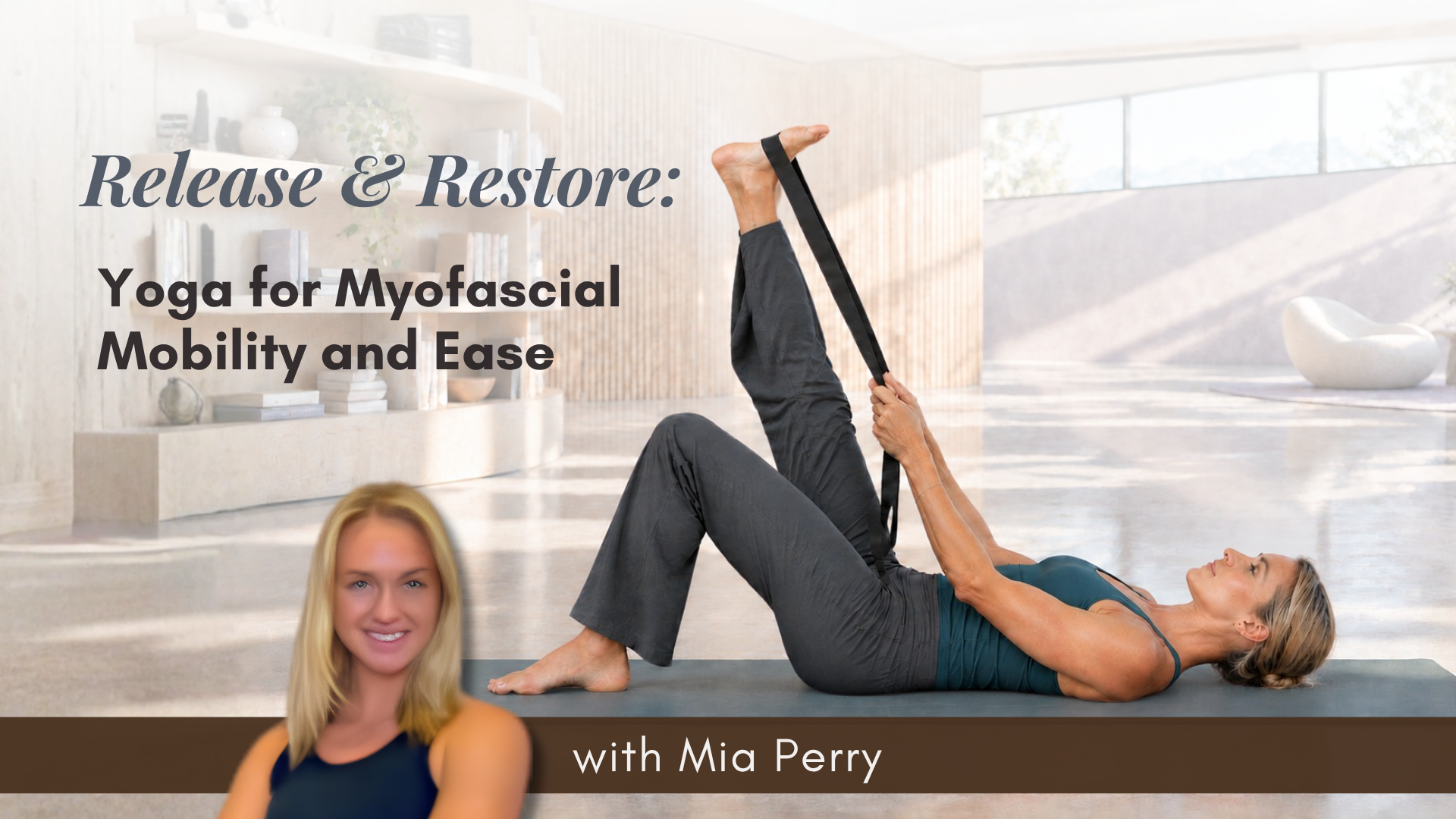
What if the answer to stiffness isn’t stretching harder—but learning how to release more intelligently?
Fascia is the body-wide connective-tissue network that helps your muscles, joints, and other structures move together. Over time, habitual postures, repetitive movement, stress, and long periods of inactivity can leave certain areas feeling tight, compressed, and resistant to movement.
In this four-part Age Strong Yoga Practice series, Mia from AL!VE Yoga draws on her Yin Yoga background to offer a gentle yet powerful approach to myofascial release. Using mindful movement, sustained but moderate pressure, breath, and sensory awareness, you’ll explore common areas of tension without forcing your body into deeper stretches.
Discover how less effort and more attention can help you unwind deeply held tension, restore a sense of glide and spaciousness, and move through life with greater freedom and ease.
APRIL
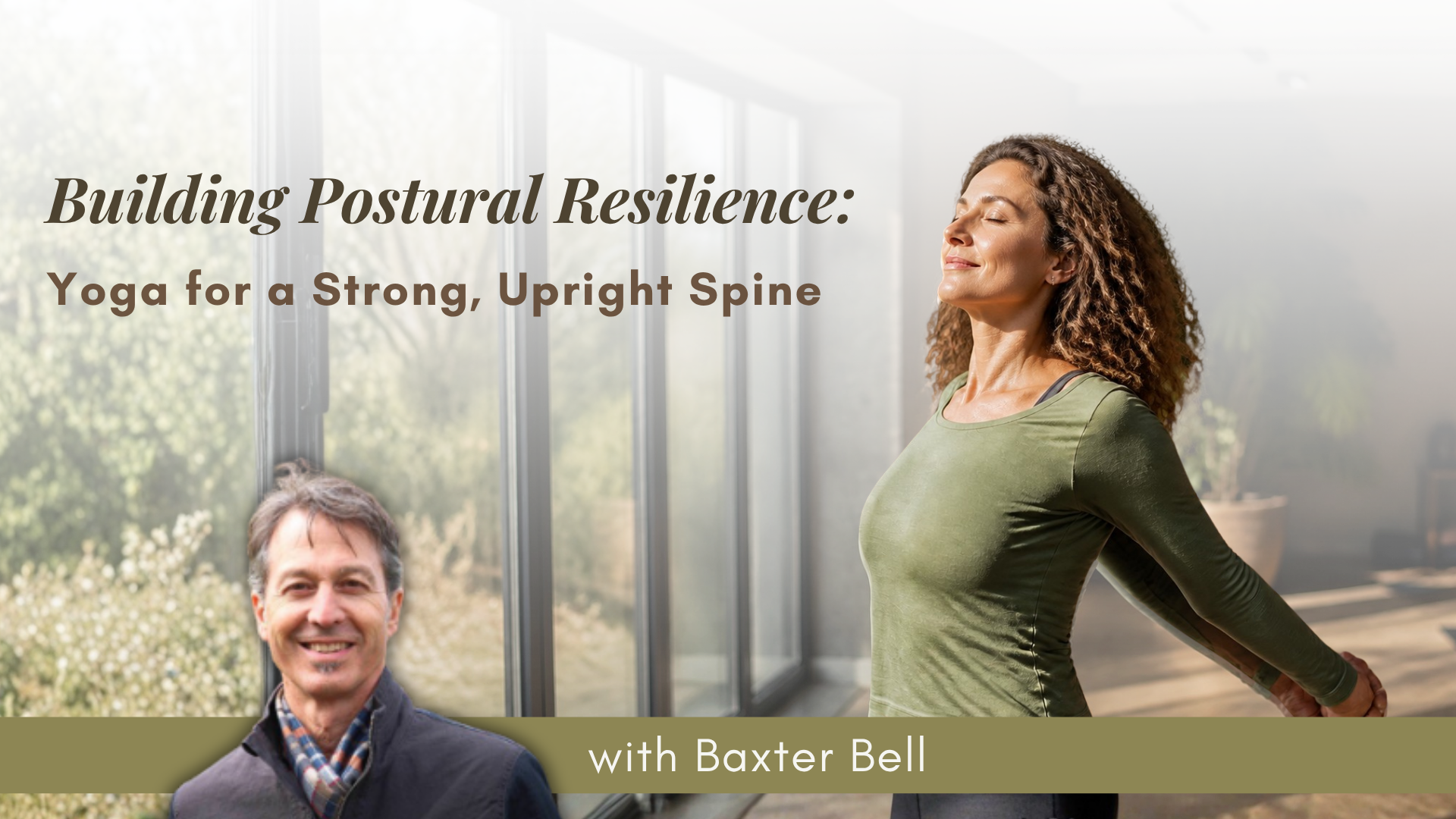
Baxter Bell
Building Postural Resilience:
Yoga for a Strong, Upright Spine
Tuesdays at 4:30 pm ET / 1:30 pm PT
April 6,13,20 & 27
For decades, one of neuroscience's greatest mysteries was this: why do some people's brains show the physical changes linked to dementia and Alzheimer's, while their minds and memory stay perfectly sharp?
A long-term study on Catholic nuns helped resolve this puzzle. When researchers examined their brains after death, some showed the full physical hallmarks of Alzheimer's disease — plaques, tangles, all the classic markers. Yet these women had shown no signs of memory loss while alive.
Something protected them from ever experiencing the effects of that disease. Researchers call it cognitive reserve — a mental buffer, built over a lifetime, that lets some brains keep functioning well despite age-related wear and tear.
Here's the hopeful part: cognitive reserve isn't something you're born with. It's something you build. Researchers estimate that up to 45 percent of dementia cases worldwide may be preventable or delayable through modifiable lifestyle factors.
So what builds it? Not crossword puzzles or brain-training apps, despite popular claims. The stronger research evidence points to something simpler: movement, and yoga in particular.
JUNE
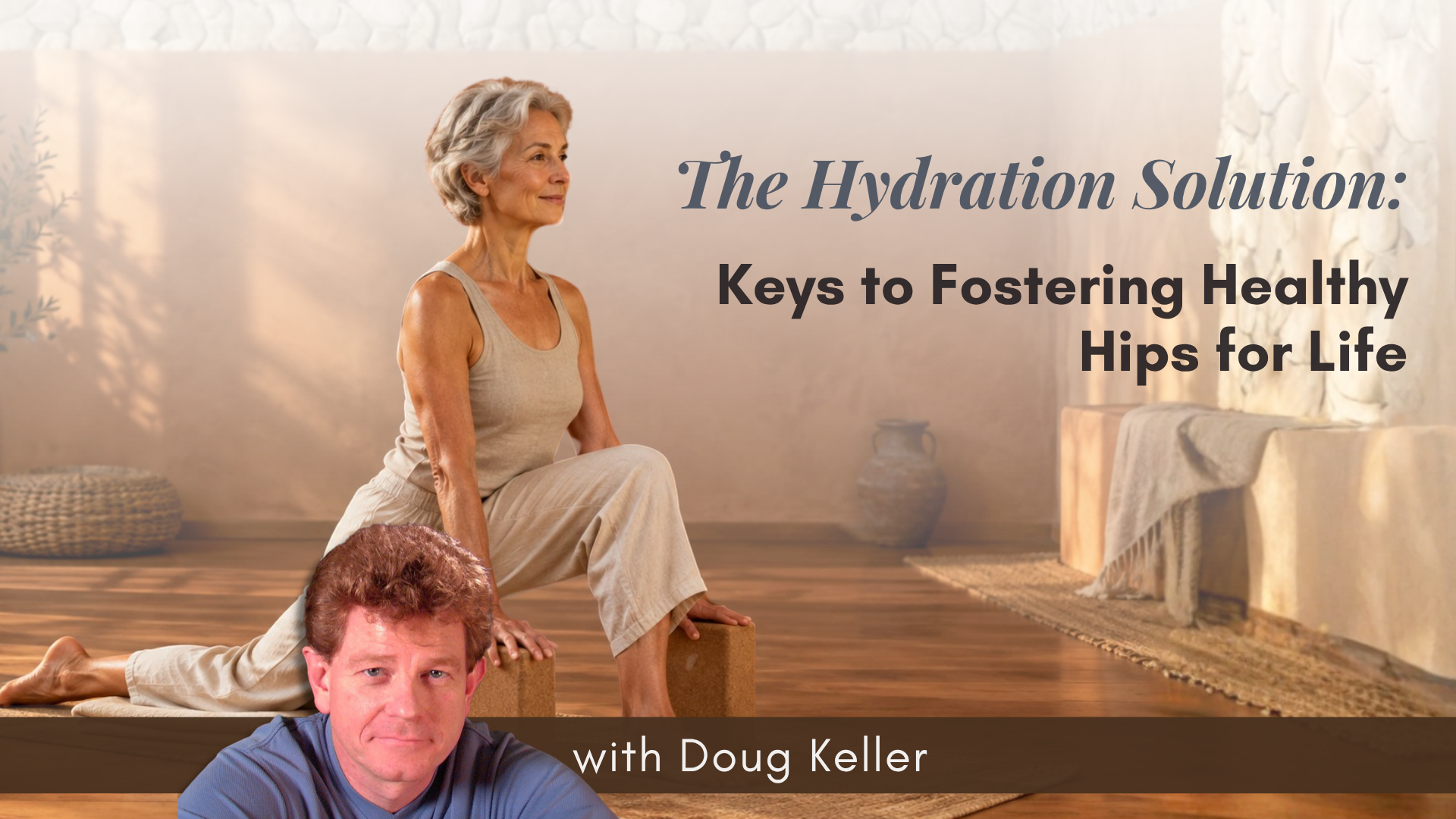
Doug Keller
The Hydration Solution:
Keys to Fostering Healthy Hips for Life
Wednesdays at 1:00 pm ET / 10:00 am PT
June 2, 9, 16, and 23, 2027
Your hips are your gateway to an active life. They carry you through every step, help you climb stairs, steady your balance, and make it possible to get down to the floor—and back up again. But keeping them healthy requires more than stretching or walking.
In this four-part Age Strong Yoga Practice series, renowned yoga therapist Doug Keller reveals what your hips actually need to stay nourished, stable, and mobile. You’ll discover how varied movement and changing pressure help circulate fluid through the joint—and why traditional hip openers can sometimes do more harm than good when flexibility isn’t balanced with strength.
Instead of pushing for a deeper pose, you’ll learn to work intelligently with your individual structure, strengthen the muscles that protect and center the hips, and build mobility you can truly use.
Give your hips the movement nourishment they need to support a lifetime of walking, balancing, exploring—and doing what you love.
Recorded and Available Now
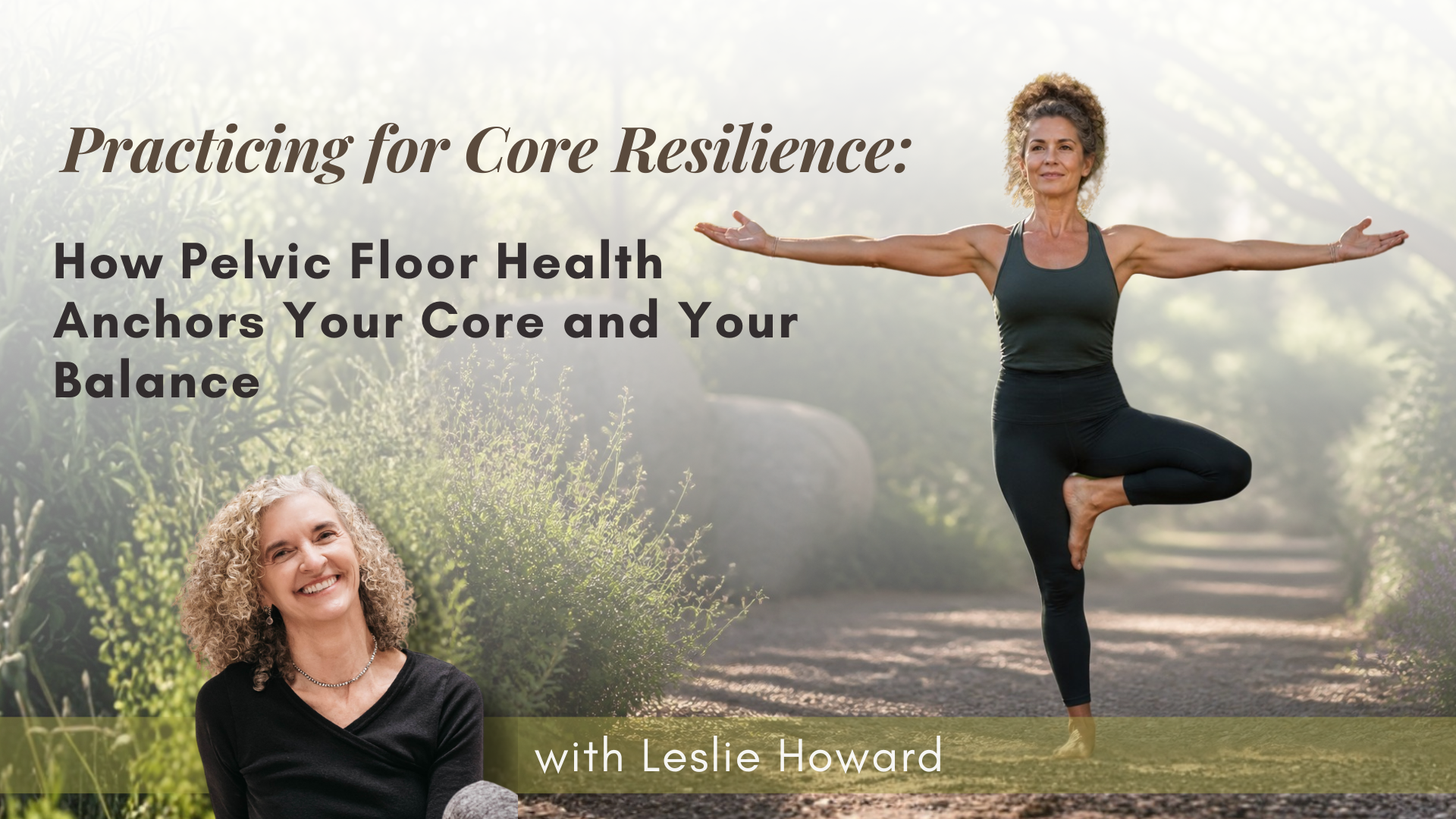
Leslie Howard
Practicing for Core Resilience:
How Pelvic Floor Health Anchors Your Core and Your Balance
The pelvic floor is one of four structural walls, the deep core — diaphragm above, pelvic floor below, deep abdominals in front, multifidus behind — that together regulate intra-abdominal pressure.
This pressurized cylinder acts as an internal stabilizer that reduces shear and bending stress on the lumbar spine during movement.
Research shows that when the diaphragm, abdominal wall, and pelvic floor fail to coordinate — as seen in chronic low back pain patients or those with pelvic floor dysfunction — IAP regulation becomes impaired, forcing the spine to rely on less efficient stabilization strategies.
Most core training focuses on the muscles you can see — the abdominals, the back. But in this practice series, renowned yoga teacher and author Leslie Howard will help you develop the true foundation of core strengthening. Learn yoga practices to effortlessly and holistically engage and tone the pelvic floor muscles, the vital base of the pressure system that stabilizes your spine with every step you take.
Recorded and Available Now
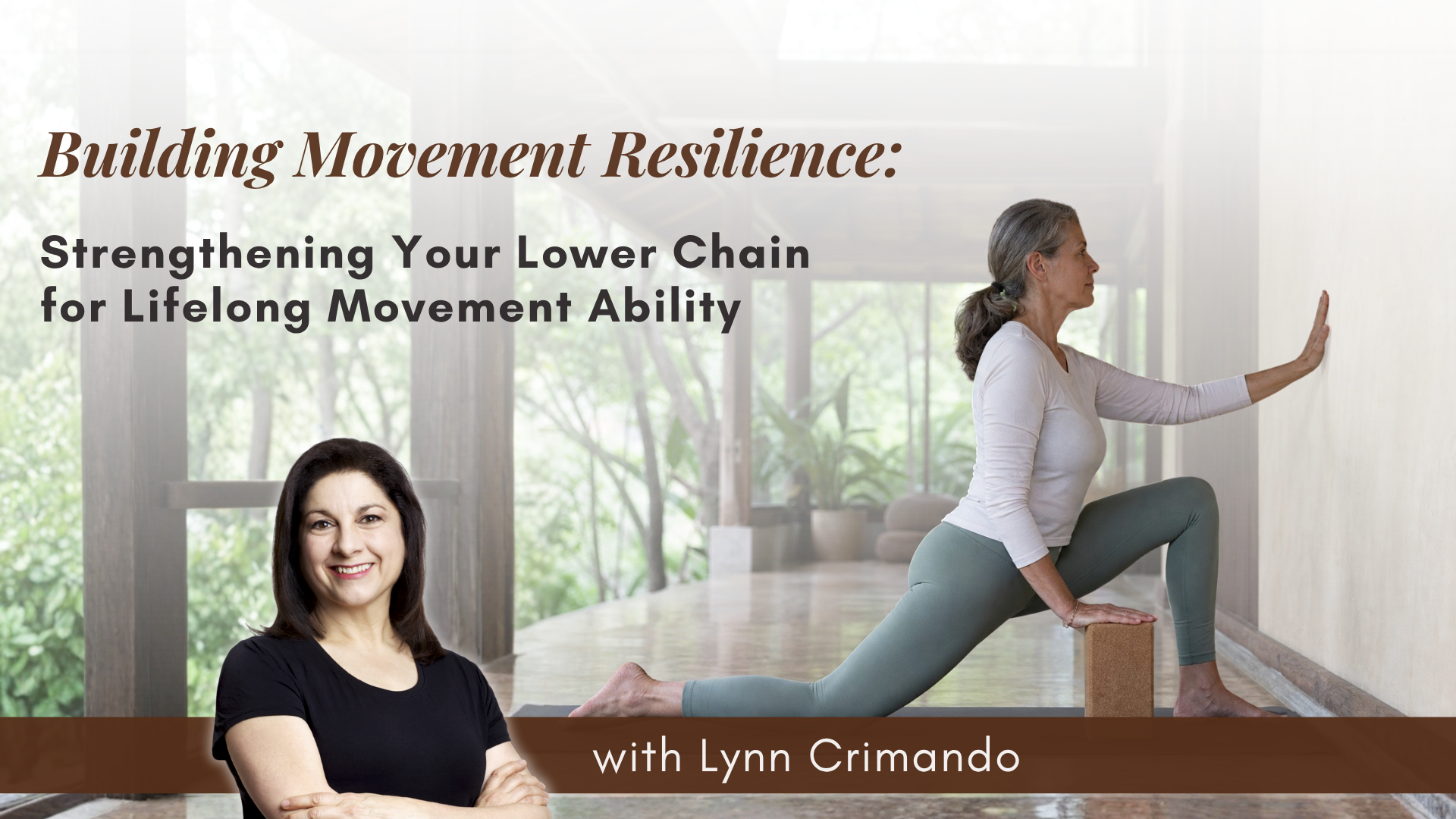
Lynn Crimando
Building Movement Resilience:
Strengthening Your Lower Chain for Lifelong Movement Mobility
Every step, stair, and transition from sitting to standing depends on the connected strength of your feet, ankles, knees, hips, and glutes. When this lower chain weakens, everyday movement can become slower, less stable, and more tiring.
In this four-part practice series, renowned yoga therapist Lynn Crimando combines mindful yoga with progressive strength training to rebuild this essential foundation. You’ll strengthen your feet, improve ankle mobility, and develop the leg, hip, and glute power needed for walking, climbing stairs, rising from the floor, and recovering from a stumble. The practices also enhance balance, coordination, endurance, and sensory awareness while reducing unnecessary strain on the knees, hips, and lower back.
The goal is more than stronger legs—it’s practical, usable strength that supports confident movement, fall prevention, and lifelong independence. Lynn brings expertise in yoga therapy, personal training, and corrective exercise to this integrated approach
Monthly Strength-Building Mentoring Sessions Starting in October
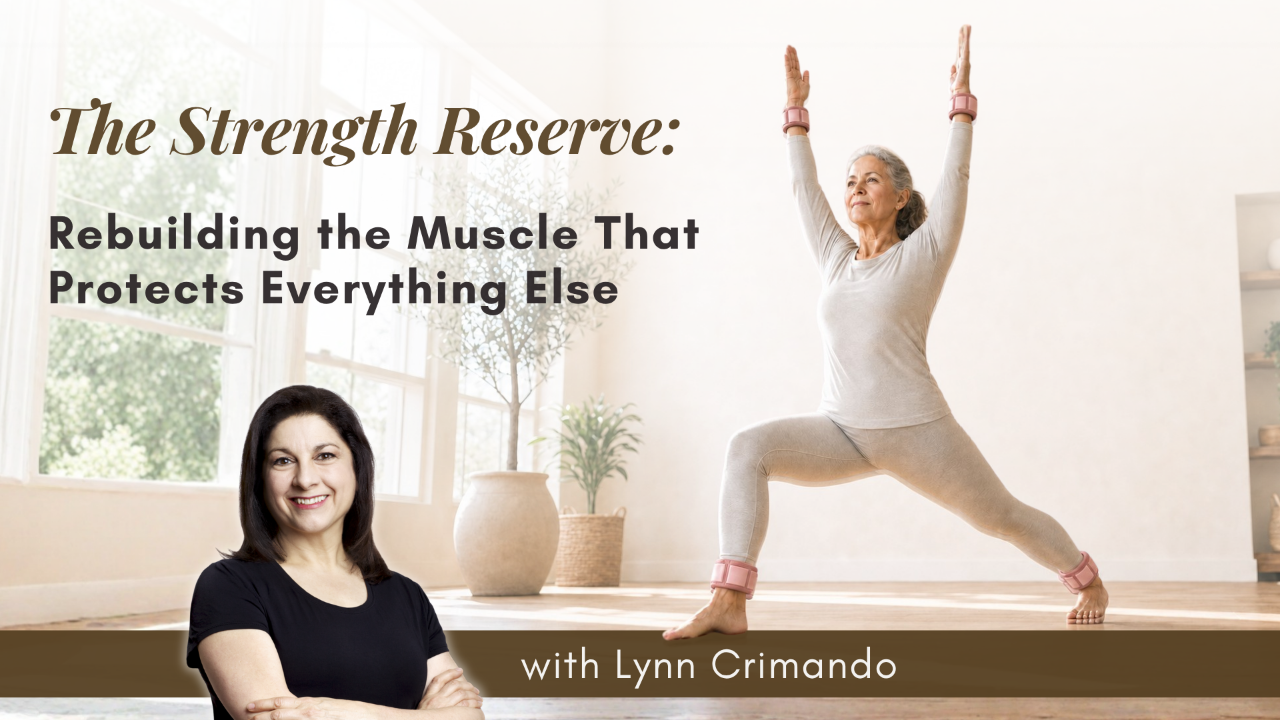
The Strength Reserve
Lynn Crimando
Saturdays, October 3 and 17; November 7; December 12; and January 23
Discover why yoga and strength training is a marriage made in heaven!
Around age 50, the same workouts stop building strength the way they used to — this is a biological shift, not a discipline failure.
Muscle functions as one of the key buffers determining whether you bounce back quickly from illness, falls, or surgery, or get knocked down for months. In this 5-part series, you will learn how to use an integration of strength training and yoga to retain and rebuild muscle mass and power.
- Workshop 1: The Reserve Tank - Why Two People the Same Age, Age So Differently
- Workshop 2: The Resistance Problem - Why Your Muscles Stopped Listening to the Same Workout
- Workshop 3: The Weight of Doing Less - How Slowing Down Recruits More Muscle, Not Less
- Workshop 4: Load-Bearing for Healthy Bones - What Your Skeleton Actually Needs to Stay Dense
- Workshop 5: The Compound Interest Practice - One Sequence, Five Systems, Decades of Payoff
BONUSES
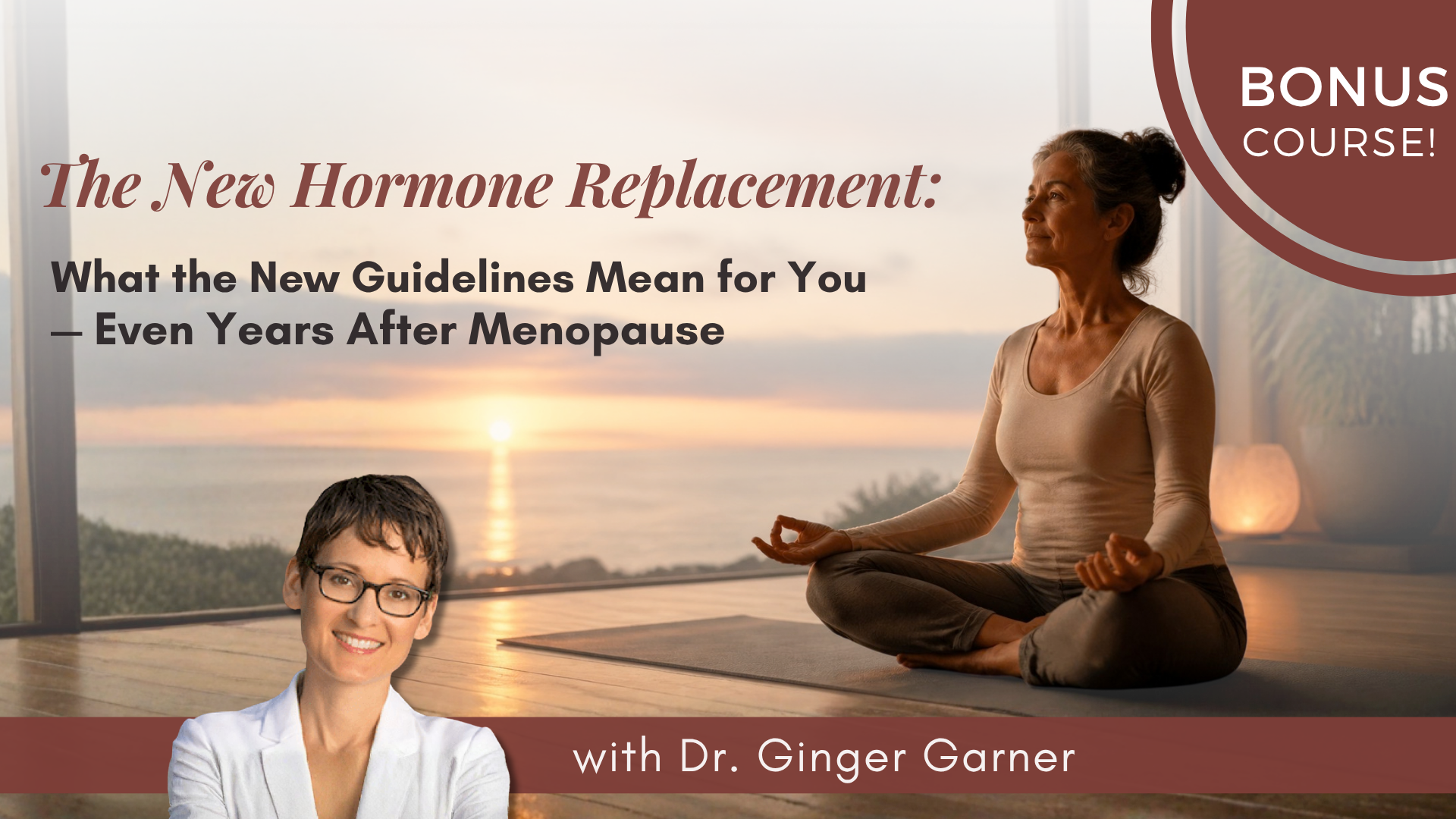
The New Hormone Replacement
Dr. Ginger Garner
Tuesdays, November 10 & 17
For decades, women were told there was a narrow "window" for starting hormone replacement therapy — and if you missed it, the door was closed for good. That guidance is now being revisited.
Join Dr. Ginger Garner for this bonus workshop as she breaks down the evolving research and updated clinical guidelines on hormone replacement therapy (HRT) — and what they actually mean if you're 10, 15, or even 20 years past menopause.
You'll learn:
- Why the medical guidance around HRT has shifted, and what prompted the reassessment
- What the "timing hypothesis" really says — and doesn't say — about starting HRT later in life
- The risks and benefits worth understanding at each stage: 10 years out, 15 years out, and 20+ years out from menopause
- Questions to bring to your own doctor to advocate for an informed, personalized conversation
- How hormone health connects to the broader picture of building reserve capacity and long-term vitality
Whether you're currently on HRT, stopped years ago, or never started, this session will help you understand where the science stands today — and what options may still be worth exploring for your own health and longevity.
Tuesdays, November 10 & 17
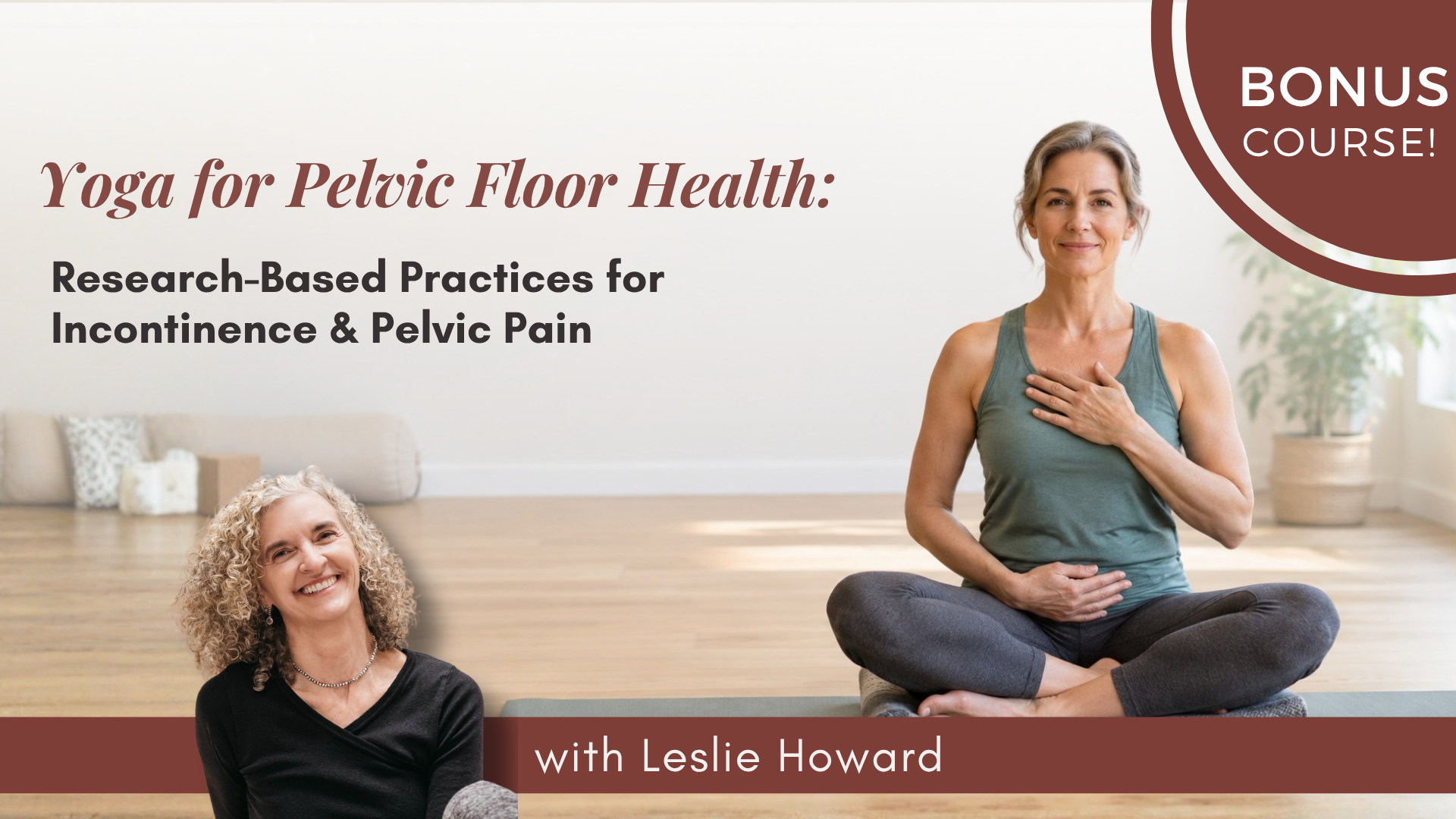
Yoga for Pelvic Floor Health:
Research-Based Practices for Incontinence & Pelvic Pain
Leslie Howard
Available at Course Portal
Do You Struggle with These Common Pelvic Floor Problems?
Feeling a constant need to go to the bathroom, even though you’ve just been there – and don’t really need to go?
You may be dealing with an overactive bladder – a form of incontinence that is surprisingly common.
Pelvic floor problems like incontinence and pelvic pain affect a surprising number of people, and it’s not just an issue linked to getting older. It can also be triggered by pregnancy and (in men) prostate problems.
About one in four men and women in the US struggle with urinary incontinence. It is not just a medical problem; it can affect us emotionally and socially, as it often makes us afraid to engage in activities that would make us veer too far away from a bathroom.
Like incontinence, pelvic pain is surprisingly common – affecting one in seven women. Moreover, it can be a disabling, persistent pain condition, which is as common as migraine headaches, asthma, and chronic back pain.
The pelvic floor muscles play an important role as part of the body’s core system, contributing to core stabilization during movement.
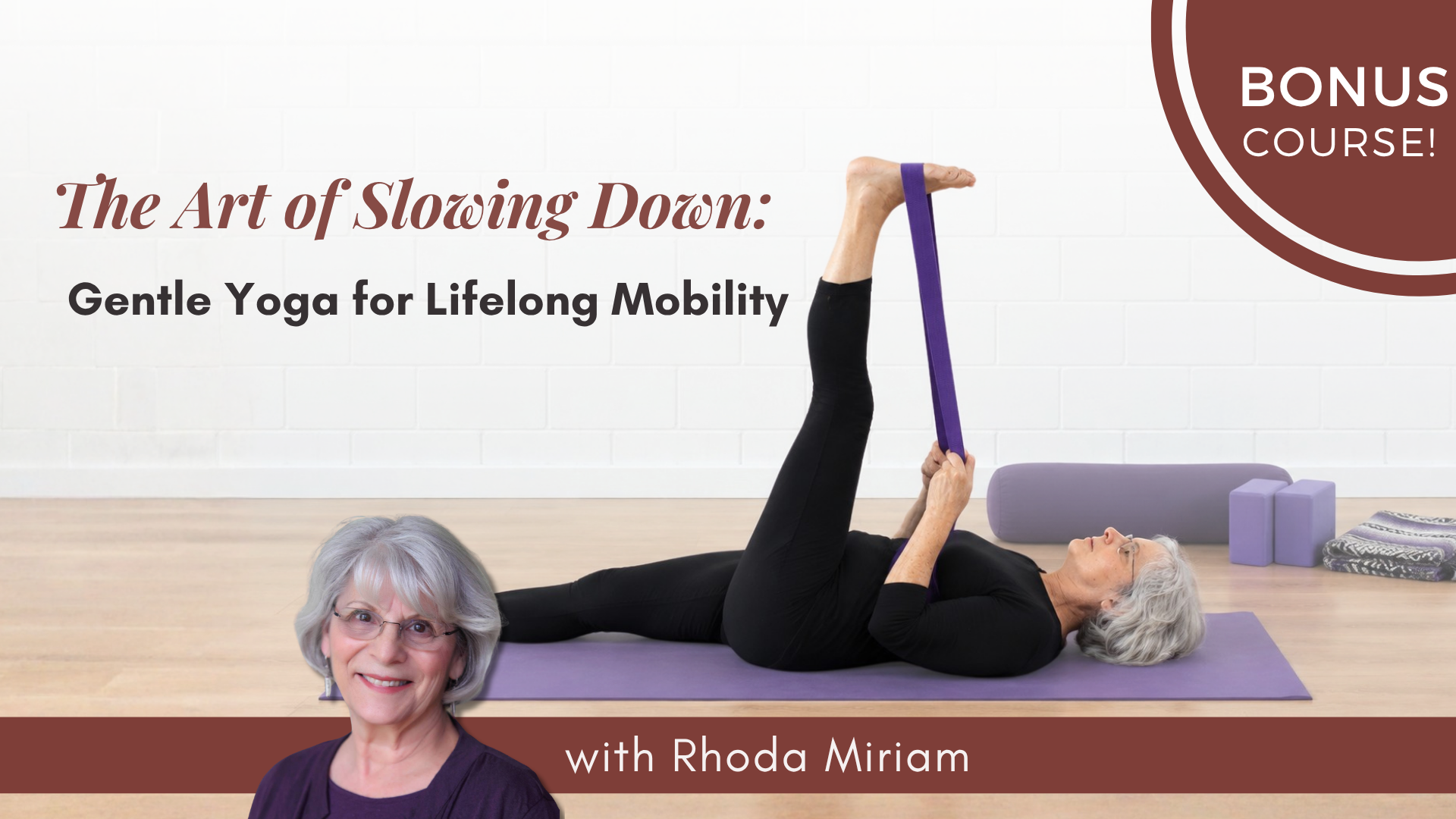
The Art of Slowing Down:
Gentle Yoga for Lifelong Mobility
Rhoda Miriam
Available at Course Portal
Join Rhoda Miriam for a nourishing series of slow yoga practices designed for days when you need a gentler approach. With an emphasis on mindful movement, breath awareness, and relaxation, these practices invite you to release pressure, listen to your body, and enjoy yoga at an unhurried pace.
Through accessible supine sequences, Rhoda guides you in lengthening the spine, increasing freedom of movement in the hips, and exploring gentle twists and backbends. The series includes Bridge Pose, relaxing twisting movements, and a soothing breath practice that helps you transition from movement into greater stillness.
The series also offers a supportive chair yoga practice focused on spinal mobility and hip opening. By coordinating simple seated movements with the breath, you’ll discover how slowing down can deepen body awareness and make the benefits of yoga more accessible—regardless of your mobility level, energy, or previous experience.
Turning the Tide on Muscle Loss:
Yoga for Strength, Stability and Lifelong Mobility
Giulia Pline
Available at Course Portal
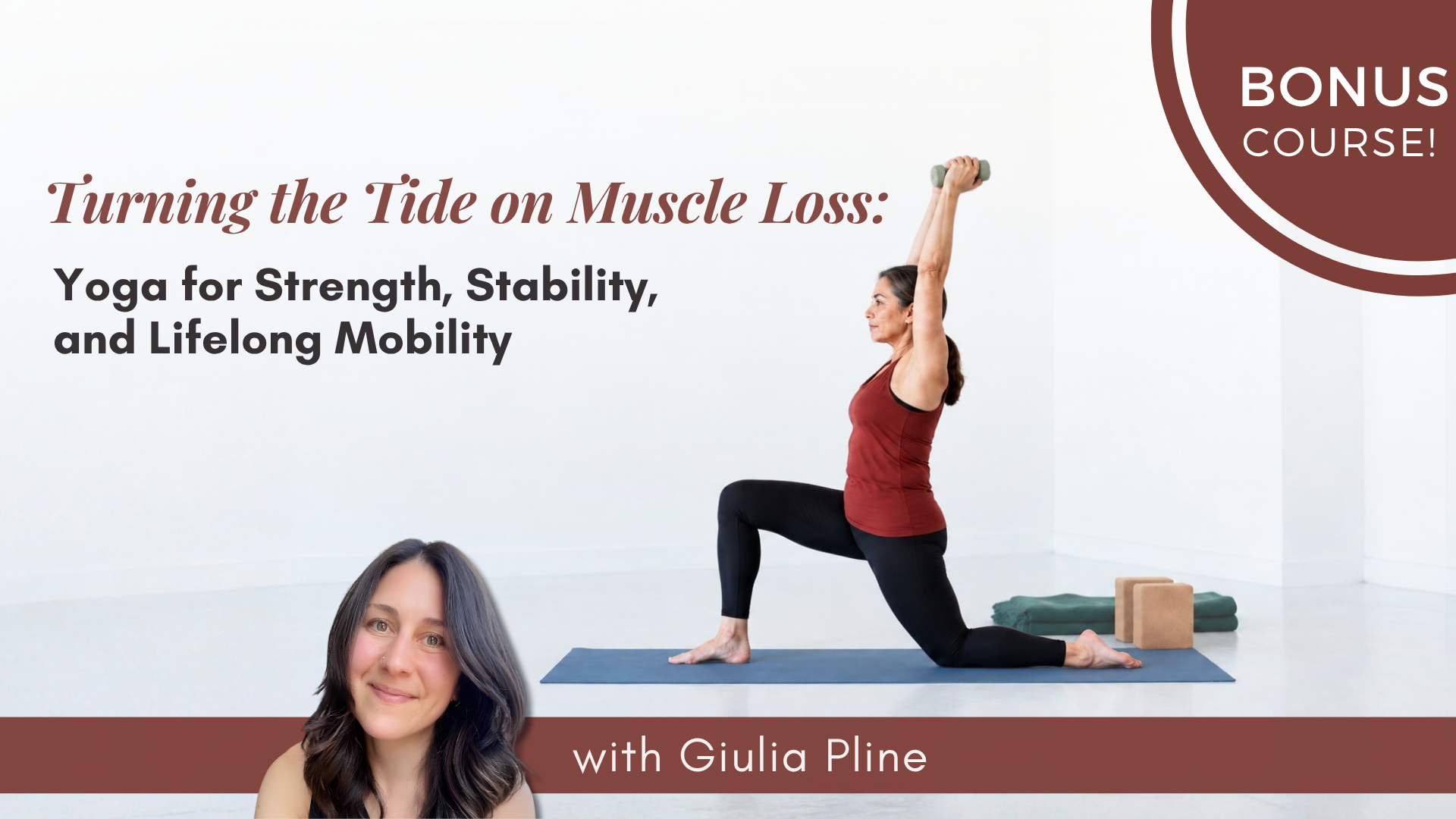
- Did you know that we lose muscle mass at a rate of 3–8% per decade after the age of 30?
- And, did you know that this decline speeds up to as much as 6 - 15% per decade after the age of 60?
- And, are you trying to do traditional strength-building, but find it tedious and uninspiring?
If you are wondering why your thighs are starting to look like blubber when you move, look no further than to this loss of muscle mass.
But the consequences of shrinking muscle mass are so much more far-reaching than just loss of your youthful, toned body..
Loss of muscle mass, strength, and function is a fundamental cause of and contributor to physical limitations and, eventually, disability as we get older.
The Vital Importance of Body Awareness
EXPERT TALKS
Your Next Step
Chronic disease doesn't happen overnight. It's built — silently — over decades. But so is vibrant health.
Every expert-led yoga class you take, every workshop that strengthens your understanding of your muscles, bones, and joints, every strategy you add to your Health Span is another layer of protection against the decline that so many people accept as inevitable.
It doesn't have to be inevitable. And now you have the program to prove it.
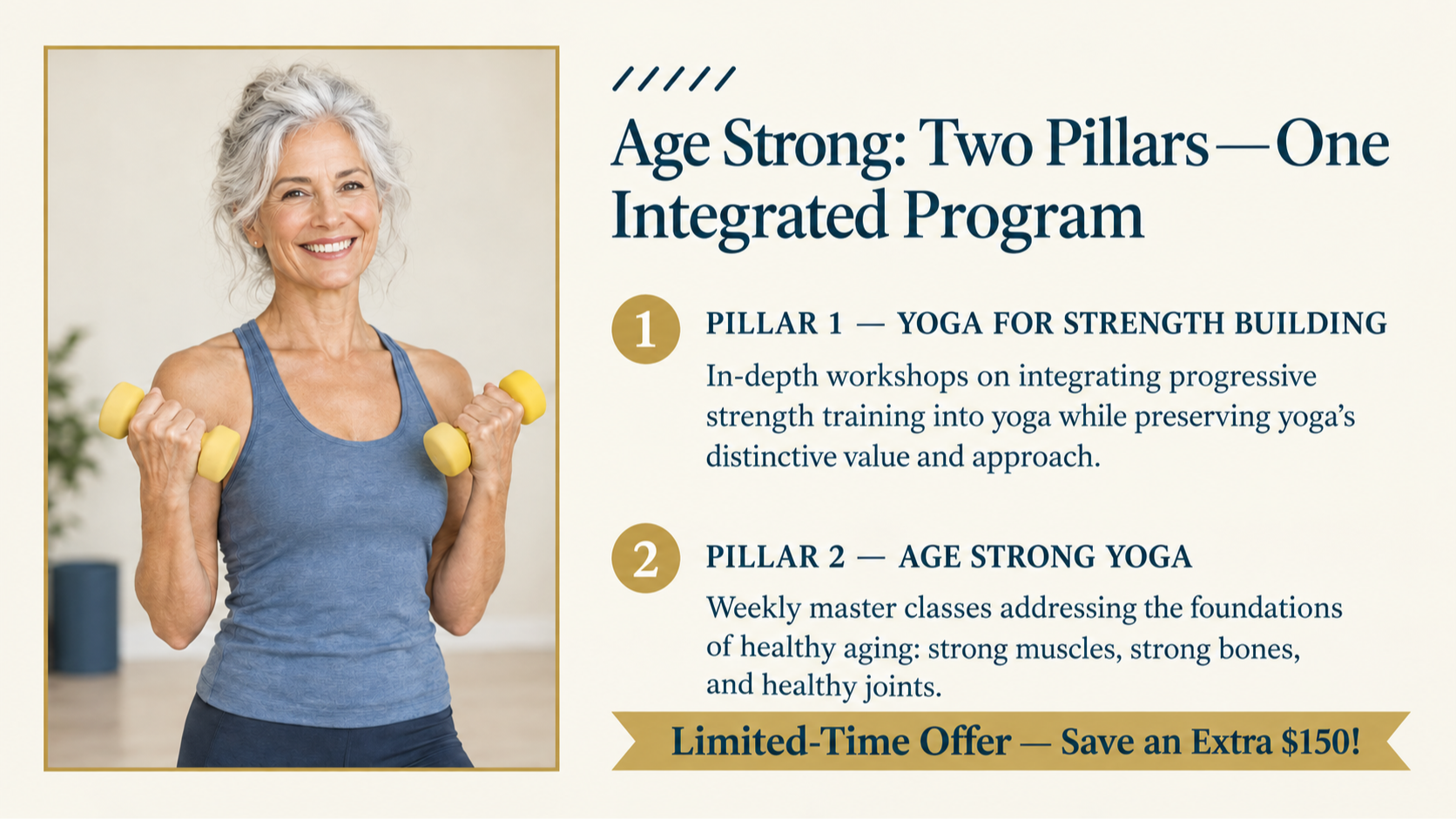
Join Age Strong for Life today and start building health span both pillars of Healthy Aging!
- Yes, I want to enroll in 'Age Strong for Life' as a Founding Member and get access to all the Membership programming, plus Bonuses! I'm looking forward to studying with expert yoga teachers and yoga therapists without having to spend big money or travel long distances!
- I understand that to give everyone equal terms, enrollment is only open twice a year, for the Spring/Summer semester and Fall/Winter semester.
- I understand that I will continue to get access to the Age Strong Membership portal with the course recordings and other Age Strong resources until I notify YogaUOnline to cancel my enrollment. Our courses are ongoing so we will keep you enrolled unless you notify us otherwise.
- I understand that once I am no longer a member, I will no longer have access to the Membership Portal and the recorded courses and resources in it as well as all upcoming courses.
- I understand that to make it fair for everyone, at the end of each semester, continuing members will continue to have access to the courses for all previous semesters in which they have been enrolled.
SAVE 75%!
Membership registration is available for a limited time only! Everything you need to build your reserve capacity and movement longevity across all the dimensions.
If you were to join each program individually, the cost would be $197 a month.
You pay only $47 - a 75% savings!
