Live Sessions
MONTHLY OVERVIEW
SEPTEMBER
Leslie Howard
Practicing for Core Resilience:
How Pelvic Floor Health Anchors Your Core and Your Balance
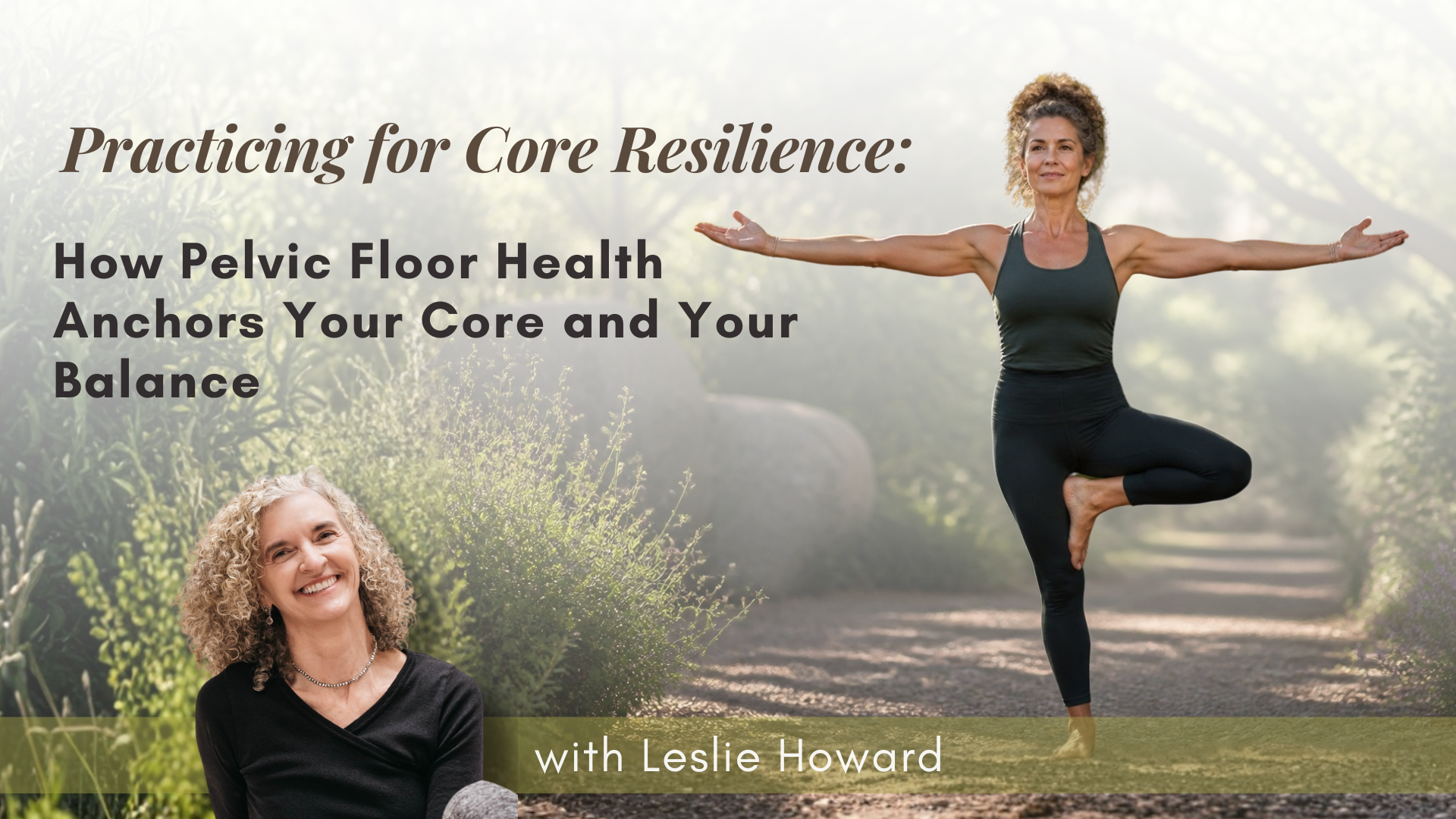
The pelvic floor is one of four structural walls, the deep core — diaphragm above, pelvic floor below, deep abdominals in front, multifidus behind — that together regulate intra-abdominal pressure.
This pressurized cylinder acts as an internal stabilizer that reduces shear and bending stress on the lumbar spine during movement.
Research shows that when the diaphragm, abdominal wall, and pelvic floor fail to coordinate — as seen in chronic low back pain patients or those with pelvic floor dysfunction — IAP regulation becomes impaired, forcing the spine to rely on less efficient stabilization strategies.
Most core training focuses on the muscles you can see — the abdominals, the back. But in this practice series, renowned yoga teacher and author Leslie Howard will help you develop the true foundation of core strengthening. Learn yoga practices to effortlessly and holistically engage and tone the pelvic floor muscles, the vital base of the pressure system that stabilizes your spine with every step you take.
OCTOBER
Lynn Crimando
Building Movement Resilience:
The Single Most Powerful Thing You Can Do for Your Health Span
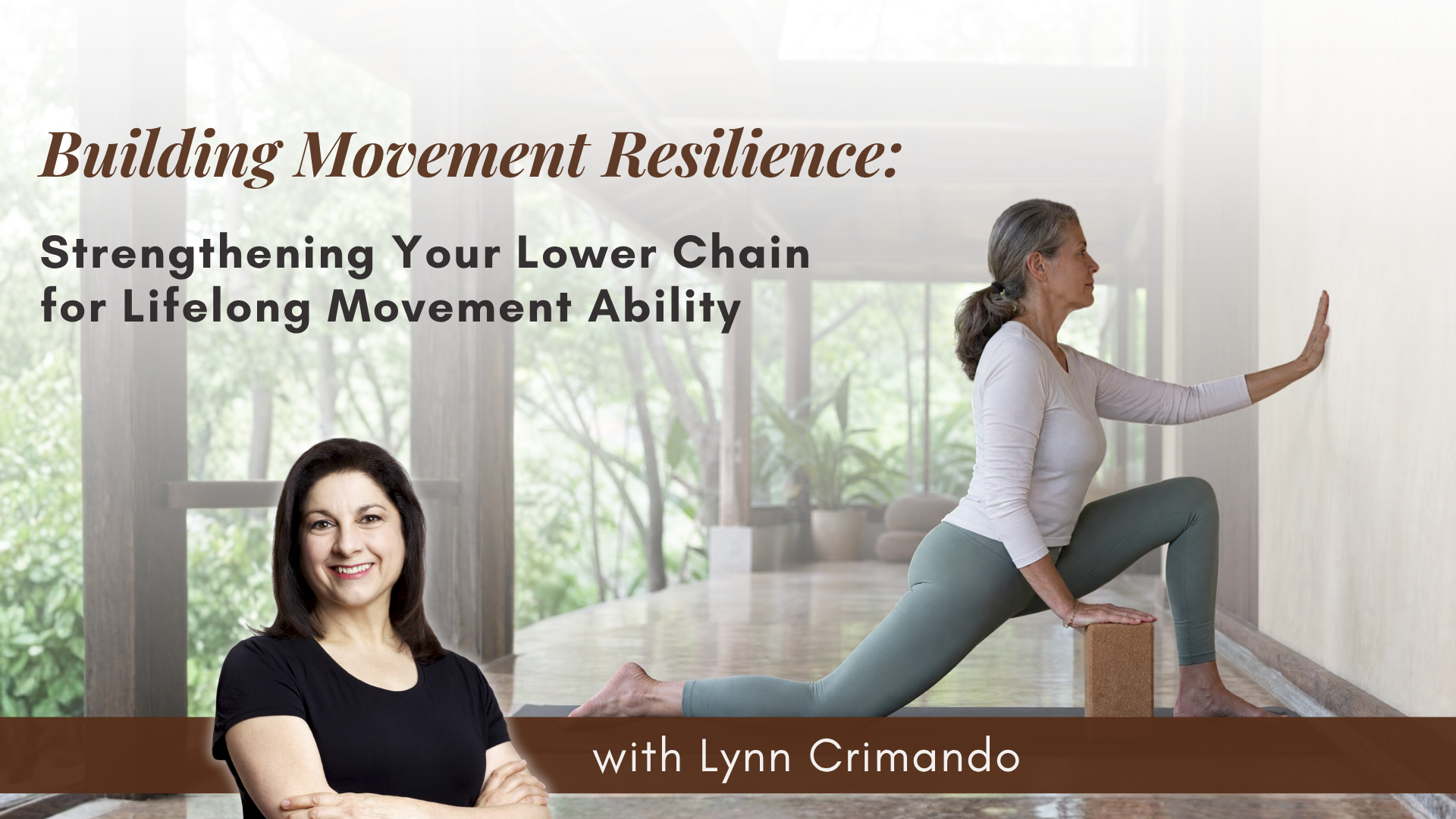
Every step, stair, and transition from sitting to standing depends on the connected strength of your feet, ankles, knees, hips, and glutes. When this lower chain weakens, everyday movement can become slower, less stable, and more tiring.
In this four-part practice series, renowned yoga therapist Lynn Crimando combines mindful yoga with progressive strength training to rebuild this essential foundation. You’ll strengthen your feet, improve ankle mobility, and develop the leg, hip, and glute power needed for walking, climbing stairs, rising from the floor, and recovering from a stumble. The practices also enhance balance, coordination, endurance, and sensory awareness while reducing unnecessary strain on the knees, hips, and lower back.
The goal is more than stronger legs—it’s practical, usable strength that supports confident movement, fall prevention, and lifelong independence. Lynn brings expertise in yoga therapy, personal training, and corrective exercise to this integrated approach
NOVEMBER
James Knight
Discovering Your Intelligent Body:
Reconnecting with Somatic Wisdom™
Aging is not the ending of your story—it is an invitation to keep writing it.
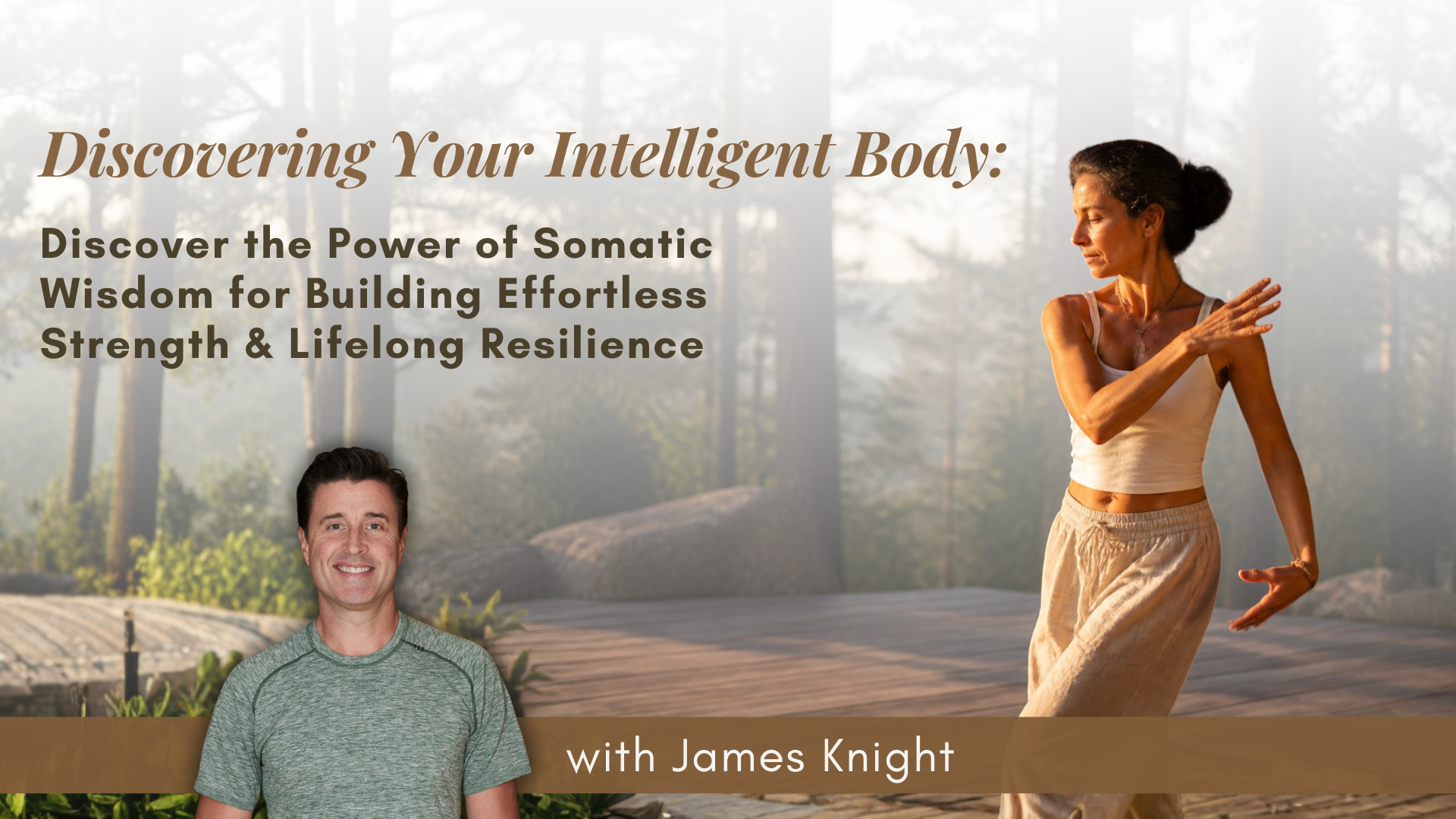
Join yoga teacher James Knight, founder of Gentle Somatic Yoga®, for a transformational four-part journey that will redefine your relationship with your body and your understanding of what movement and exercise can be.
This is not another program to help you hold on to what you have. It's an invitation to remember, repattern, strengthen, and embody a version of yourself with more freedom, resilience, and joy than you may have thought possible.
In this four-part series, James Knight introduces a fresh perspective on healthy aging through the lens of Somatic Wisdom™. Rather than focusing solely on muscles, flexibility, or exercise, participants will learn how the nervous system, brain-to-muscle communication, and mindful movement work together to create resilient strength, greater ease, and more pleasure in everyday movement.
Each session in this series combines Gentle Somatic Yoga®, Somatic Movement Flows®, and practical strategies that can immediately be integrated into daily life. While every practice in the series stands on its own, together they offer a progressive journey from increasing awareness to creating sustainable movement patterns that support resilience, independence, and vitality for years to come.
DECEMBER
Melina Meza
Building Cognitive Resilience:
Keys to Enhancing and Protecting Your Long-term Brain Health
For decades, one of neuroscience's greatest mysteries was this: why do some people's brains show the physical changes linked to dementia and Alzheimer's, while their minds and memory stay perfectly sharp?
A long-term study on Catholic nuns helped resolve this puzzle. When researchers examined their brains after death, some showed the full physical hallmarks of Alzheimer's disease — plaques, tangles, all the classic markers. Yet these women had shown no signs of memory loss while alive.
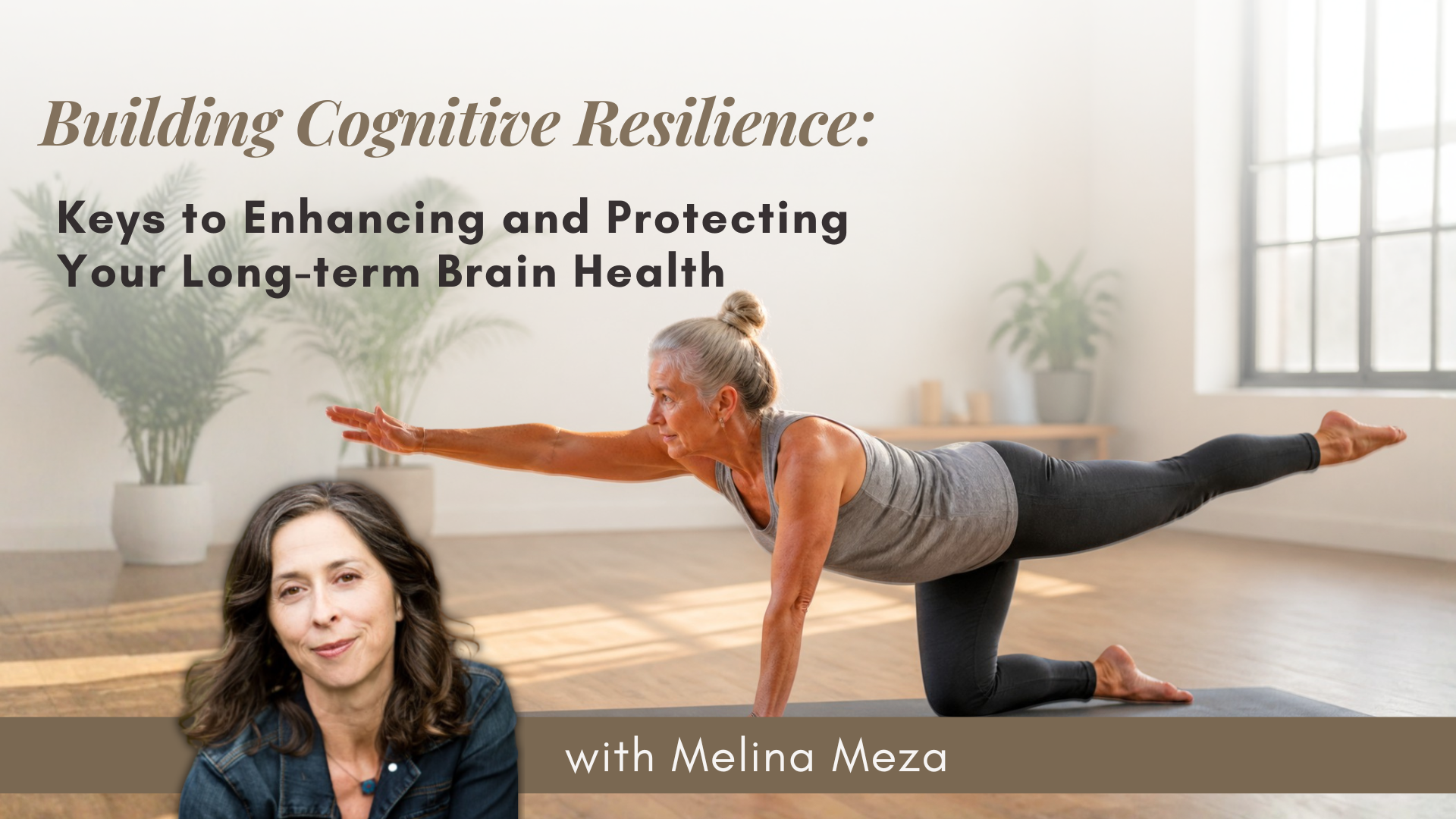
Something protected them from ever experiencing the effects of that disease. Researchers call it cognitive reserve — a mental buffer, built over a lifetime, that lets some brains keep functioning well despite age-related wear and tear.
Here's the hopeful part: cognitive reserve isn't something you're born with. It's something you build. Researchers estimate that up to 45 percent of dementia cases worldwide may be preventable or delayable through modifiable lifestyle factors.
So what builds it? Not crossword puzzles or brain-training apps, despite popular claims. The stronger research evidence points to something simpler: movement, and yoga in particular.
JANUARY
Dr. Arielle Schwartz
Fostering Nervous System Resilience:
Building the Hidden Reserve Behind Every Recovery
Two people face the same stressor — an illness, a stumble, a stressful week — and one bounces back quickly while the other struggles for weeks. What explains the difference?
Researchers refer to this capacity as nervous system resilience, and building it may be one of the most powerful, overlooked things we can do for our long-term health. Nervous system resilience isn't a fixed feature — it can be cultivated at any age.
Much of the conversation around building reserve focuses on muscles and joints. But your nervous system has its own reserve capacity, centered on the vagus nerve, the primary regulator of your body's "rest and recover" response. Researchers track this through vagal tone, often measured via heart rate variability, or HRV — a marker increasingly used to gauge physiological resilience more broadly. Higher vagal tone is linked to faster stress recovery, better emotional regulation, and stronger cardiovascular and cognitive function.
In other words, your nervous system's reserve capacity shapes how well every other system in your body — heart, muscles, immune function, mind — can absorb stress and bounce back.
The good news? This capacity can be enhanced, and yoga is one of the best ways to help reshape the nervous system's ability to respond effectively to challenges.
FEBRUARY
Lynn Crimando
Building Joint Resilience:
The Movement Prescription for Lifelong Mobility
Want to move through life without your knees, hips, or shoulders holding you back? Here's a shift in thinking most people never learn: your joints aren't wearing out. They're waiting to be trained.
Joints are living, adaptive structures that respond to how you use them. Cartilage has no direct blood supply and depends almost entirely on movement to receive nutrients and clear waste. Movement isn't just safe for your joints. It's what keeps them alive, and prolonged stillness is often more damaging than motion itself.
Unfortunately, joints quietly stiffen over the years. A joint is never protected by one structure alone; it's supported by a web of muscles, fascia, and ligaments, and when one part weakens, the others compensate, creating wear and instability. After an injury or flare-up, the nervous system often develops a protective guarding pattern, restricting movement long after healing has occurred.
The good news is that this can be reversed. Joints that stiffen with disuse can regain fluidity, strength, and confidence, not through more effort, but through smarter, more intelligent movement.
Across four sessions, Building Joint Resilience guides you through the biology of joint health, targeted strengthening for vulnerable joints like hips, knees, and shoulders, and gentle nervous system retraining to release guarding patterns that may be limiting your range. You'll leave with a simple, sustainable daily practice and real confidence in your body's ability to keep moving freely for years to come.
APRIL
Baxter Bell
Building Postural Resilience:
Yoga for a Strong, Upright Spine
For decades, one of neuroscience's greatest mysteries was this: why do some people's brains show the physical changes linked to dementia and Alzheimer's, while their minds and memory stay perfectly sharp?
A long-term study on Catholic nuns helped resolve this puzzle. When researchers examined their brains after death, some showed the full physical hallmarks of Alzheimer's disease — plaques, tangles, all the classic markers. Yet these women had shown no signs of memory loss while alive.
Something protected them from ever experiencing the effects of that disease. Researchers call it cognitive reserve — a mental buffer, built over a lifetime, that lets some brains keep functioning well despite age-related wear and tear.
Here's the hopeful part: cognitive reserve isn't something you're born with. It's something you build. Researchers estimate that up to 45 percent of dementia cases worldwide may be preventable or delayable through modifiable lifestyle factors.
So what builds it? Not crossword puzzles or brain-training apps, despite popular claims. The stronger research evidence points to something simpler: movement, and yoga in particular.
Monthly Strength-Building Mentoring Sessions Starting in October
The Strength Reserve
Lynn Crimando
Discover why yoga and strength training is a marriage made in heaven!
Around age 50, the same workouts stop building strength the way they used to — this is a biological shift, not a discipline failure.
Muscle functions as one of the key buffers determining whether you bounce back quickly from illness, falls, or surgery, or get knocked down for months. In this 5-part series, you will learn how to use an integration of strength training and yoga to retain and rebuild muscle mass and power.
- Workshop 1: The Reserve Tank - Why Two People the Same Age, Age So Differently
- Workshop 2: The Resistance Problem - Why Your Muscles Stopped Listening to the Same Workout
- Workshop 3: The Weight of Doing Less - How Slowing Down Recruits More Muscle, Not Less
- Workshop 4: Load-Bearing for Healthy Bones - What Your Skeleton Actually Needs to Stay Dense
- Workshop 5: The Compound Interest Practice - One Sequence, Five Systems, Decades of Payoff
Saturdays, October 3 and 17; November 7; December 12; and January 23
BONUSES
The New Hormone Replacement
Dr. Ginger Garner
For decades, women were told there was a narrow "window" for starting hormone replacement therapy — and if you missed it, the door was closed for good. That guidance is now being revisited.
Join Dr. Ginger Garner for this bonus workshop as she breaks down the evolving research and updated clinical guidelines on hormone replacement therapy (HRT) — and what they actually mean if you're 10, 15, or even 20 years past menopause.
You'll learn:
- Why the medical guidance around HRT has shifted, and what prompted the reassessment
- What the "timing hypothesis" really says — and doesn't say — about starting HRT later in life
- The risks and benefits worth understanding at each stage: 10 years out, 15 years out, and 20+ years out from menopause
- Questions to bring to your own doctor to advocate for an informed, personalized conversation
- How hormone health connects to the broader picture of building reserve capacity and long-term vitality
Whether you're currently on HRT, stopped years ago, or never started, this session will help you understand where the science stands today — and what options may still be worth exploring for your own health and longevity.
Yoga for Pelvic Floor Health:
Research-Based Practices for Incontinence & Pelvic Pain
Leslie Howard
Do You Struggle with These Common Pelvic Floor Problems?
Feeling a constant need to go to the bathroom, even though you’ve just been there – and don’t really need to go?
You may be dealing with an overactive bladder – a form of incontinence that is surprisingly common.
Pelvic floor problems like incontinence and pelvic pain affect a surprising number of people, and it’s not just an issue linked to getting older. It can also be triggered by pregnancy and (in men) prostate problems.
About one in four men and women in the US struggle with urinary incontinence. It is not just a medical problem; it can affect us emotionally and socially, as it often makes us afraid to engage in activities that would make us veer too far away from a bathroom.
Like incontinence, pelvic pain is surprisingly common – affecting one in seven women. Moreover, it can be a disabling, persistent pain condition, which is as common as migraine headaches, asthma, and chronic back pain.
The pelvic floor muscles play an important role as part of the body’s core system, contributing to core stabilization during movement.
The Vital Importance of Body Awareness
EXPERT TALKS
Click on each image to listen