Live Sessions
MONTHLY OVERVIEW
MARCH
Baxter Bell
Yoga for Back Care and Spinal Mobility
A 4-Week Practice Series
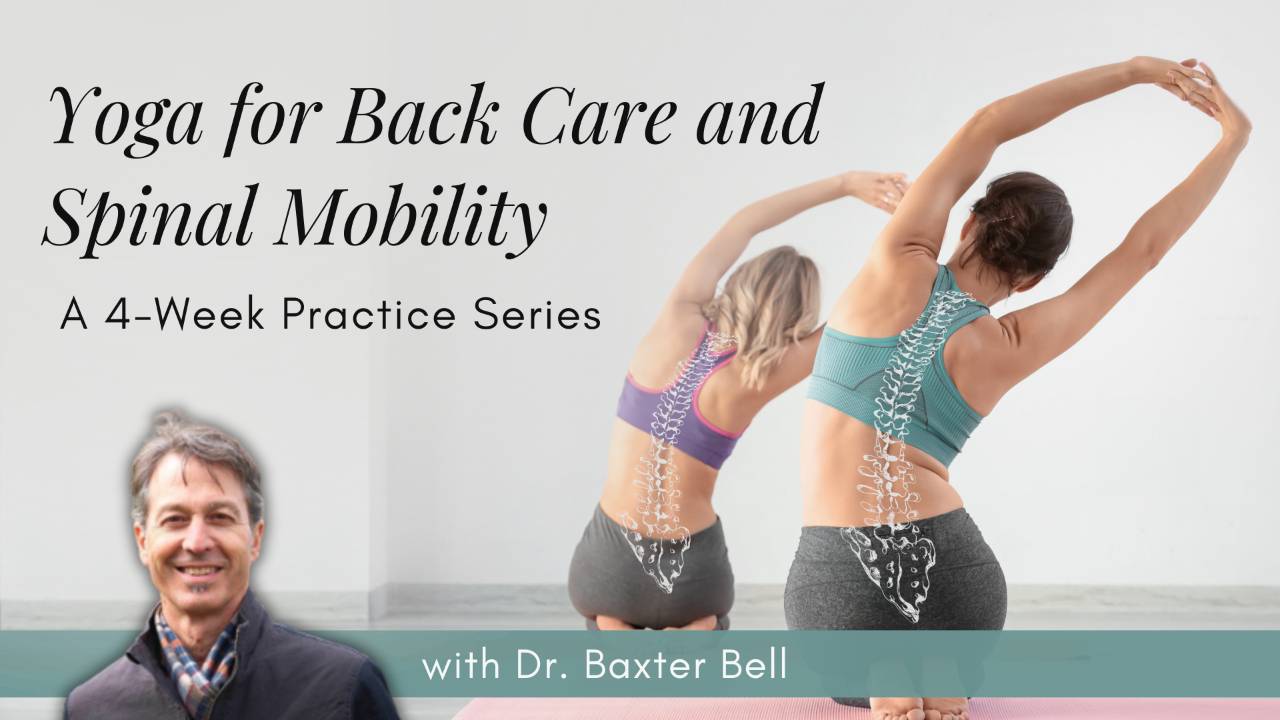
You can have the strongest legs and the most dedicated exercise routine, but if your back hurts, none of it matters. Back problems are the #1 reason people over 50 stop exercising entirely. Studies show that by age 65, nearly 40% of adults have stopped participating in regular physical activity due to back pain or mobility limitations.
Without a healthy, mobile spine, the metabolic benefits of movement—the strength training, the daily activity, the physical resilience that protects your metabolism—become impossible to access.
Movement is life. Every breath you take, every step you walk, every reach and turn throughout your day depends on spinal health. But your spine does more than enable movement—it's the central communication highway of your nervous system.
When vertebrae compress or shift out of alignment, the nerves exiting at each spinal level can become compressed. These nerves don't just control movement; they innervate your organs. Chronic compression can interfere with digestive function, breathing capacity, and even the autonomic signals that regulate metabolic processes. Over time, restricted spinal mobility doesn't just limit what you can do—it affects how well your body functions at a cellular level.
Here's what most people don't realize: spinal mobility is not a given as we age. The flexibility and ease of movement you had at 40 will not automatically be there at 60 unless you actively maintain it. Age-related changes—disc dehydration, loss of spinal extensors strength, accumulated postural habits—quietly erode the spine's natural movement capacity. By the time pain appears, restriction has often been building for years.
APRIL
Leslie Howard
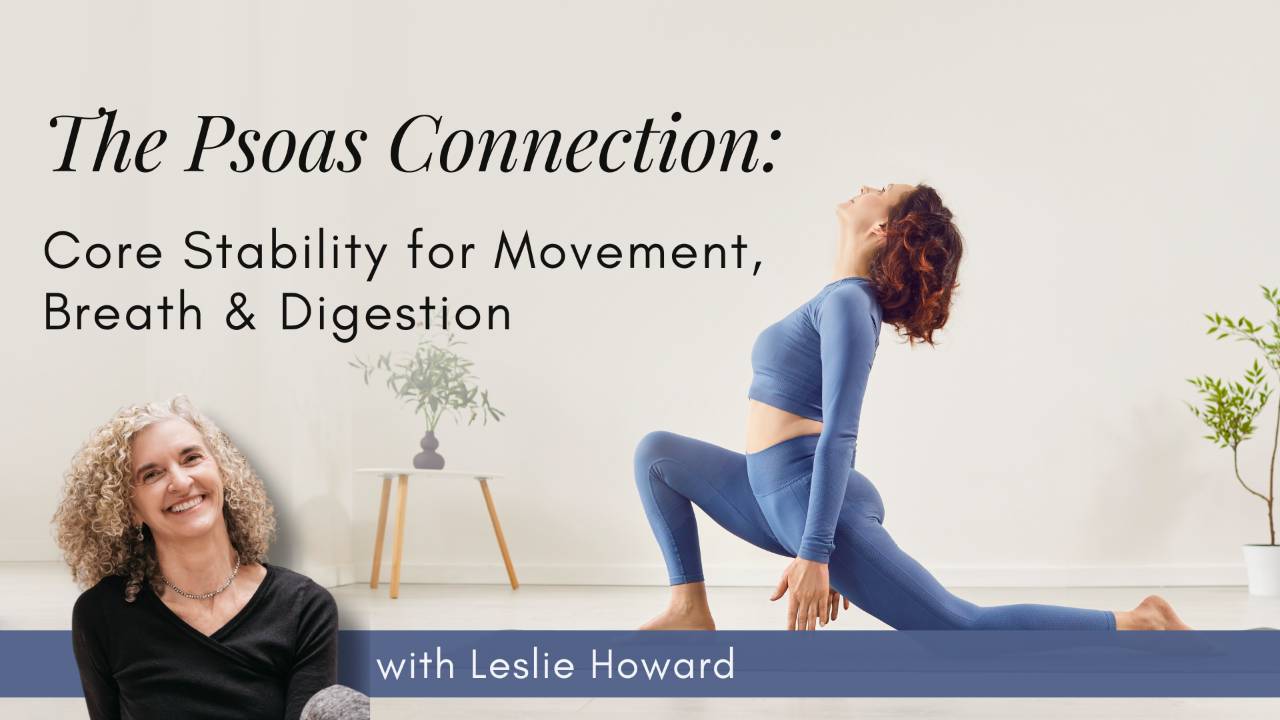
The Psoas Connection:
Core Stability for Movement, Breath & Digestion
In this course, we’ll explore gentle strengthening and release work to restore balance to your psoas; breath practices that support both hip flexors and digestive function; yoga poses that stimulate digestive fire and improve motility; and simple techniques to calm the nervous system and support gut health. All practices will include modifications and prop support so that bodies of all ages and stages can benefit.
We will explore a series of yoga poses, mudras, breathwork, and simple daily practices to support healthy digestion — from mindful chewing and abdominal massage to twists, belly-release work, sequencing for elimination, and practices that tone the abdominal organs. Participants will leave with both philosophical insight and concrete strategies for easing bloating, indigestion, constipation, and that familiar sense of digestive sluggishness that can arise from stress, hurried eating, or lack of movement.
At the center of this work lies the psoas — one of the body’s most influential and least understood muscles. Pronounced so-as, the psoas is a deep stabilizer that connects your spine to your legs and plays a surprising role in everything from how you move to how you breathe to how well your digestive system functions. After 50, the psoas tends to become short and tight from years of sitting, or weak from under-use of the hip flexors. This matters more than you might think for your overall health.
MAY
Lynn Crimando
Yoga for Flexibility:
Fascia, Flow, and Metabolic Efficiency
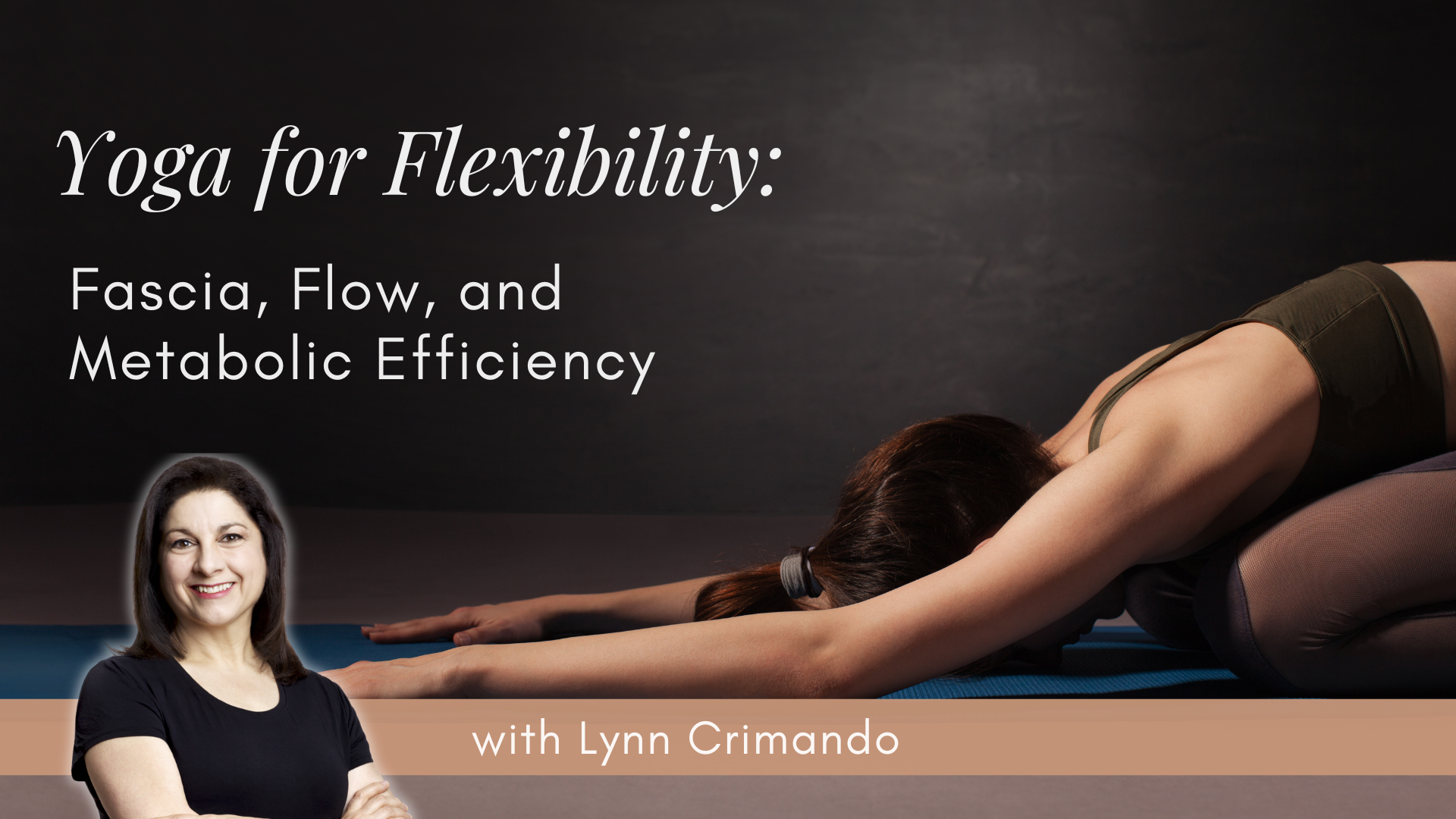
Flexibility after 50 isn’t about touching your toes—it’s about restoring the fluid, responsive connective tissue matrix that enables efficient movement, glucose disposal, and metabolic signaling throughout your entire body. This four‑week series with Lynn Crimando reveals how intelligent fascia‑focused practices can reverse the stiffness that silently undermines your metabolic health, movement capacity, and muscle‑building efforts.
Most people understand that tight muscles limit movement, but fewer realize that fascial restriction can also impair nutrient delivery and waste clearance between tissues. Your fascia—the web of connective tissue wrapping every muscle, organ, and cell—should behave like a hydrated, dynamic matrix for cellular communication and resource exchange. After 50, this matrix can become dehydrated, denser, and less pliable, creating what researchers describe as fascial adhesions and ECM remodeling. These changes don’t just make you stiff; they can contribute to reduced nutrient flux and altered mechanical signaling, which in turn supports a more insulin‑resistant, inflamed environment.
Lynn’s approach integrates her deep understanding of anatomy with practical, accessible movement sequences that help rehydrate, reorganize, and restore glide in fascia at multiple levels—from the superficial layers that create overall body tension to the deeper fascial chains that transmit force and coordinate whole‑body movement. This isn’t passive stretching. These are active, mindful explorations that teach your nervous system to release habitual gripping while building resilient, springy tissue quality that characterizes more youthful movement.
JUNE
James Knight
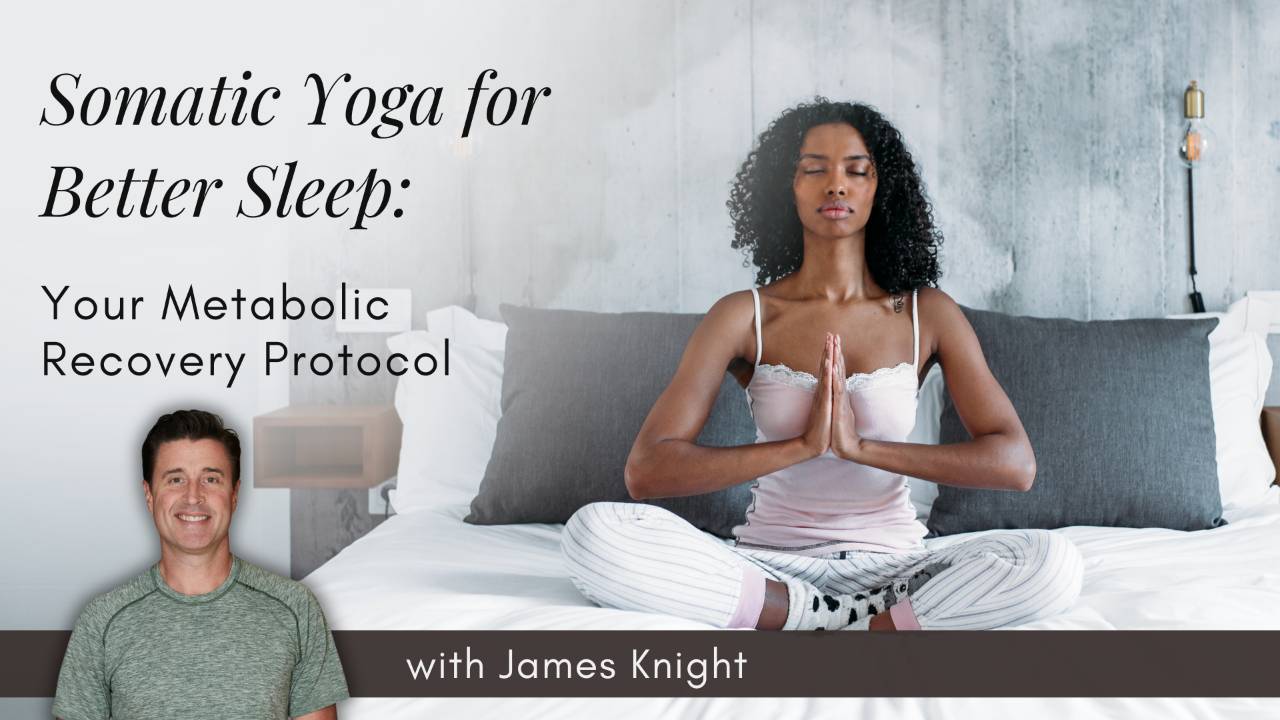
Somatic Yoga for Better Sleep:
Your Metabolic Recovery Protocol
After 50, sleep becomes more than rest—it becomes a key regulator of muscle preservation, glucose metabolism, and hormonal balance.
Research shows that age-related changes in muscle signaling can make strength gains and tissue repair less efficient over time. While the stimulus for growth begins during movement and resistance training, it is processed and integrated during deep sleep—particularly during slow-wave cycles when growth hormone release supports protein synthesis and cellular repair.
When deep sleep is disrupted:
- Muscle repair becomes less efficient
- Inflammatory markers may rise
- Insulin sensitivity can decline
- Glucose regulation becomes more fragile
Even short-term sleep restriction has been shown to measurably impair metabolic flexibility.
JULY
Melina Meza
Yoga with Weights:
Building Strength for Bone Health and Metabolic Resilience
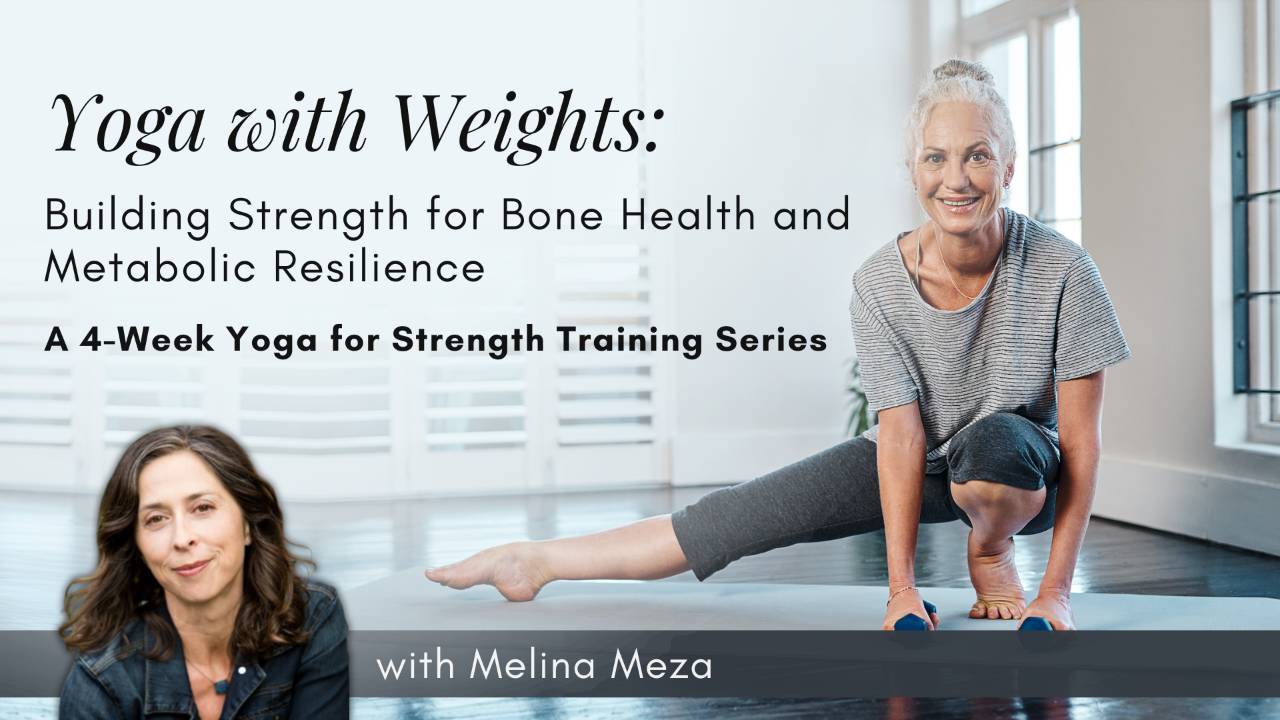
As we age, maintaining muscle becomes essential—not just for strength, but for metabolic health, balance, and vitality. After age 50, muscle loss is one of the biggest drivers of metabolic slowdown.
Muscle tissue plays a key role in regulating blood sugar and energy; when we lose it, even healthy habits can feel less effective, and fatigue and weight gain can creep in.
Retaining muscle strength is equally important for keeping your bones strong and maintaining your functional health and balance that will help prevent falls and fractures.
The solution isn't complicated: you need to build and maintain muscle. But here's where it gets interesting for yoga practitioners.
Traditional strength training works—but it comes with limitations. Isolated movements on machines don't train the integrated movement patterns you use in daily life. Heavy weights can stress aging joints.
Gym environments can feel intimidating or inaccessible. And conventional strength training often ignores the mobility, balance, and nervous system regulation that become increasingly important as we age.
AUGUST
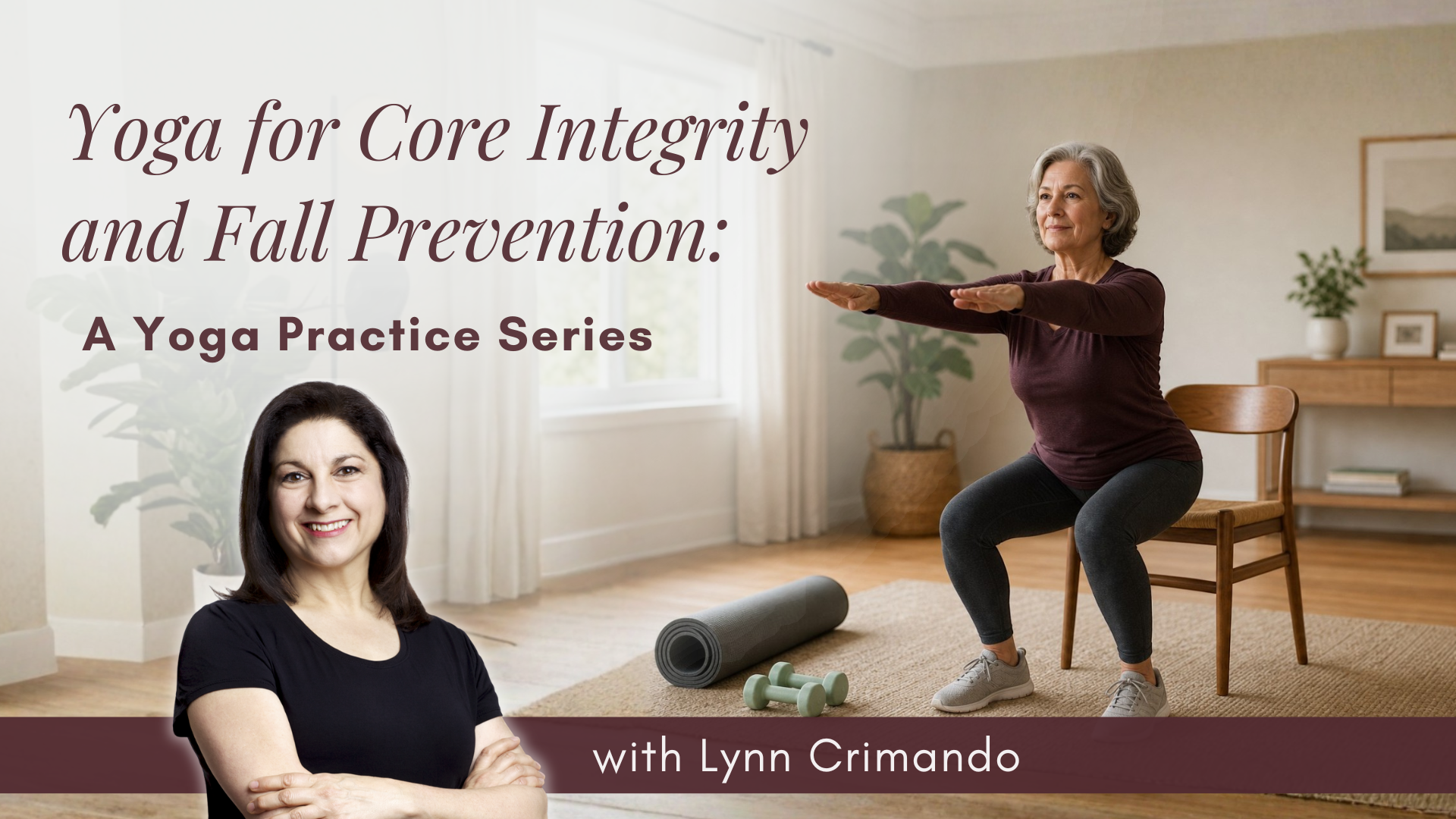
Lynn Crimando
Yoga for Core Integrity and Fall Prevention:
A Yoga Practice Series
-
Develop deep core integrity that stabilizes the spine, protects against vertebral fractures, and supports every movement you make
-
Train dynamic balance and proprioception — the real-time body awareness that catches a stumble before it becomes a fall
-
Strengthen the back extensors, hips, and postural muscles that hold you upright and reduce fall risk
-
Learn to use the breath strategically to support core engagement and body awareness
-
Build movement confidence through safe, progressive practices suited to adults with osteoporosis, osteopenia, or a history of fractures
AUGUST
Judith Hanson Lasater
How Not to Be Present: Understanding the Power of Consciousness
We have all heard the spiritual teaching “that we need to be present” to live a full and kind life. And we believe this teaching is important and powerful.
But in this two-part course, we will take a unique approach to the idea of being present.
Instead of focusing on presence, we will broaden our focus to what might interfere with our ability to stay in the present moment all day long.
And we will apply these concepts not only to our formal yoga practice but also to noticing how easily we get sidetracked in our daily lives, thus losing our awareness of the now.
Students find this approach fun, insightful, and very practical.
BONUSES
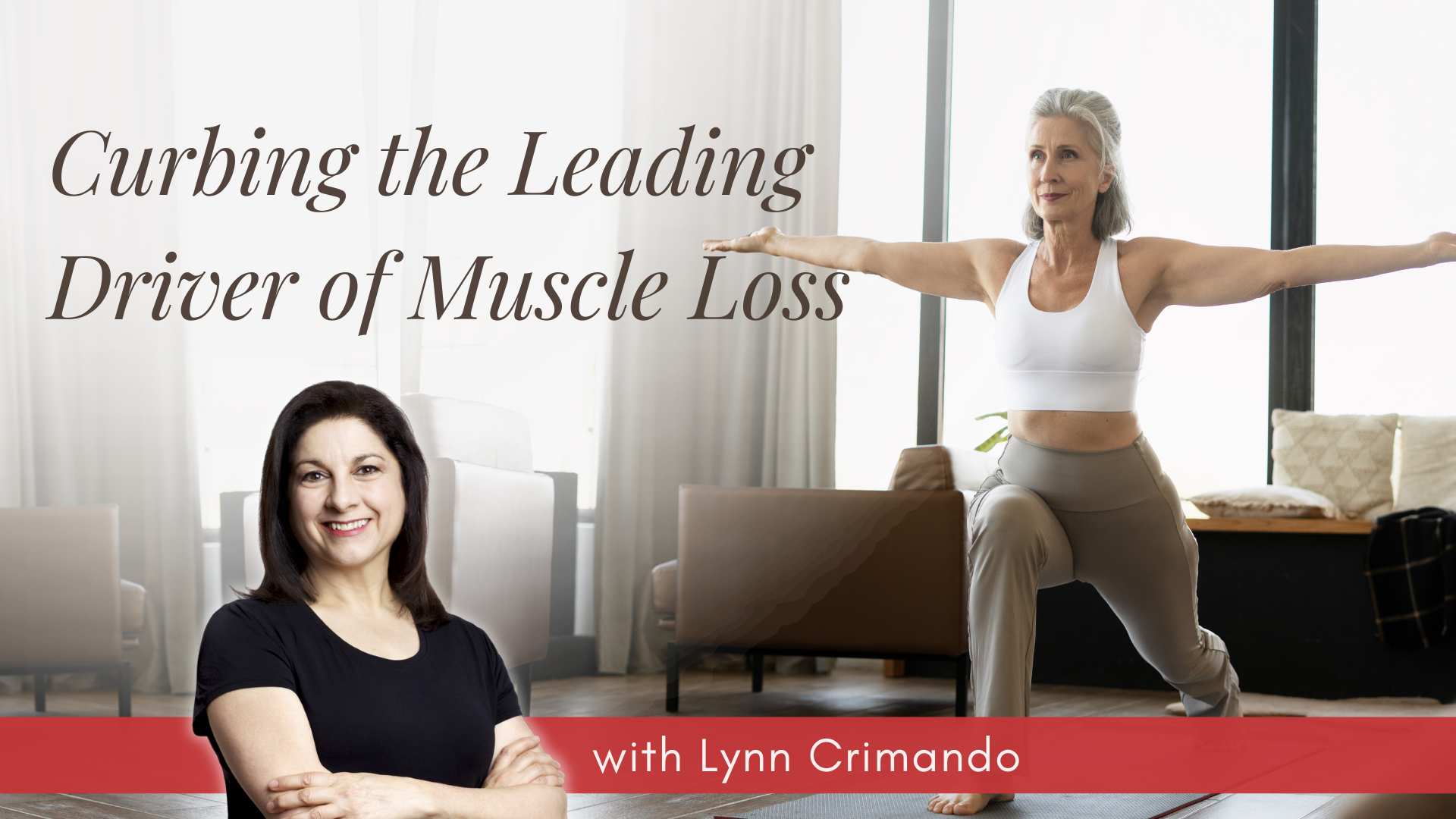
Curbing the Leading Driver of Muscle Loss
Lynn Crimando
After age 50, muscles become less responsive to the same exercise that maintained strength in younger years—a phenomenon called anabolic resistance. This series teaches evidence-based strategies to counter this change and support metabolic health.
You'll learn why muscles lose mass and strength after 50 through four specific mechanisms, and more importantly, how to address this decline. The workshops introduce three powerful approaches: sustained holds (time under tension), progressive loading as you adapt, and eccentric emphasis—controlled lowering that produces 30-50% more force than lifting.
This isn't typical yoga class intensity. The practice is noticeably more challenging, with clear connections to the science presented. You'll also learn how every lowering movement in daily life—sitting in a chair, getting into bed, walking downstairs—becomes an opportunity for strength building.
Optimizing Your Breath:
Yogic Breath for Cellular Vitality
Doug Keller
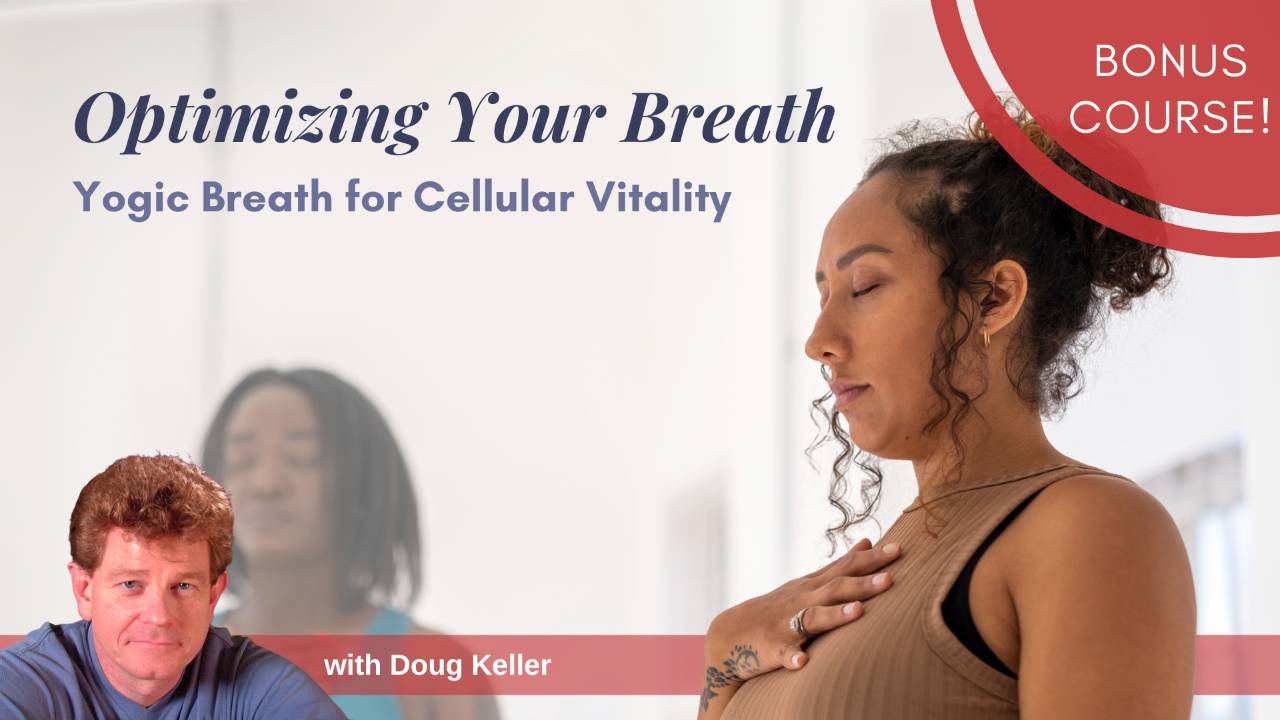
Healthy breathing is about quality more than quantity.
There are many elements to achieving this, which can be incorporated into movement practices for better breathing — and these online sessions are about doing just that!
One element has to do with enhancing our body’s natural production of nitric oxide as we breathe. It’s a molecule that plays an essential role in increasing circulation by keeping our arteries supple, and delivering oxygen into cells. Our immune function, body weight, circulation, mood, and sexual function can all be heavily influenced by the amount of nitric oxide in the body.
Nasal breathing can boost nitric oxide sixfold, which is one of the reasons we can absorb 18% more oxygen by breathing through the nose compared to breathing through the mouth.
However, as we get older, on the average, the body’s production of nitric oxide declines by over 50% after age 40 — if we don’t pay attention to how we breathe!
Fundamental yogic breath practices — which can be combined with movement — can reverse this decline and stimulate nitric oxide production as well as optimizing the use of the diaphragm and maintaining flexibility in the rib cage, ensuring that our breathing patterns meet our body’s needs, giving the body time and space to absorb the breath.
The Vital Importance of Body Awareness
EXPERT TALKS
Click on each image to listen